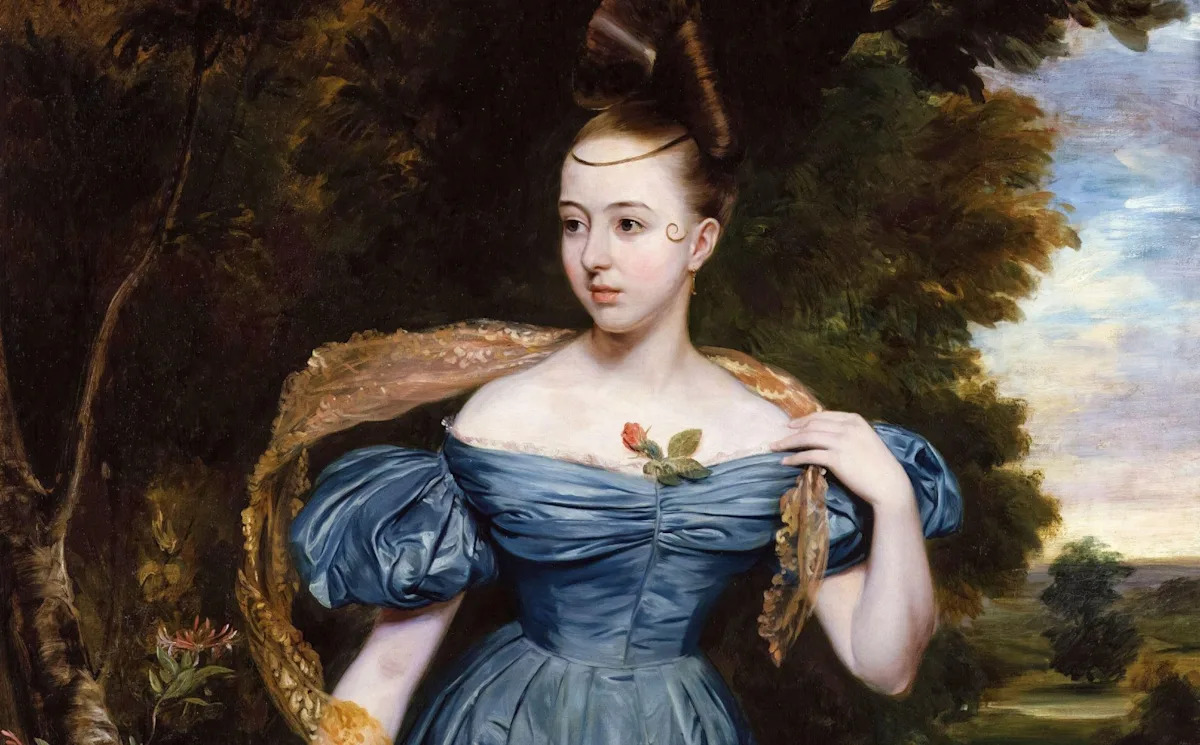
At lunch yesterday in the lovely Tudor house of Nettlecombe Court, east of Exmoor, a four-part grace was sung, composed by Vincent Novello, the founder of the music publishers. It may well have been sung there before, because Novello and his daughter, the singer Clara Novello, were frequent visitors to the house when it was owned by Sir John Trevelyan Bt (1761–1846).
This year it was the setting for Spode Music Week, a residential opportunity for intensive music-making, much to a very high standard, with the Catholic liturgy at its heart. Its name comes from Spode House, Staffordshire, where it was founded in 1954 by the remarkable Dominican priest Father Conrad Pepler.
Nettlecombe’s connections with Vincent Novello and Catholic liturgical music in early 19th-century England were explored in a lecture by John Sloboda, research professor at Guildhall School of Music and Drama. The musical world he described is generally unfamiliar. Catholics were not emancipated from their civil disabilities until 1829, but in the meantime made music at Mass in the country houses of recusant gentry or, in London, in embassy chapels, such as the one at the Portuguese embassy off Golden Square, ransacked in the Gordon Riots of 1780, despite its diplomatic status.
At Warwick Street church, the successor to that chapel, Professor Sloboda found among old music scores the name of Manuel Garcia, a great Spanish operatic tenor of the early 19th century. Not only did he worship at Warwick Street when he was in London to appear at Covent Garden, but he was also one of the performers who would sing at Mass from the choir loft. The excellence of music at the church won it the nickname “the shilling opera”, from the amount worshippers might contribute each Sunday.
Earlier, Thomas Arne (of Rule, Britannia! fame) had been director of music at the Sardinian Chapel in Lincoln’s Inn Fields (now St Anselm and St Cecilia’s, Kingsway). In 1793 Vincent Novello, aged 12, was recruited to the Sardinian Chapel choir. Aged 16 he was appointed permanent organist at the Portuguese Chapel, by then in South Audley Street, staying for 47 years.
Novello found and adapted Latin sacred music from the Continent for English Catholics, publishing it in anthologies arranged for soprano, alto, tenor, bass. The Novellos lived in Oxford Street, where Vincent’s father had set up a confectioner’s shop, and later in Meard Street, Soho. The embassy chapels were all within walking distance. Novello is said to have premiered in the Sardinian Chapel many of the editions of Mozart he published.
He and his wife Mary had 11 children, seven of whom survived into adulthood. As the children grew up, they took part in soirées that he put on for visitors, including Mendelssohn, who often came to London.
Another visitor was Sir John Trevelyan of Nettlecombe, Catholic landowner, ornithologist, and learned patron of the arts. He was much taken with Clara Novello’s voice and intelligence, not to mention her looks. He took the Novello girls driving in his park. Their father was able to try out the organ at Nettlecombe made in 1665. No earlier organ survives in England, though it is currently in pieces.
Clara went on to a long career as a singer, admired by Queen Victoria. Novello’s music company prospered. To me it is impressive that a religious minority that had only recently been able to show its face in public should invest so much care into making music for worship.
‘ The preceding article may include information circulated by third parties ’
‘ Some details of this article were extracted from the following source www.yahoo.com ’