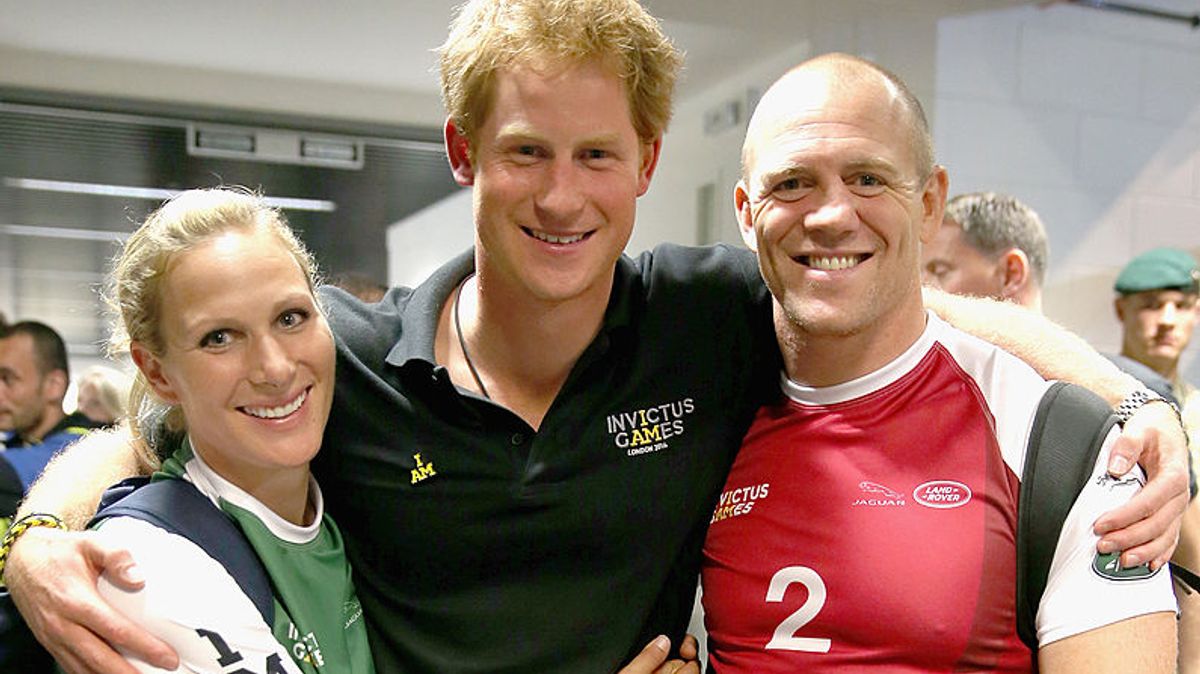
Former England international rugby star Mike Tindall has publicly mocked the Duke of Sussex, joking that he knew Prince Harry back when the exiled royal was still a fun individual.
The remarks, delivered before a live audience at the Hay Festival in Powys, Wales, underscore a severe deterioration in relations within the British Royal Family. For global observers, including those in Commonwealth nations like Kenya where dynastic public relations are closely scrutinised, the comments illustrate a monarchy struggling to contain internal fracturing. The statements carry significant weight given Tindall’s marriage to Zara Phillips, the niece of the reigning monarch, placing him firmly within the institutional inner circle.
A Calculated Public Rebuke
Speaking alongside his podcast co-hosts James Haskell and Alex Payne, Tindall expressed theatrical disbelief that Haskell had managed to avoid embarrassing himself during the 2011 royal wedding. In a pointed departure from usual diplomatic restraint, Tindall quipped that many others managed the occasion better, specifically naming Prince Harry and adding the caveat about his past demeanour. The audience reception to the jab highlighted the shifting public sentiment surrounding the Duke of Sussex following his relocation to Montecito, California.
The relationship between the Sussexes and the extended royal network has steadily chilled since the highly publicised transatlantic move. While Prince Harry remains the godfather to Tindall’s second daughter, Lena, royal commentators note that geographical distance and publishing tell-all memoirs have severed once-close bonds. The commentary at a prominent literature festival suggests that the institutional tolerance for the Duke has evaporated, allowing extended family members to openly disparage him in public forums.
The Bounds of Institutional Loyalty
The Hay Festival appearance was not limited to critiques of Prince Harry. Tindall navigated complex royal territory with a series of barbed comments, revealing the strict parameters placed on royal adjacent figures. During the session, Payne highlighted Tindall’s elite status by noting he possessed his own bedroom at Buckingham Palace. Tindall immediately fired back with a calculated reference to another disgraced royal, noting his quarters were at the opposite end of the residence to Andrew Mountbatten-Windsor.
Tindall further disclosed the behind-the-scenes anxiety his presence generates among palace officials. He informed the audience that backstage handlers explicitly warned him that the session was being recorded and advised him to avoid discussing his uncle-in-law. This admission of institutional censorship provides a rare glimpse into the active reputation management deployed by the Crown, a tactic familiar to political dynasties globally from Westminster to Nairobi.
The Economics of Royal Association
Beyond family politics, the podcast trio discussed leveraging their elite connections for commercial and athletic revival. The discussion turned to Richmond Rugby Club, where Tindall and his co-hosts recently filmed a pilot for a prospective Amazon Prime television series. The integration of royal proximity into commercial ventures remains a delicate balancing act.
- Podcast Reach: The Good, The Bad and The Rugby podcast routinely leverages Tindall’s royal connections to secure high listener engagement.
- Commercial Ambitions: The team aims to recruit Richmond resident Mick Jagger for a major fundraising concert at the Richmond Athletic Ground.
- Public Funding Commentary: Tindall casually referenced taxpayer funds, joking that his 2018 corrective rhinoplasty for a broken nose possessed a royal warrant because public money covered the surgical costs.
For international audiences, the casual discussion of taxpayer-funded cosmetic surgery offers a stark contrast to public spending debates in developing economies. While Kenyan taxpayers scrutinise sovereign debt and essential service funding, the British royal apparatus continues to insulate its members from standard financial pressures.
A Dynasty in Transition
The normalisation of public attacks on the Duke of Sussex by figures like Tindall marks a definitive shift in royal communications strategy. Historically, the family adhered to a strict code of silence regarding internal disputes. The modern iteration, however, appears willing to deploy proxy figures to litigate grievances in the court of public opinion.
This evolving dynamic presents significant challenges for the monarchy’s global standing. As the institution seeks to project stability and unity, the unchecked commentary from its extended ranks threatens to overshadow official diplomatic efforts. The persistent focus on internal drama detracts from the family’s broader constitutional mandate.
What emerges next could reshape the public understanding of royal loyalty. As the boundary between private family tension and public entertainment dissolves, the monarchy risks reducing its historic mystique to the level of common reality television.
‘ The preceding article may include information circulated by third parties ’
‘ Some details of this article were extracted from the following source streamlinefeed.co.ke ’