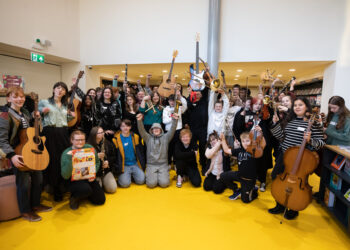
ROCHESTER, N.Y. — The power of music is undeniable, especially in schools, according to experts. Multiple studies have shown that students who play an instrument in school tend to do better in the classroom. Music can also help lessen the stress, especially for struggling students.
A funding gap means many public charter schools in New York have to make tough choices. A new Rochester nonprofit is helping to put instruments in the hands of students — where they’re needed most.
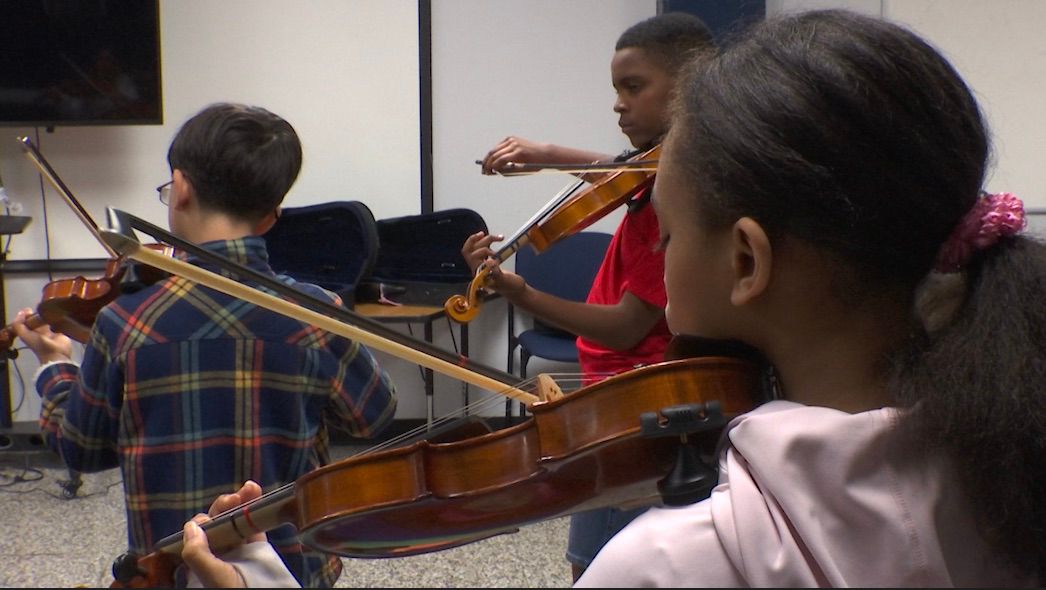
Mastering the art of music takes a sound foundation. It is something fourth graders at Rochester Prep are building upon. But it takes time.
“Oh, yeah. It was very hard to learn,” said Nicklaus Bailey, who plays violin.
“It gets me really nervous,” said Fernanda Rangel. “But once you play it, you get more excited.”
Rochester Prep is a charter school. Students in the music program there have to have good grades and must show up.
“We have class on a daily basis, and that also helps with the attendance at the school,” said Michelle Walker, the school’s Suzuki strings coordinator. “The kids are very motivated to come and play their instrument every single day.”
Funding for music programs in public charter schools can be tricky. In Rochester, schools like Rochester Prep get just a portion of the funding that traditional public schools do, about 42 cents on the dollar.
“So we have to do a lot more with less,” said Christie Raymo, the school’s director of development.
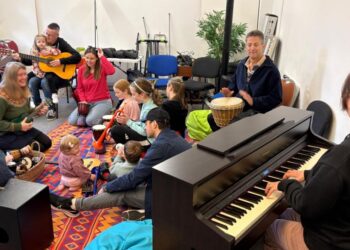
That’s where a new initiative comes in. Sound Foundations of Rochester is a nonprofit that invests in public charter schools, with donors providing money for music programs.
“We want to help these students,” said Melinda Goldberg, executive director of Sound Foundations. “What can we do? What would they benefit from? And after doing some research, the answer was music.”
At the K-4 charter school Innova Girls Academy, it’s the difference between having music class — and not. Administrators say they’re seeing real results in the classroom too.
“We see more participation in class, in math, in ELA,” said Innova co-founder Lindsay Swanson. “We see better behavioral outcomes, that some of our more challenging kiddos get engaged in this positive start. And that just carries through.”
“It is something we are paying attention to, because this program does build that education foundation at the youngest years,” said Raymo. “And when our children have that habit formation, that discipline that builds each year throughout high school.”
And beyond — especially for students like Bailey, who sees a future in music.
“We’re going to have a pathway through where we go into a program where we get free lessons, and we don’t have to pay for college,” said Bailey. “I really want that, because we won’t be able to afford it.”
“A lot of these kids wouldn’t have the opportunity to do this,” said Walker. “Strings is expensive. Purchasing an instrument is expensive, and then getting private lessons is way more expensive. And so it’s nice to give this opportunity to our scholars.”
Studies have shown time and again that among young learners, there is power in music. Sometimes, a sound foundation just needs a little help.
“That’s the bottom line,” said Goldberg. “What can we do to help these students succeed in school and beyond?”
‘ The preceding article may include information circulated by third parties ’
‘ Some details of this article were extracted from the following source spectrumlocalnews.com ’