ROCK
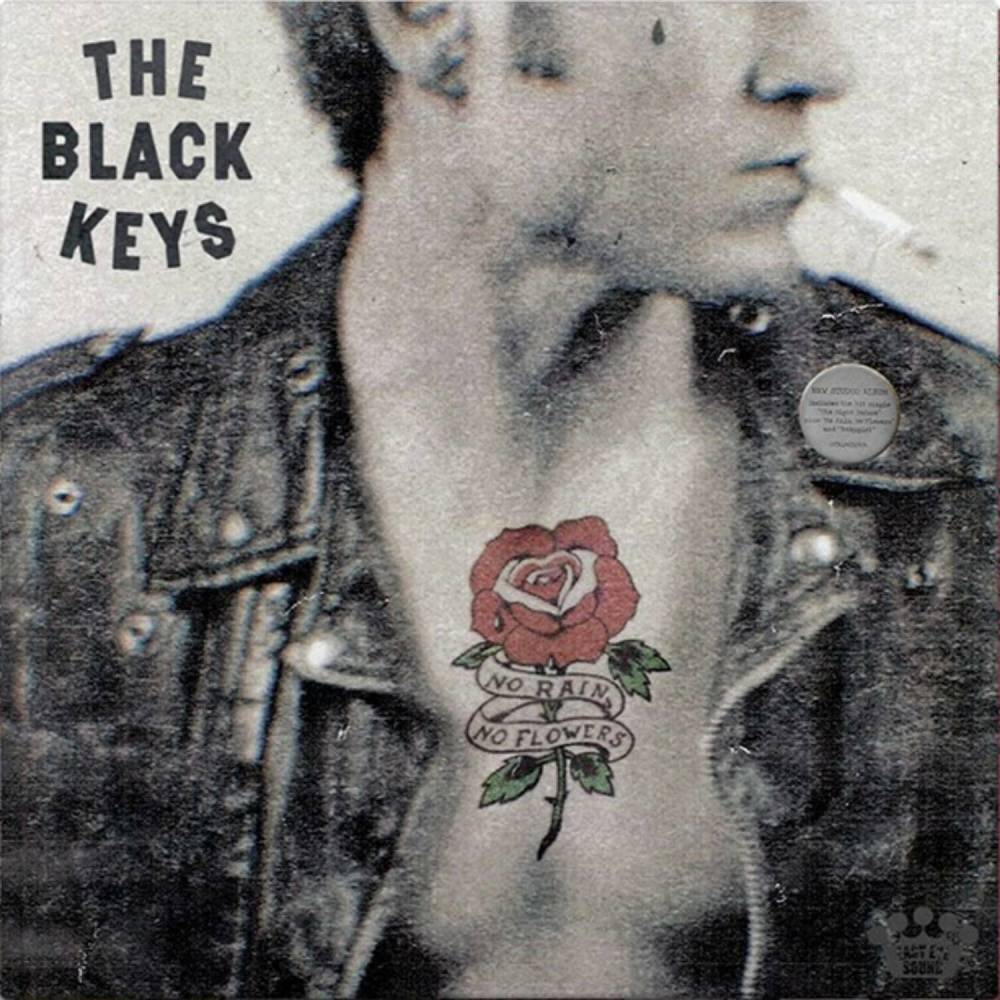
The Black Keys
No Rain, No Flowers (Warner Records)
The Ohio alt-rock band the Black Keys are finding their way home on their 13th full-length LP, No Rain, No Flowers.
The journey hasn’t been easy. Last year, the Grammy-winning duo underwent a fiery, public split with their management after their arena tour was unceremoniously cancelled. But on No Rain, No Flowers, guitarist and vocalist Dan Auerbach and drummer Pat Carney put a feel-good spin on their recent career turbulence. The album pulls the raw blues, psychedelia, garage rock and roots music of their 23-year discography into a single package.
Discerning fans won’t have to look hard for nods to their rough 2024. The opening track begins with a synthesizer-infused post-punk riff that leaves a sense of both inner peace and simmering resentment. After warning “There’s evil people in this world / Live long enough and you will be burned,” Auerbach’s easygoing voice assures that “Baby, the damage is done / It won’t be long ’til we’re back in the sun.”
Their fourth album in five years marks a return to the prolific pace they maintained early on in their career. Underdogs no more, the critically acclaimed duo’s tenure shows itself on this album, in a mix of trusted creative partners and long-admired new collaborators.
And perhaps truer to their name, this iteration of the Black Keys includes a lot more piano. The band says they’ve never worked with someone who writes on the piano like Rick Nowels, who appeared on Lana Del Rey ‘s Auerbach-produced album Ultraviolence.
Hip-hop producer Scott Storch plays keyboard on the groovy Babygirl, which is part-power pop, part-Rolling Stones with its sharp rhythmic piano and lyrical self-assertiveness. He’s also on Make You Mine, where Auerbach’s upper register and a string section push the band as close to Bee Gees’ disco as they’ll get.
But they’re at their best with moody, trance-inducing tracks like Down to Nothing, where Auerbach’s guitar elicits the feeling of yearning that’s remained a constant throughout their catalog.
The album leaves listeners with the twangy tones and folksier sounds of Nashville — where many of its contributors work and where Auerbach launched his Easy Eye Sound record label eight years ago. Music City songwriter Pat McLaughlin brings the same Americana sound of Auerbach’s 2017 solo album to the penultimate track A Little Too High, an upbeat stomper that evokes The Eagles.
Electronic backing vocals imbue the closer, Neon Moon, with the same supernatural undercurrent as Kacey Musgraves’ 2018 Golden Hour — both of which credit songwriter Daniel Tashian. Its natural imagery, however, is less complex. “You can find it in the southern sky,” Auerbach sings, “By the light of the neon moon.”
“Take me home / Back to you,” the chorus repeats. “Take me home / Neon moon.”
The Black Keys aren’t quite home with this one. But they’re certainly following the light.
— The Associated Press

JAZZ
Terri Lyne Carrington and Christie Dashiell
We Insist 2025! (Candid Records)
This is a remarkable and unexpected album. In 1960, drummer Max Roach with a stellar cast and then wife vocalist Abbey Lincoln released one of the most powerful social comment albums in jazz history. It was We Insist! and at times was clearly explosively angry in a description of racial realities facing African Americans of the day. It is highly recommended for you to explore.
This audacious update revisits every track on the 1960 original, adds a couple of tribute and acknowledgment tracks and like its predecessor demands attention. Drummer Carrington and vocalist Dashiell are joined by Morgan Guerin on bass woodwinds and percussion, Milena Casado on trumpet and electronics, Simon Moulier on vibes and marimba, Weedie Braimah on conga and djembe, and several vocalists. As that list suggests, the rhythmic base of this album is stunning. The drum is the heartbeat of the people and the music. The opening track, Driva Man, lays down a relentless and complex rhythm while the voice and instruments leave no hiding place.
While comparisons to the earlier release are probably unavoidable, this album stands firmly on its own to send the message that in 2025 the fight is far from over. In perhaps the best sense, this is serious music delivering a serious message in serious times. Wisely this album doesn’t repeat the track on the original on which Abbey Lincoln literally screams for minutes. The track here, Triptych: Resolve/Resist/Reimagine depends on the actual words and it works. Dashiell is wonderful throughout in her interpretations and improvisations. The supporting trumpet, sax, vibes and other instruments are totally solid, always moving well over the ever-present rhythm.
Reviewing this album is both very easy and very complex. It is an important album with an important message. Blending that with the specific musical elements must be true to both components. The best answer is for you to check it out – maybe with a (re)visit to 1960.
★★★★★ out of five
Stream: Driva Man, All Africa
— Keith Black
CLASSICAL
Yuval Zorn
Masques, Images & Hommages
(Rubicon Classics)
This newly minted release features prominent Israeli conductor/pianist Yuval Zorn in works by Rameau, Debussy and early 20th-century Polish composer Karol Szymanowski, recorded during a time of perilous war. It follows his prior solo keyboard album “Landscapes” from November 2019 on the same label.
Following the kinder, gentler first offering, the “Sarabande” from Rameau’s “Nouvelles Suites de Pieces de Clavecin,” the artist displays his versatile artistry with Szymanowski’s wholly contemporary “Masques, Op. 34,” beginning with its opening movement of three, “I. Sheherazade,” that begins sparsely before building to cascading waves of sound, followed by a playful “II. Tantris le Bouffon.” The suite caps off with “III. Serenade de Don Juan,” infused with dramatic swathes, sharply honed rhythmic accents and pregnant pauses that compel.
Also included are Debussy’s highly impressionistic “Images I,” and “Images II,” further showcasing Zorn’s rich palette of rich tonal colour, with particular highlights including “I Reflets dans l’eau,” from the former, and “I. Cloches a travers les feuilles,” from the latter volume.
The album rounds out with Rameau’s “Nouvelles Suites de Pieces de Clavecin,” including a crisply rendered “I. Les Trois Mains,” more lilting “II. Fanfarinette,” ebullient “III. La Triomphante,” before one final “IV. Sarabande,” bringing Zorn’s eclectic program full circle as a graceful, lyrical balm for war-torn turbulence.
★★★★ out of five
STREAM THIS/THESE: “Masques, Op. 34, ‘II. Tantris le Bouffon;’” “Images II, ‘I. Cloches a travers les feuilles;’” “Nouvelles Suites de Pieces de Clavecin, ‘IV. Sarabande’”
— Holly Harris
‘ The preceding article may include information circulated by third parties ’
‘ Some details of this article were extracted from the following source www.winnipegfreepress.com ’