The Clash or Leonard Cohen? Dave Grohl or David Ackles? Die Kreuzen or Van der Graff Generator? Indie rock or sea shanties? Life if full of choices — except next week, when you can truly have it all. Or at least read about them all. Let’s book it:

Such Great Heights: The Complete Cultural History of the Indie Rock Explosion
By Chris DeVille
THE EDITED PRESS RELEASE: “The definitive history of 21st-century indie rock ― from Iron & Wine and Death Cab For Cutie to Phoebe Bridgers and St. Vincent ― and how the genre shifted the musical landscape and shaped a generation. Maybe you caught a few exhilarating seconds of Teen Age Riot on a nearby college radio station while scanning the FM dial in your parents’ car. Maybe your friend invited you to a shabby local rock club and you ended up having a religious experience with Neutral Milk Hotel. Perhaps you were scandalized and tantalized upon sneaking Liz Phair’s Exile In Guyville from an older sibling’s CD collection, or you vowed to download every Radiohead song you could find on LimeWire because they were the favorite band of the guy you had a major crush on. However you found your way into indie rock, once you were a listener, it felt like being part of a secret club of people who had discovered something special, something secret, something superior. In Such Great Heights, music journalist Chris DeVille brilliantly captures this cultural moment, from the early ’00s and the height of indie rock, until the 2010s as streaming upends the industry and changes music forever. DeVille covers the gamut of bands ― like Arcade Fire, TV On The Radio, LCD Soundsystem, Haim, Pavement and Bon Iver ― and in the vein of Chuck Klosterman’s The Nineties, touches on staggering pop culture moments, like finding your new favorite band on MySpace and the life-changing O.C. soundtrack. Nerdy, fun, and a time machine for millennials, Such Great Heights is about how subculture becomes pop culture, how capitalism consumes what’s “cool,” who gets to define what’s hip and why, and how an “underground” genre shaped our lives.”

Down River: In Search Of David Ackles
By Mark Brend
THE EDITED PRESS RELEASE: “In 1972, David Ackles’ third album American Gothic was released to a flurry of press plaudits declaring it to be ‘the Sgt Pepper of folk’ and one of the greatest records ever made. Yet the album, like its two predecessors, failed to sell, and after one more record, its creator simply vanished. He found work, raised a family and died a couple of decades later, having never made another record. Today, Ackles’ music is largely consigned to the streaming netherworld. It is yet to be properly repackaged and reappraised, and he remains largely unknown. But there is no middle ground. You either love him or you’ve never heard of him. His admirers range from Black Flag’s Greg Ginn to indie polymath Jim O’Rourke to Genesis drummer-turned-platinum-selling solo artist Phil Collins. In 2003, when Elvis Costello interviewed Elton John for the first episode of his television show Spectacle, the two spoke at some length, and with palpable respect, about Ackles’s great talent, before performing a duet of his Down River — the same song Collins had selected for Desert Island Discs a decade earlier. Ackles did not make rock music, and Down River is not a rock story. It is a search for an artist who got lost. Not a pretty-good, I-wonder-what-happened-to-him sort of talent, but a man revered as one of the greats. Drawing on conversations with Ackles during the last year of his life as well as full access to archive material, it positions him as one of the great maverick talents of popular music — an equal of Scott Walker and Tom Waits. It seeks to understand the disconnect between his obvious gifts and his commercial failure, and wonders about the fickleness of fame and cult status. How does this process of retrospective recognition work, and why does it happen for some but not others? Was Ackles’ music just too strange, or might his time yet come? And what do the answers to these questions say about the mythmaking of the popular music industry — and about us, the audience?”

Don’t Say Please: The Oral History Of Die Kreuzen
By Sahan Jayasuriya
THE EDITED PRESS RELEASE: “Step back to the early ’80s in the Rust Belt of the Midwest, where underground newsletters and ‘zines ignited a creative revolution. Amidst this explosion of American punk and experimental music, a band from Milwaukee, Wisconsin, emerged with a groundbreaking sound. Die Kreuzen, a group that defied genre boundaries, fused punk and metal influences to create something entirely new. Were they punk? Were they metal? Die Kreuzen recorded what fans and critics hail as a defining album of hardcore punk, only to reinvent their sound with each subsequent release. They toured the world, made little money, and eventually broke up. Yet, this seemingly brief stint in music history has rendered Die Kreuzen legendary. But why? For the first time, band members Keith Brammer, Brian Egeness, Dan Kubinski and Erik Tunison — alongside their friends, collaborators, and famous fans — reveal the inside story of Die Kreuzen. This book features rare images and artwork, with contributions from music icons like Thurston Moore, Steve Albini, Neko Case, Lou Barlow and more.”
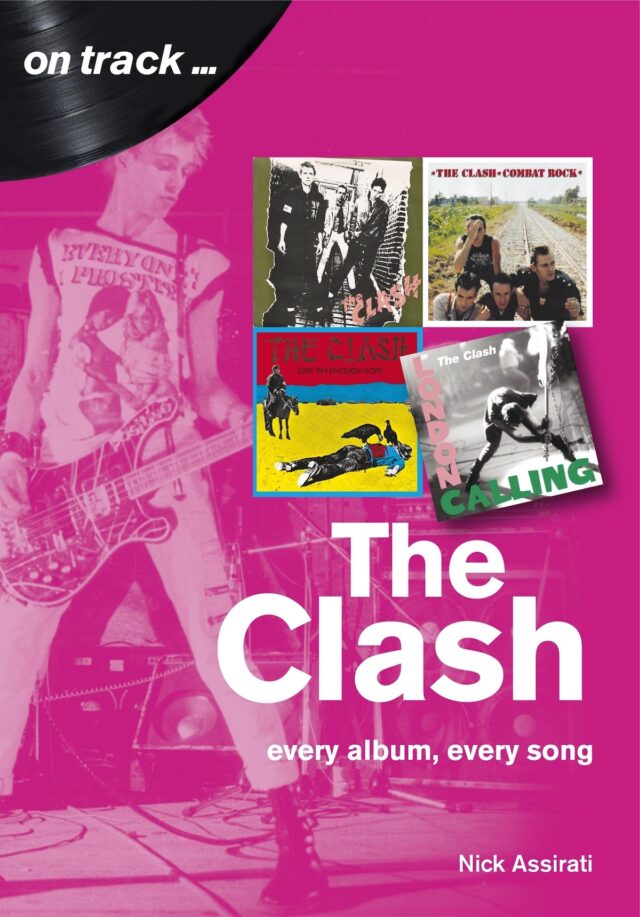
 The Clash: Every Album, Every Song
By Nick Assirati
THE EDITED PRESS RELEASE: “The Clash recorded their self-titled first album over three weekends. It is now regarded as the quintessential punk record. Over the next five years, they recorded another fourteen sides of long-playing vinyl including the platinum-selling double-LP London Calling, which was voted the best album of the 1980s and the eighth best album of all time by Rolling Stone. Through the triple-LP Sandinista! to their double-platinum Combat Rock, plus a whole bunch of standalone singles and EPs, The Clash mixed both street and global politics with music spanning several genres including rock, reggae, jazz, rap, calypso and rockabilly. This new edition contains a wealth of recently-unearthed new material, providing a concise narrative of the rise and fall of The Clash, putting each song of their prolific musical output into context, including a selection of bootlegs and rarities. There is also advice about how to buy The Clash‘s music without falling into the record company trap of repeatedly buying the same material through different compilations, making this the most essential guide to the music of this iconic band yet written.”

Dave Grohl And The Foo Fighters: Every Album, Every Song
By Ben L. Connor
THE EDITED PRESS RELEASE: “Dave Grohl is one of the most respected musicians of the 21st century. From his early days in the 1980s punk scene, he initially established himself as one of the greatest rock drummers of his generation. He then survived the chaos of Nirvana to establish his own songwriting voice as singer and guitarist for Foo Fighters. With hits such as Everlong, Learn to Fly, Times Like These and Best of You, Foo Fighters have dominated modern rock for the past three decades. Outside of his band, Grohl is the ultimate rock ’n’ roll hype man, playing in side projects with famous friends, and boosting the profiles of undervalued underground acts and up-and-coming artists alike. And yet, Grohl’s music is strangely underappreciated. Gatekeeping alt-rock fans dismiss it, while critics are often more interested in his tragic backstory than his songs. This book is the first to cover the entirety of Foo Fighters’ discography, as well as Grohl’s various experimental side projects. By reviewing every song in depth, it reveals that Foo Fighters have more impressive and more varied music than what you hear on the radio, and there is far more to Grohl than his reputation as The Nicest Man In Rock.”

Leonard Cohen: Every Album, Every Song
By Opher Goodwin
THE EDITED PRESS RELEASE: “An enigma, Leonard Norman Cohen was possibly the most improbable bohemian intellectual singer-songwriter in music history. He was certainly the working-class hero, the peoples’ poet, the suicidal lamenter of doom and the purveyor of popular songs. But the truth is even more complex. Throughout his life, there were juxtapositions of the most unlikely life choices and influences. To have fashioned a mishmash of ideas, styles and influences into a successful, long-lasting musical career is nothing short of amazing. He blended secular, mystical, sexual and religious themes into ambiguous poetic tapestries and devised an intricate, unique musical style. He possessed a deep baritone voice that, although mesmerizing, was sometimes in danger of sounding monotonous. Leonard was able to fuse these elements into a distinctive amalgam that somehow worked on many levels. He did not look the part, play the game or conform to any rules, but Leonard touched hearts and minds all over the world, while writing some remarkable songs, including Hallelujah and Suzanne. Focusing equally on this popular early albums, his more experimental mid-period and his final, late-career renaissance, this book analyzes and interprets every album and every individual song to shed light on the phenomenon of Cohen.”

Pawn Hearts by Van der Graaf Generator
By Paolo Carnelli
THE EDITED PRESS RELEASE: “It’s been more than 50 years since extraordinary British rock band Van der Graaf Generator released their legendary fourth studio album Pawn Hearts: A mind-splitting masterpiece that fascinated an entire generation of music lovers, redefining what could be done within the realm of music. Written by iconic progressive rock author Paolo Carnelli, this is the most extensive treatise of its kind on Van der Graaf‘s seminal 1971 record. The book starts with the birth of the Pawn Hearts concept from live band experience, the songs rehearsals and eventually the recording of the album material. A detailed track-by-track musical and lyrical analysis follows. Specific chapters are dedicated to the making and the meaning of the artwork and to the band’s collaboration with King Crimson’s Robert Fripp. The last part of the book deals with the press reaction to the album and the unexpected release of the Theme One / W 7” in 1972. The final chapter recalls the amazing 2013 Lighthouse Keepers tour: Venues, dates and setlists for the whole tour are included, as well as a detailed Pawn Hearts discography. Some fresh comments on the album from David Jackson, Hugh Banton, Guy Evans, Peter Hammill, Stephen W. Tayler and Paul Whitehead enrich the story. With a preface by Gary Lucas.”

Everything We Do is Music: How 20th-Century Classical Music Shaped Pop
By Elizabeth Alker
THE EDITED PRESS RELEASE: “The worlds of pop and rock owe a much greater debt to the classical canon than we realize. A direct and fascinating lineage draws from the experimentalism of Pierre Henry to The Beatles’ Tomorrow Never Knows, from Stockhausen to Donna Summer‘s I Feel Love and from Bruckner to Sonic Youth via Glenn Branca. In Everything We Do is Music, Elizabeth Alker highlights the innovators of classical music and their fans and collaborators in pop who challenged the notion that such musical worlds were mutually exclusive. Alker shines a light on the rich tapestry that exists between their borders through exclusive interviews with Sir Paul McCartney, Steve Reich, La Monte Young, Nils Frahm, The Blessed Madonna, Jonny Greenwood, Soweto Kinch and Jean-Michel Jarre among others.”

In China With Green Day
By Aaron Cometbus
THE EDITED PRESS RELEASE: “When a former Green Day roadie reunites with the group, the result is a moral reckoning that eviscerates the music business, both underground and mainstream. It’s also a tender travelogue about finding common ground while exploring new roads with old friends. One need not be a fan of the band to enjoy this rollercoaster journey through Asia and its exploration of very different ideas of success.”

Sailor Song: The Shanties and Ballads of the High Seas
By Gerry Smyth & Jonny Hannah
THE EDITED PRESS RELEASE: “Passed down in the oral tradition and sung as working songs, sea shanties tell the compelling human stories of life on the water: Hard labor, battling the elements, pining for distant loves and faraway homes. The music’s rhythms are designed to galvanize the group effort of heaving, pushing, and pulling to weigh anchor, wind rope around a capstan or set sail. Acclaimed shanty devotee Gerry Smyth presents the background to each shanty alongside musical notation. The lyrics are elaborated upon with explanations of terminology, context including historical facts and accounts of life at sea, and the characters, both fictional and nonfictional, that appear in the songs from the great age of sail to the last days of square-rig.”
‘ The preceding article may include information circulated by third parties ’
‘ Some details of this article were extracted from the following source tinnitist.com ’