The 38th annual Chicago Duo Piano Music Festival, hosted by The Music Institute of Chicago, is coming to town July 12–19 with the world premiere of a new work by Music Institute alumna and composer Maddie Stephenson at Nichols Concert Hall, 1490 Chicago Ave.
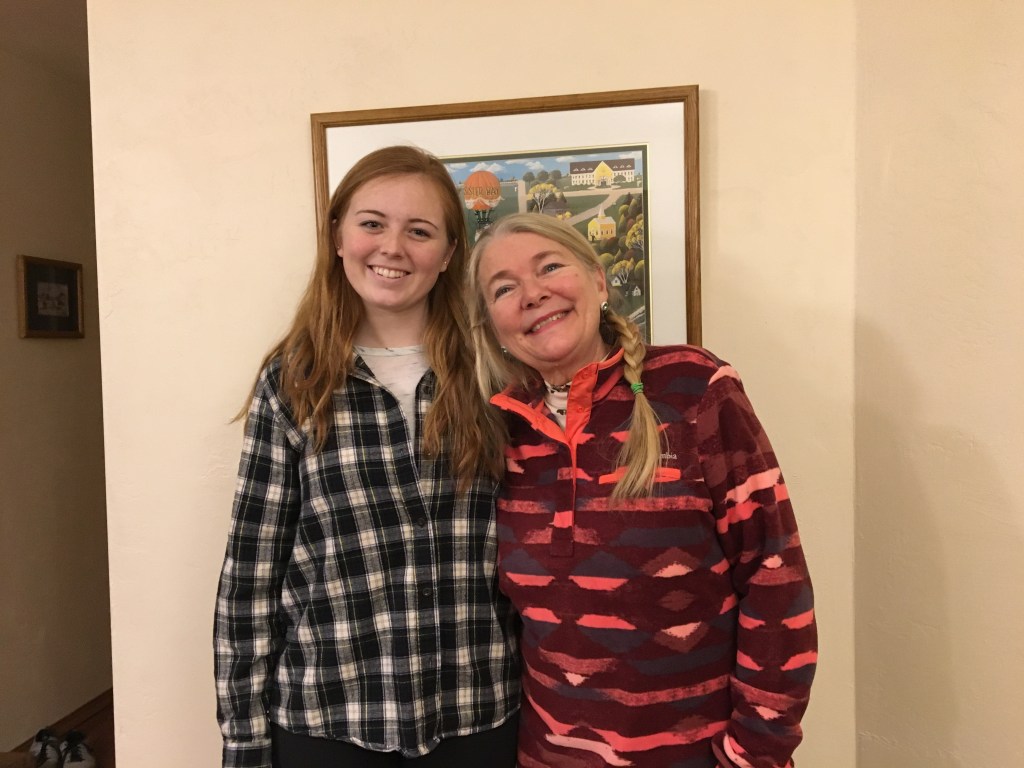
The festival’s founders, Claire Aebersold Neiweem and Ralph Neiweem, will play the new piece, titled Through Time, at the opening concert at 3 p.m. July 12. Having attended the duo festival throughout her childhood and studied privately under Aebersold Neiweem, Stephenson said the piece draws on feelings of nostalgia.
“I was thinking about my time learning from them and my time at the duo fest and thinking about it fondly,” she said, “and I’m nostalgic for it because it was a huge part of my musical growth.”
Stephenson described the piece as a “flowing” stream of consciousness, in which a simple theme passed between Claire and Ralph transforms into increasingly rhapsodic passages, but all anchored by a recurring ticking clock-like sound.
Aebersold Neiweem said the piece is the festival’s fifth commissioned work and reflects one of its core missions to both build and sustain the repertoire.
“We decided that we should have a four-part mission, which is teaching of the wonderful repertoire, performing guest teams, inspiring composers to write music for it and competitions,” she said.
Another highlight is the Faculty Extravaganza on July 14, when Music Institute of Chicago faculty will play a program primarily of American composers in tribute to the 250th anniversary of American independence. Among the composers featured are Aaron Copland, described as the “Dean of American composers,” and John Corigliano, who has won five Grammy awards and has a music residency slated for May 2027 at Northwestern’s Bienen School of Music.
Beyond concerts, the festival includes music coaching, a student recital and a guest master class free to the public led by the EStrella Piano Duo, which consists of Elena Doubovitskaya and Svetlana Belsky.

Ralph Neiweem added that for non-music fans, the festival provides an accessible gateway into classical music, as it’s “visually very interesting” to watch pianists looking at each other from behind two pianos 14 feet away, and to notice the subtle hand and breathing cues between them.
“It can probably seem like magic at first, because there’s all sorts of ways of signaling each other that people aren’t supposed to notice,” he said.
The Neiweems both started out as soloists, but after meeting at a music festival in Italy, the two formed a piano duo. Three years later, they got married and committed to working full-time as duo piano partners.
In a conventional piano duet, pianists are assigned either the upper, or primo, part or the lower, or secondo, part. But Ralph Neiweem said the two regularly switch their roles. He added that the art is extremely demanding due to the precision each piece requires, and thus it requires years of practice.
“It has to be exactly together,” he said. “Otherwise, it’s very obvious if it’s not.”
While the couple consistently reworks music from previous festivals, such as Mozart’s Sonata in F Major, K. 497 — one of this year’s opening pieces — the performances never sound the same. Having already reached precision, the duo now works toward blending the piece to better balance out the sound, a process that Claire Aebersold Neiweem describes as “weaving a tapestry.”
The festival’s commitment to regularly revisiting previous works while also adding new ones has become a defining tradition that draws pianists from all over the world.
Stephenson noted that commissioning new works ensures the ongoing evolution of classical music.
“It’s still a living, breathing thing,” she said. “It’s not just a museum.”
Related Stories
‘ The preceding article may include information circulated by third parties ’
‘ Some details of this article were extracted from the following source evanstonroundtable.com ’