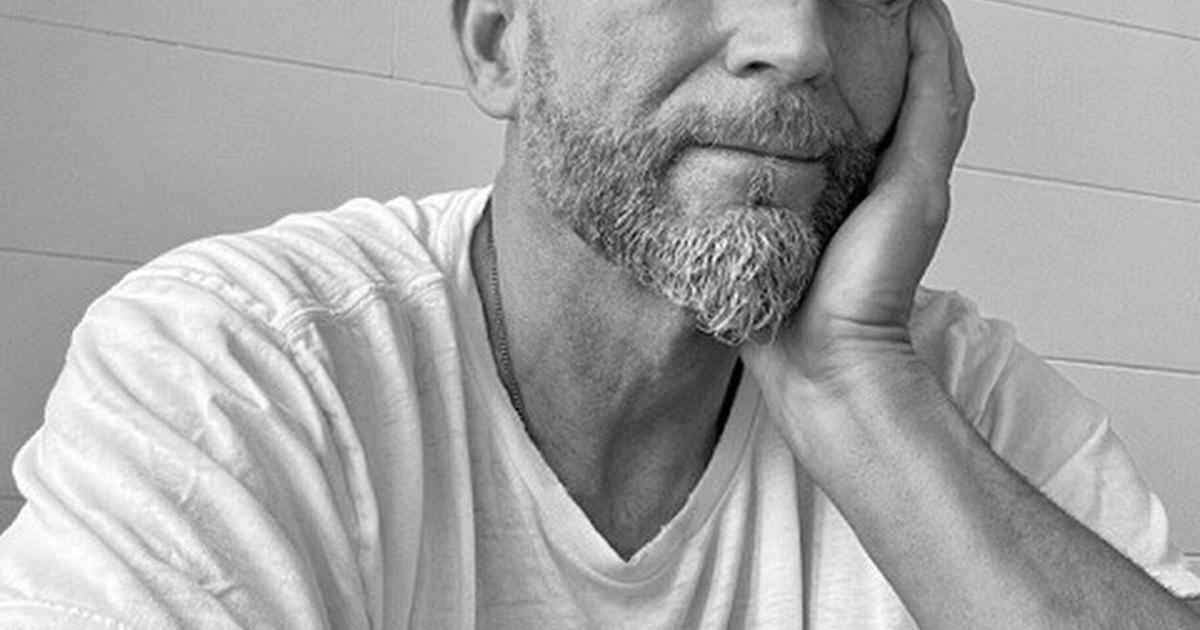
Author Chris Lockhart was fishing in the Touchet River near Walla Walla several years ago when a childhood friend called out of the blue.
This friend was Michael Dodd (a pseudonym used by Lockhart to protect Dodd’s identity), an avid outdoorsman and Afghanistan war veteran who had been committed to the state mental health system in the aftermath of Jan. 6, 2021, when he drove a pickup full of firearms to the governor’s mansion in Olympia. Dodd had previously entered the mental health system because of low-level offenses and missed court dates.
Dodd believed he was egged toward violence by a right-wing conspiracy theorist named John Knowles, who led three comrades in arms to the governor’s mansion that day.
But Dodd was in fact acting on his own. Knowles, and the co-conspirators in question, were Dodd’s alternate personalities, or “alters” as Lockhart refers to them.
“I’m in the loony bin,” Dodd told Lockhart on the phone, meaning the psychiatric hospital at Western State. “When can you come? Can you come now?”
For Lockhart, who was raised outside Olympia, the call kick-started a snaking exploration of right-wing conspiracies and Washington’s mental health system. In his new nonfiction book, “American Alt” (out now from Bloomsbury), Lockhart details how he reconnected with Dodd, who he learned had undiagnosed dissociative identity disorder and schizophrenia. Rekindling their relationship over the course of a few years, Lockhart unearthed uncomfortable truths about the commodification of victimhood in conservative American politics, much of it relating to Washington’s urban-rural class divide.
Lockhart’s involvement in Dodd’s life resumed after that winter in 2021, when a crowd of Donald Trump supporters broke through a gate and gathered on the lawn of the governor’s mansion in Olympia to protest the 2020 presidential election results. Dodd had followed along; he was ultimately picked up by police after his father asked them to perform a welfare check on him. Lockhart had been out of touch with Dodd for a while and didn’t see how any of this stacked up. He knew his old friend as a lover of philosophy and camping. He decided to go to Western State and investigate.
When Dodd was released — the charges were ultimately dropped — he asked Lockhart to help him reconstruct the meandering and at times patchy tale of how he wound up with those guns outside the governor’s mansion. This would involve Dodd’s alters surfacing to speak (and camp, and fish, and go to taverns) with Lockhart, who recorded the oral accounts and assembled them in written form. Dodd’s therapist approved of the plan.
“Michael didn’t have conscious penetration of his alters or what they were doing,” says Lockhart, meaning he had no situational memory when overcome by his alternate personalities. “But his alters did have penetration of Michael.”
Lockhart had almost no experience with these mental disorders. But his journalistic reflex and friendship with Dodd convinced him to forge ahead.
“I don’t claim to know the intricacies of DID,” Lockhart says. “I’ve read some books on it. But one thing I didn’t want to do is come off as saying, ‘I know this, or that, or how it works.’ We were clumsy friends trying to figure things out.”
Voice recorder and fishing pole in hand, Lockhart began cataloging Dodd’s story. He knew that their time together would be best spent in the wilderness, “because that’s where Michael kind of calms down,” he says.
But Michael’s alters were significantly less relaxed. A bevy of vitriol, much of it directed at Seattle, comes through in their voices.
“What are the goals of anyone who lives in America?” asks MacGregor, the name of a right-wing alter that Dodd “meets” at a court-mandated, Aberdeen-area therapy session. “All we want is not to be denigrated or stepped on,” he continues. “How about this: my goal is to eat a Big Mac, smoke a cigarette, and not recycle a single (expletive) soup can without being classified as mentally incompetent by some yoga-practicing, politically correct academic snot (expletive) in Seattle.”
Even when Dodd is speaking as himself, both he and Lockhart, having grown up in areas of industrial decline around Olympia, come off as hyperaware, even jilted, about the geographical distance between their respective upbringings and the cultural American elite. “That just comes with growing up in Southwest Washington,” says Lockhart.
But if Lockhart has an aggrieved spin to his journalism, the chip on alter John Knowles’ shoulder is of another magnitude. He believes that global elites have teamed up, purposefully and maliciously, to torture the postindustrial American underclass.
“‘Pusher,’” Knowles says to Lockhart, pointing out pedestrians as they drive around Aberdeen and Hoquiam after dark. “‘Tweaker,’ ‘bum,’ ‘skin popper,’ ‘wino,’ ‘zombie,’ ‘drifter,’ ‘screamer.’”
“After a while,” writes Lockhart, “his pronouncements took on the cadence of some strange, dystopian language, as if he were reading an abstract poem comprised of iambic words for the damned.”
Encountering a “Subaru couple” near the Hoh Rain Forest, Knowles says he “can just imagine them racing back to their Queen Anne home, risking the inconvenience of running out of gas on some lonely state highway to avoid their condescending preconceptions of small-town America. Isn’t it just like those clever Seattle people to turn every journey, every stopover, into a judgement on the places and people they encounter?”
Lockhart withholds a verdict on Dodd’s psychological diagnoses and Knowles’ MAGA leanings. His role in the story is, first and foremost, to support his struggling friend. “I seemed to need this as much as he did,” Lockhart recognized midway through his project.
Most of the hot-button political talking points in the book can be found across social and national media.
“Once you saw yourself as a victim,” writes Lockhart, “it was that much easier to embrace … things that confounded fantasy with memory. And victimhood was more seductive than ever these days. People marketed it, preached it, made a living out of it, conquered others and garnered power and influence from it. The culture of complaint was big business.”
Knowles’ victim complex ultimately leads Dodd, in the imaginary company of multiple alters, to Olympia on that day that would soon enter the American lexicon.
Jan. 6 isn’t commonly framed in terms of the country’s class divide. Lockhart argues that it should be. “It’s there for a reason,” he says of the rural-urban schism class divide at the heart of his book. At the same time, he doesn’t see it as inherently negative.
“It’s funny, because I grew up here, went to UW and all that stuff,” Lockhart says. “But as I get older, I’m always going to Eastern Washington. We need each other. Eastern Washington, Western Washington, rural, urban. It’s easy to look at them as divisive. But there’s a synergy there. It really works when it works.”
‘ The preceding article may include information circulated by third parties ’
‘ Some details of this article were extracted from the following source www.yakimaherald.com ’