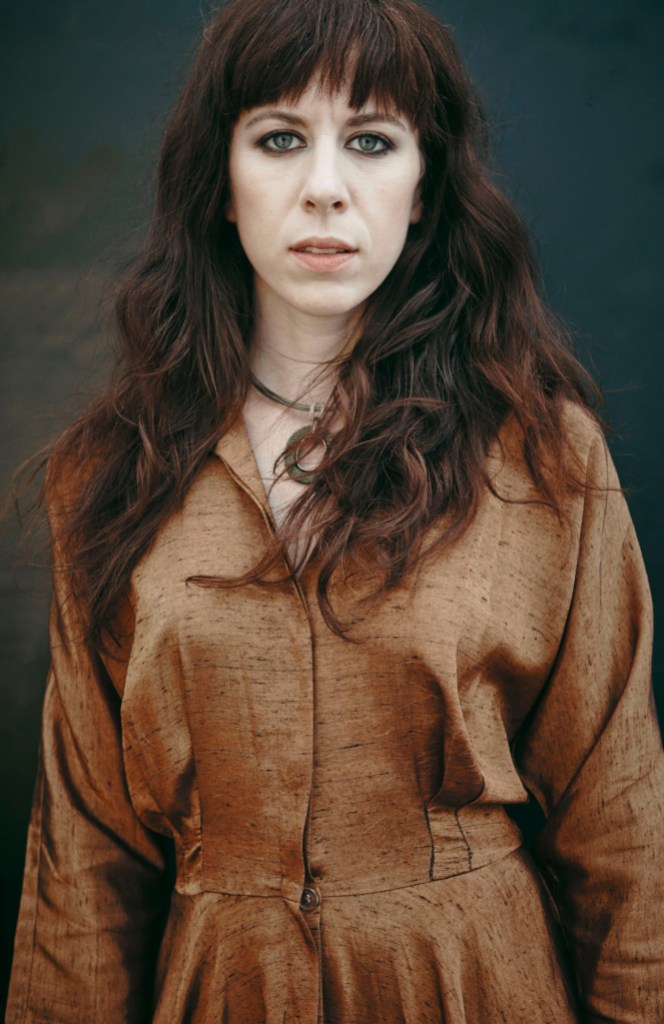
After the Music Academy of the West (MAW) launched its summer season with its usual gusto, checking in with the motherlode of standard repertoire stuff of the Takács Quartet’s stirring all-Beethoven night and the Academy Festival Orchestra’s happy holiday-fueling of Gershwin and Brahms, and more, MAW pulls into the living composer station this week. And the composer in question: The much-acclaimed and performed Missy Mazzoli is very much alive and kicking — and appearing live in person on the Miraflores compound this week.
Mazzoli, whose expanding oeuvre spans chamber music, orchestral, and operatic works and beyond, has become a prominent and prolific composer on the scene in recent years. The latest buzz in her world is the world premiere of her latest opera, Lincoln in the Bardo, bringing George Saunders’s much-buzzed-about book to the Metropolitan Opera in N.Y.C., starting on October 19. Incidentally, Lincoln in the Bardo continues a recent expansion of women composers’ presence at the Met, which has historically been rare.
In a summering mode at Miraflores, Mazzoli showed up on Monday afternoon for the festival’s first “composer chat” event, moderated by faculty pianist Conor Hanick. Hanick had a personal and invested role in Mazzoli’s presence this summer, having commissioned her to write music for his piano fellows (to be performed this Friday, July 10. More info here: link). “One of the joys of having this commissioning program,” Hanick said, “is that I get to choose composers I like.”
Mazzoli spoke about the differences between projects of radically different scales, noting that, as a pianist, “it starts by sitting at the piano. Big and small projects feed off of each other. But they take different amounts of time accordingly. The piece for the Met took eight years. These piano etudes took a few months. But each of them is like a little opera, a little world.”
She haltingly admitted that, while working on a current piano concerto commission, “I stole from myself,” borrowing materials from the etudes. “But it’s a totally different drama.”
Tracing her roots, studying at Boston University, the Netherlands, and Yale before busting out as an independent composer operator, she explained that “I was sort of a weirdo. I decided to be a composer at 10. I would go to rehearsals and thought, ‘I belong.’ I knew I’d never be a piano soloist. I don’t like the isolation. But I knew I could be a composer and work with people and many different ideas.”
A member of the audience asked her, “Do your themes show up automatically, or can you sort of will them into existence?”
“There is that famous quote,” she replied, citing a quote often attributed to Pablo Picasso. “ ‘Inspiration will find you, but it has to find you working.’ Even if I’m not feeling it, I will just show up at the desk. By doing that, maybe after three days, things will start to happen. I spend a lot of time with these piano etudes, just improvising and finding original kernels of an idea. It will take me weeks to come up with that kernel, and then it will be finished in two days.
“I guess I can will it into existence, but only after a lot of sitting around.”
Friday’s Mazzoli-featuring and curated Hahn Hall concert is a time-spanning program of music by women composers, going back to the 12th-century mystic Hildegard von Bingen, up through a world premiere by now 15-year-old (!) composer Mia Turakhia and the music of Mazzoli’s mentor, Meredith Monk. It also sports a healthy amount of Mazzoli music, from the piano etudes to her bass concerto Dark with Excessive Bright and the presumably autobiographical art song Self-Portrait with Disheveled Hair.
A Week of Firsts
Last week’s roster of Music Academy events revved up the season’s engine with a variety of sub-series-launching events, beyond Friday’s orchestra series kicker. On Wednesday night at Hahn Hall, the celebrated voice department gave its fellows — freshly delivered to the campus only three days prior — with the program “Oh Beautiful: Songs from Home.” Home, in the cases of the Academy’s multi-cultural population of fellows, meant the inclusion of several Chinese pieces (such as “The Joy of a Snowflake,” sung by soprano Jada Zijn Cheng), Spanish-language songs (e.g. bass-baritone Abraham Isai Cruz Ramirez’s take on “Pampamopa”), art songs by Rachmaninoff and Strauss, and things American.
From that zone came such varied songs as the wordless gospel tune “A Song without Words” by mezzo Maiya Williams, and, from the popscape, Don McLean’s “Vincent” by tenor Dylan Schang. Oh, not to forget: this listener’s highlights, the songs of the great American maverick Charles Ives (“West London” and “Lincoln, the Great Commoner”).
Thursday night launched the “Teaching Artist Showcase” program at the Lobero, with faculty musicians — all of a high order — playing in tandem and sometimes with fellows. Music by Arthur Foote and Max Bruch opened the concert. Still, the highlight was the thrill ride of Mendelssohn’s Octet in E-flat, with the doubled-up confab of the in-house Maple Quartet and the mighty Takács, in the actual final appearance here by 51-year-veteran founding cellist András Fejér.
Back at the Hahn, Hanick was on hand on Friday afternoon in masterclass mode, one of the festival’s secret daytime pleasures. With young pianist Adrian King taking on Schubert’s Fantasia in C, “Wanderer,” Hanick, the benevolent mentor, said, “If I could play it that way in my dreams, it would be a great dream.” But he also “nitpicked” (his term) passages, at one point saying, “you’re too good in the left hand here. It needs a little more sauce. It should scare the bejeesus out of people.” Words to the wise, from one who knows. And shows.
Looking/listening to the MAW Week
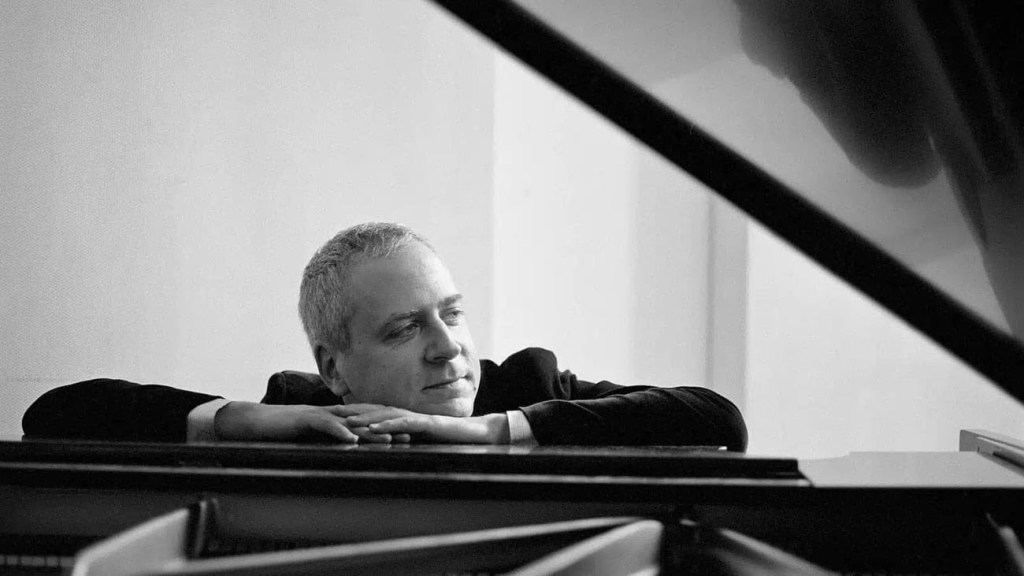
Of the offerings on the MAW calendar this week, the clear highlight comes next Wednesday (July 15 at the Lobero Theatre), when eminent — and eminently quotable — pianist Jeremy Denk brings it on in his unique way. In the past few years, faculty member and music-world elite Denk has presented fascinating, focused programs to town on the themes of Charles Ives’s Concord Sonata and Beethoven sonatas, with his witty and incisive program notes included.
Wednesday’s program is a more eclectic bag, with respected contemporary composer Unsuk Chin and Beethoven’s awesome “Hammerklavier” sonata framing a piece by one of Denk’s relatively unsung interests, the French composer-pianist Hélène de Montgeroult (1764-1836), dubbed “the missing link between Mozart and Chopin.”
On that Wednesday afternoon, you can also catch another “composer chat” with Kevin Puts, whose Elizabeth Cree is this summer’s full-on opera production (July 24 and 26, at the Lobero).
The State of Jazz on State
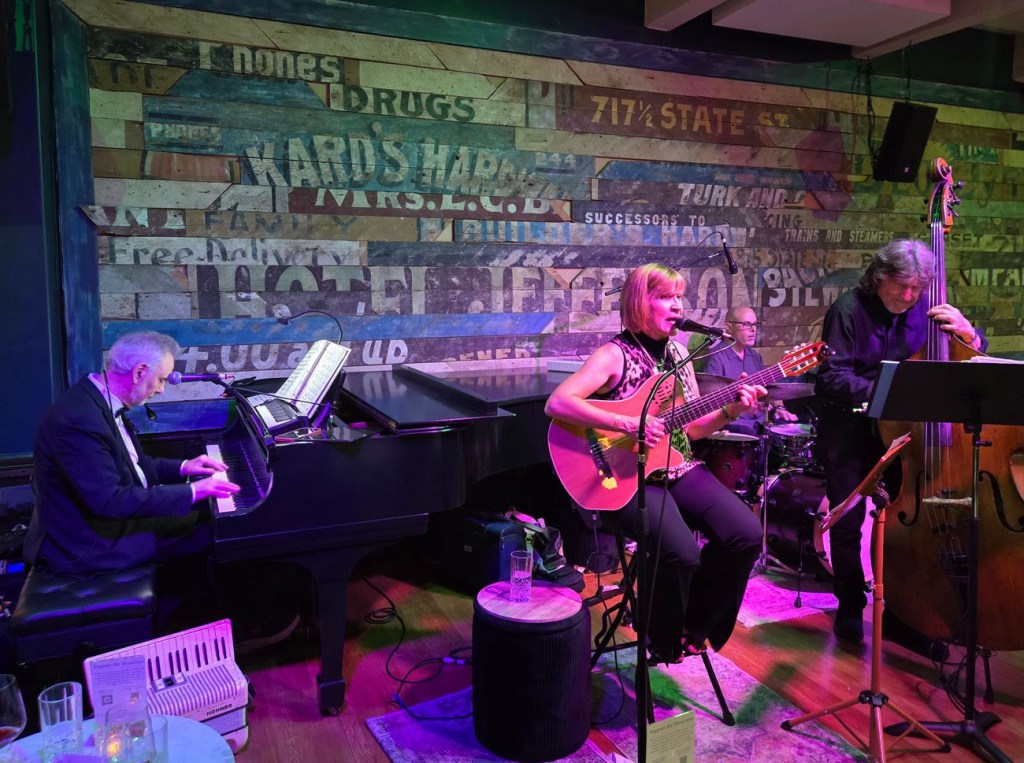
The locavore cultural adventure that is the new The Grand on State jazz club continues. Even for those with other downtown destinations in mind — especially the adjacent Granada Theatre — the sweet sound of jazz spilling out onto the sidewalk is a powerful lure, as it was last Friday. On that night, Téka was in the house, showcasing her always-inviting wares as a vocalist-guitarist. Brazil’s gift to Santa Barbara, Téka has often played around town and in Los Angeles and beyond, but to hear her in the intimate and elegant setting of the Grand was something special.
I was only able to pop in on intermission from the Academy Festival Orchestra concert at the Granada (with jazz content in that house, via Gershwin’s American in Paris.) In my short eat-and-run stint, Téka graced music by the great Brazilian songwriter-performer Moacir Santos and Burt Bacharach (“Look of Love,” nicely wrapped in a supple bossa), joined by the nimble team of Randy Tico and Kevin Winard, bass and drums, and the Grand’s co-owner Brian Mann, at The Grand on hand and in his capacity as an accordionist of the highest order.
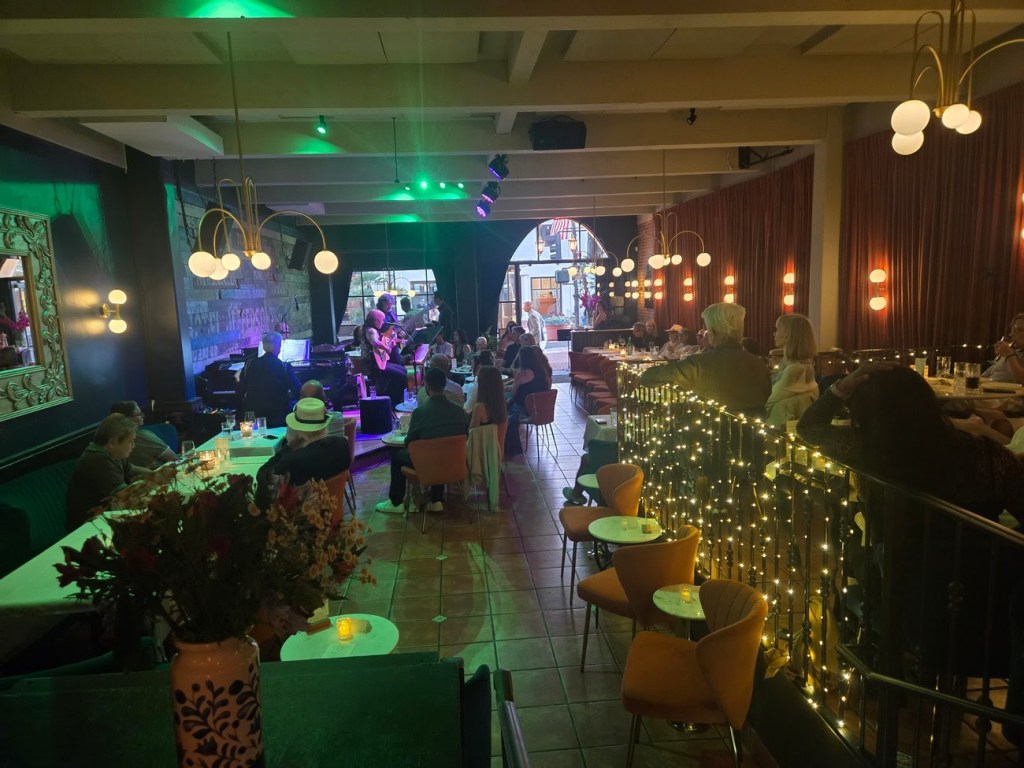
He is also the resident raconteur in the age-old jazz/comedy club emcee tradition. “A lot of people don’t know this,” the dry-witted keyboard man told the audience between songs, “but Randy Tico has only been playing for a short time. He was a professional soccer player for Paraguay but got eliminated. He found this instrument lying around, started playing it, and picked it up amazingly fast. I think he’s some kind of genius.” We half expected a rim shot from Winard.
This Grand weekend’s menu features the fine singer Leigh Vance on Friday, Brian Mann Trio on Saturday, and Colin Richardson and the “Grand Band” on Sunday. And this just in: On Wednesday, July 22, the most excellent and seasoned mainstream jazz chanteuse Roberta Gambarini is showing up with pianist Tamir Handelman. Here we have a great example of the club’s ability to host notable out-of-towners, as it did when Tom Scott and Roger Kellaway arrived a few weeks ago.

TO-DOINGS:
Downey’s celebrity son Dave Alvin and Texas’s Zen cowboy Jimmie Dale Gilmore, two rootsy American song veterans (veteran but not grizzled), are showing up at the Lobero Theatre on Sunday, July 12. It’s a potent and logical doubling up of singers who have found themselves in the embrace of the “Americana” world, but who make up their own house blends of country and folk, with traces of “alt/indie” sensibilities in the mix.
Deadheads and other living beings be alerted: The calendar at SOhO this week includes Saturday’s convergence of one of the finer Dead tribute outfits around, No Simple Highway, celebrating its 12th anniversary.


‘ The preceding article may include information circulated by third parties ’
‘ Some details of this article were extracted from the following source www.independent.com ’







![Don Toliver – Lose My Mind (feat. Doja Cat) [From F1® The Movie] [Official Audio]](https://celebrity.land/en/wp-content/uploads/2026/07/1783710470_maxresdefault-75x75.jpg)