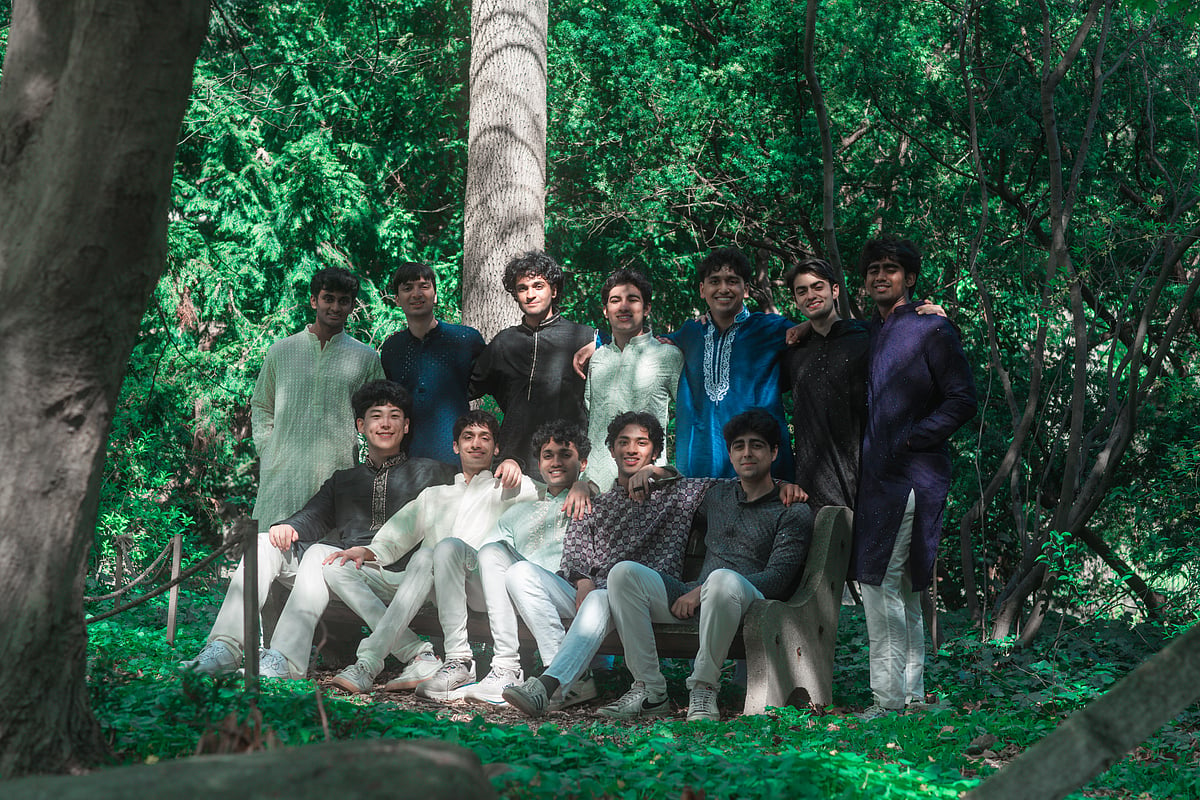
There is an immersive, almost paradoxical magic that occurs when you strip away the electronic armour of modern music production and rely entirely on the human body to fill a room. In an era dominated by synthesised beats and engineered tracks, a cappella remains one of the purest litmus tests of musical performance. Three decades in, Penn Masala, the world’s first and premier South Asian a cappella act, still sounds like the future. Born at the University of Pennsylvania, the student-led group began as an experiment in cultural translation. Their arrangements stitch together Bollywood songs with western pop hits across multiple languages, occupying a fluid space between Indian playback nostalgia and global chartbusters. Over the years, that instinct has earned them more than 200K YouTube subscribers, nearly 70K Spotify listeners and performances everywhere from the White House to the 2024 Paris Olympics. Crucially, Penn Masala is a living, evolving entity. Unlike standard bands with a permanent line-up, the group’s membership constantly changes as veteran members graduate and new members enter through a rigorous audition process. The current roster brings together Aryaman Meswani, Gaurish Gaur, Avik Agarwal, Sauman Das, Aadi Shah, Ram Pantula, Advaith Satish, Nick Chang, Aarav Doshi, Rishabh Tole, Anay Apte and Jaydon Gollapudi. Yet despite the revolving door structure, the members insist that the core philosophy has barely changed since the group’s earliest days. Marking their 30th anniversary, the group is making a return to India with a tour that stops in Bengaluru. We sit down with Penn Masala president Aadi Shah, music director Avik Agarwal and member Jaydon Gollapudi to chat about social media virality, their upcoming 13th studio album and why the group still sees itself as a work in progress.
‘ The preceding article may include information circulated by third parties ’
‘ Some details of this article were extracted from the following source www.indulgexpress.com ’