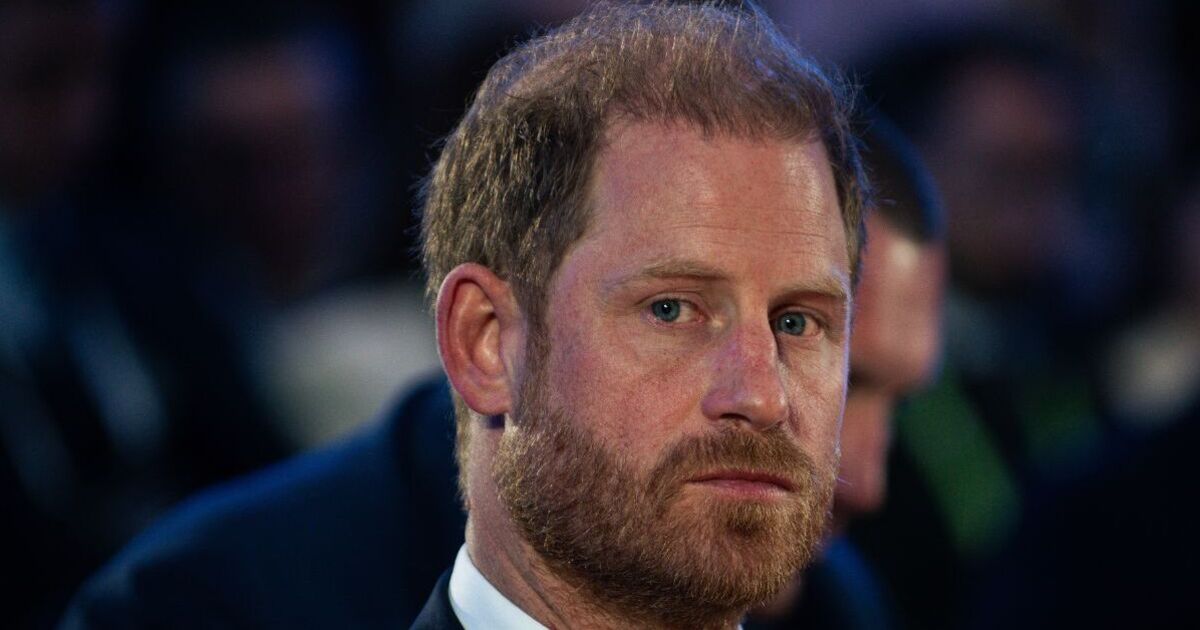
Prince Harry has been accused by a Jewish campaign group of minimising antisemitism in an essay he wrote this week. The Duke of Sussex, 41, wrote a piece in the New Statesman this week about rising antisemitism and linked Israel to inflamed community tensions.
Talking about antisemitism in his home country, Harry described it as “deeply troubling”. The Duke, who quit royal life and moved away from the UK in 2020, also wrote about how concerned he is about rising anti-Muslim sentiment.
He then said he had a desire to speak out in this essay as staying silent would allow “hatred and extremism to flourish unchecked”.
While Harry has been praised for addressing these issues in society in this new essay, a Jewish campaign group has accused Harry of “diluting” the issue by not mentioning incidents such as the October 7 Hamas attack on Israel in 2023.
The group also said that Harry talking about different types of racism in this essay is “unhelpful”.
As reported by The Times, a spokesperson for the Campaign Against Antisemitism said: “It’s nice that Prince Harry feels moved to say something about antisemitism and how it has impacted Jewish people in Britain, and how he has reflected on his own past mistakes. But the regression to tired formulas, including ‘all forms of racism’, is unhelpful.
“Antisemitism cannot be tackled if we cannot even speak about it without diluting it. Jewish people haven’t been murdered and stabbed because of all forms of racism. It’s because of one form of racism, and that is the one that should be sparking a national emergency right now.”
The spokesperson continued: “The references to Israel are also a distraction, but it’s extraordinary that, having mentioned the Jewish state, the Duke of Sussex does not mention the October 7 atrocity, which was celebrated on the streets of London and triggered the surge in antisemitism.
“Hopefully Prince Harry’s interest in this topic will shine more of a spotlight on it and elicit the national attention it needs.”
The Times reports that the timing of Harry’s essay was a coincidence.
‘ The preceding article may include information circulated by third parties ’
‘ Some details of this article were extracted from the following source www.express.co.uk ’