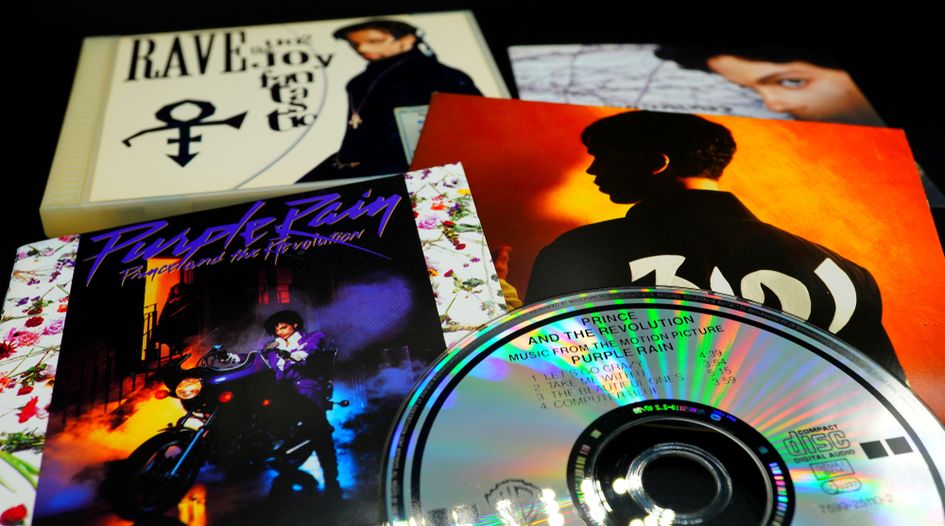
The name ‘Apollonia’ has gained recent fame as the subject of an ongoing dispute between the estate of the late musician Prince and his muse Patricia Apollonia Kotero (Kotero v Paisley Park Enter LLC, CD Cal, 25-cv-07769). On 19 August 2025, Kotero filed a complaint against Prince’s estate seeking a declaratory judgment from the US District Court for the Central District of California regarding legal ownership to the rights of the name.
Kotero co-starred with Prince as his love interest Apollonia in the 1984 film Purple Rain and co-wrote the Bangles hit ‘Manic Monday’ with him. She and Prince also sang together in his song ‘Take Me With You’ from the Purple Rain soundtrack, which spent 24 weeks atop the Billboard 200 and sold more than 25 million copies worldwide. Kotero also regularly played a character named Apollonia on the television series Falcon Crest in 1985. Riding on these achievements, Kotero released her first self-titled album Apollonia with Warner Brothers in 1988, performed her music under the same name, has a podcast entitled ‘Apollonia Studio 6’, sells Apollonia-themed merchandise online and registered several related trademarks with the USPTO.
Prince’s estate also filed US trademark applications for two marks containing the word ‘Apollonia’, which were rejected by the USPTO over Kotero’s earlier-filed registrations. In response, Prince’s estate filed cancellation proceedings against her marks. His estate claimed that Kotero’s initial contract for her performance in Purple Rain waived all rights to the name, and that his estate has always been the rightful owner.
While not admitting that a valid contract existed, Kotero’s complaint stated that, if a contract did exist, the four-year statute of limitations for any alleged breach expired long ago, and “neither Prince nor anyone on his behalf ever requested [her to] cease using her name…on a personal or professional level”. Her complaint asserted that through its inaction, Prince’s estate relinquished its rights to the name, if any, and that Prince consented to her use of the name before his death. She also claimed that the laches principle applies due to the estate’s delay in enforcing its alleged rights and permitting such belated enforcement would cause her serious harm. For these reasons, Kotero contended that her:
…use and registration of APOLLONIA in connection with entertainment services and/or related goods and services does not infringe any valid, enforceable trademark rights of [Prince’s estate], and she is the rightful owner of the APOLLONIA Marks.
In addition to the ownership question, Kotero also sought relief from the court to cancel the estate’s applications and prevent it from challenging her trademarks.
This case highlights the complex interplay between trademark rights, contractual obligations and the passage of time in the entertainment industry. Kotero’s complaint raises critical questions about implied consent, the laches principle and the enforceability of agreements that are decades old. With both parties asserting ownership over the mark – one through longstanding public use and registration, the other through legacy claims tied to a seminal film – the case will likely hinge on whether the estate’s delay in enforcement constitutes a forfeiture of rights. This will be a crucial case to watch for guidance on how courts balance fame, identity and intellectual property in legacy artist disputes.
‘ The preceding article may include information circulated by third parties ’
‘ Some details of this article were extracted from the following source www.iam-media.com ’