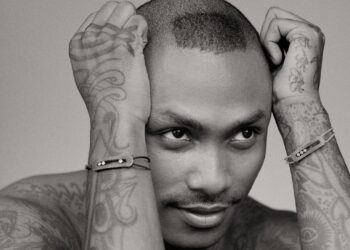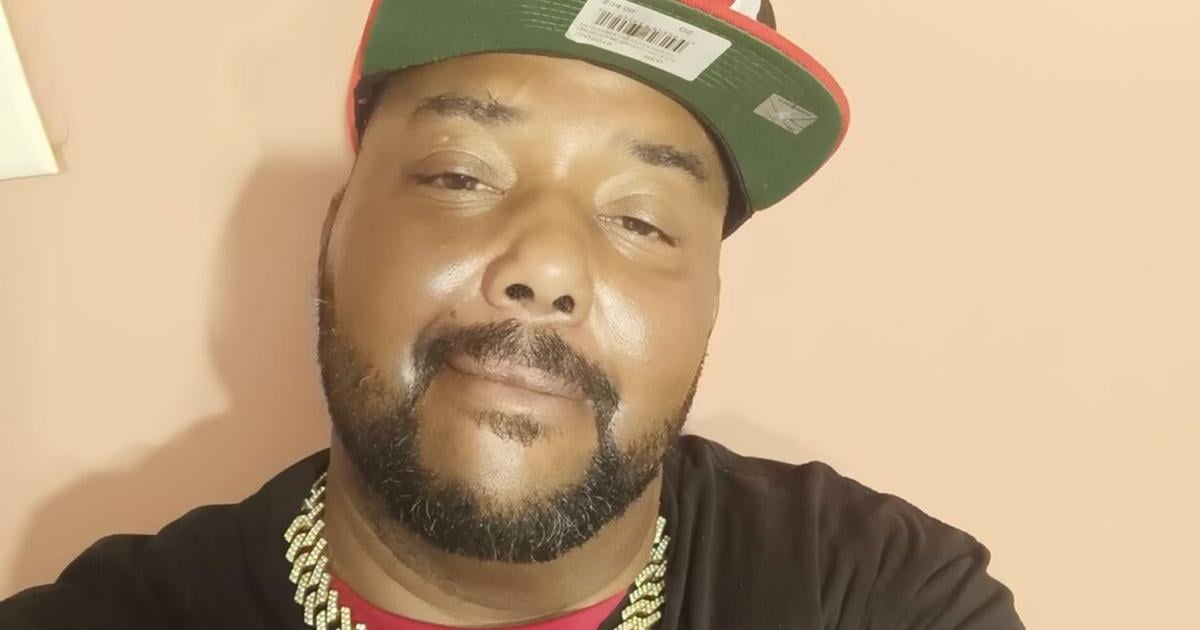
Darryl ‘Big Man’ Howard
Today, cannabis and hip-hop are intimately intertwined. Countless hits have been made about the joy of smoking and misadventures of getting high, and a number of rappers, from Snoop Dogg to Wiz Khalifa, have crossed over to starting their own brands. New Orleans itself doesn’t have to look very far: Curren$y has a catalog full of weed-related songs, started Andretti Cannabis, and his brand, Jet Life, has a THC soda and gummy collaboration with Crescent Canna.
But weed and hip-hop haven’t always gone hand-in-hand. References to bud were rare until the mid-’80s, and even then, it was through subtle lines and innuendo. But a shift began to happen in the early-’90s, and Dr. Dre’s “The Chronic” made an explicit connection.
Meanwhile, hip-hop made by New Orleans artists had been picking up steam in the late-’80s, and in the early years of the ’90s, bounce emerged. Cannabis and music, especially jazz, already had a long history in the city, and people here were smoking weed, but there hadn’t yet been many songs overtly made about pot — until PxMxWx released their debut tape “Home Grown” in 1992.
Darryl “Big Man” Howard and Eric Timmons, who at the time went by DJ Razor Cut, formed the New Orleans hip-hop group PxMxWx — or Projects’ Most Wanted — in the early ’90s and quickly released the cannabis-focused bounce track “Splift Out.” The song was a New Orleans hit and led the group to sign a deal as one of the first artists with Cash Money Records. Rappers Big Heavy and Black Jack also performed with PxMxWx during the group’s time with Cash Money.
PxMxWx followed up their tape with the Mannie Fresh-produced full-lengths “Legalize ‘Pass Tha Weed’” in 1993 and “High Life” the following year. And soon, other artists began making hip-hop more overtly focused on weed, like Lady Red’s “Smokin’ Dat Weed.”
PxMxWx split from Cash Money following “High Life,” and Howard went on to record a third album, “A New Beginning” as PxMxWx. Over the years, he has continued to record and perform as Big Man.
Gambit spoke with Howard about forming PxMxWx and recording songs about weed. An edited transcript of the conversation follows.
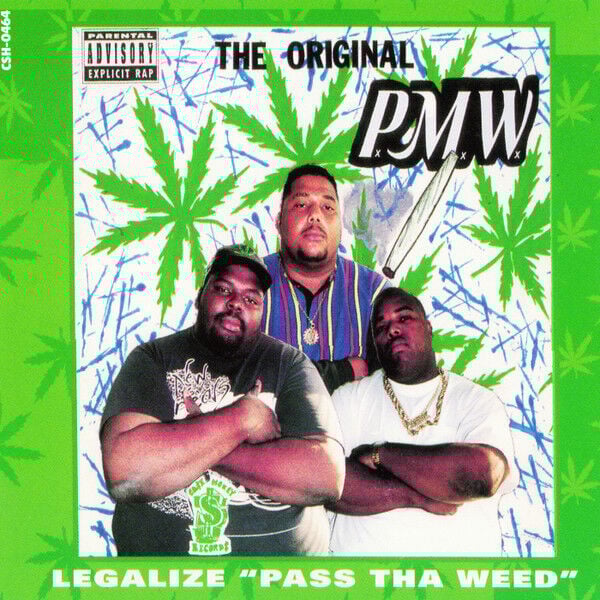
the cover for PxMxWx’s album “Legalize ‘Pass Tha Weed'”
Gambit: Could you tell me about how PxMxWx started? Y’all came up in the Iberville Projects, right?
Darryl “Big Man” Howard: Yeah. Actually, I came up in Iberville. The guy I was doing music with, DJ Razor Cut, he came up in the 9th Ward. He was known as DJ Razor Cut back when PxMxWx was together, me and him. He’s now known as Freak Nasty, and he made a song called “Da’ Dip” — “I put my hand on your hip / When I dip, you dip, we dip.” That’s my buddy.
Gambit: How did y’all know each other?
Howard: When we were in high school, we were DJs, and we came up together doing all kind of DJ stuff, doing parties and stuff like that — school dances, talent shows, all that.
He left to go to California, and when he came back, T. Tucker and DJ Irv were out with “Where Dey At.” We were listening and he said “Man, we could do something better than that.” At the time, Dr. Dre came out with “The Chronic,” so I said, “Let’s do a weed song.”
I was in my apartment in the Iberville Projects, and [Razor Cut] had his drum machine and his recorder and everything, so he started laying the beat down with the “Trigger Man” beat (The Showboys’ “Drag Rap”) everybody used back in the day for bounce. He recorded that, and I started down in the lyrics early in the morning — that’s what gave me a raspy sound, being early in the morning. People think I was smoking.
That song became “Splift Out.” And on the backside, we did “Boot Up N****” and “Alphabet Bitches.”
Gambit: How did y’all get hooked up with Cash Money?
Howard: We had [“Splift Out”], we put it out in the streets. We popped the trunk with cassette tapes, and the tapers were going so fast and so hot. It got to the radio station Q93, that’s when DJ Davey D and Wild Wayne were together back in the ‘90s.
Cash Money was just starting up, and we met Bryan (“Baby”) and Ronald (“Slim”) in Bobby Marchan’s office. Bobby Marchan was a concert promoter back then and told them “Man, this is a hot song. These guys, PMW, got a hot song.”
We didn’t have enough money to keep the distribution going, because the price was too high to order more cassette tapes. So Bryan wanted to take over the project and buy the cassette tapes and stuff like that to get it back out there. That’s how we signed with Cash Money.
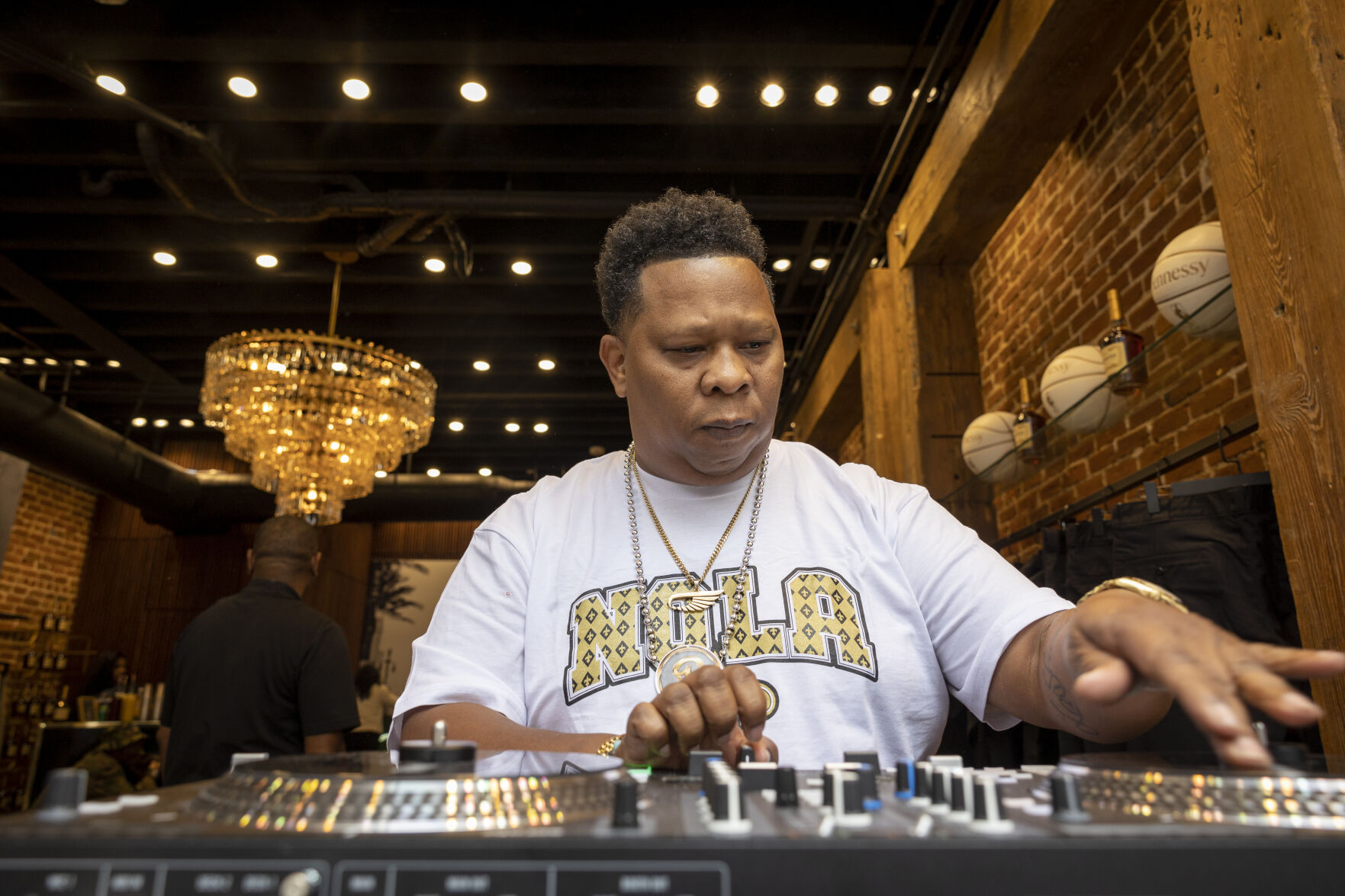
[Razor Cut] left for Atlanta, and Mannie Fresh was producing for Cash Money, so he started producing my music. I did two more albums with Cash Money, “Legalize ‘Pass Tha Weed’” and “High Life.” And “High Life” featured major artists like Bun B from UGK. He was featured on a song called “Bag of Indo.” And the music Mannie had done with that was like the G-Funk kind of style that Snoop Dogg and Warren G. had been doing. Mannie had the organ, pianos and everything, kind of like what Dr. Dre was doing, so “High Life” was the first bounce album that had that kind of stuff on it.
Gambit: Were y’all performing live a lot during that time?
Howard: Yeah. We were performing on weekends, out of town in Baton Rouge and Lafayette, throughout the South region pretty much. We had a show out in Texas with Scarface. My biggest performance I did was in Lafayette, at a club called Club Strawberries, and that year was when Tupac (and his group Thug Life) came out with the “Thug Life” album. He performed before we went up, and he actually got into a fight because one of the guys threw a bottle up on stage at him.
I’m like, “Man, I gotta go on stage after Tupac just beat up someone?” But my gimmick was I had some girls with me who were my dancers, so when they saw the girls coming on stage, it was all cool. The show went great.
There was another night when Bone Thugs-N-Harmony came down to New Orleans to perform and we got in the van with them. When I tell you they had a trash bag full of weed — man, they had a trash bag full of weed. I was like “Man, y’all smoking all this weed?” And they were like, “Man, don’t you smoke?” And I said, “Yeah, but I don’t smoke that much!”
Gambit: Do you remember what was in that garbage bag?
Howard: Colombian gold. They had the best, man. It was wild!
Gambit: You said you and Razor Cut met while DJing. Could you take me back to the beginning and tell me about how you started DJing?
Howard: We were just into the hip-hop music back in the ’80s and everything like that: The Fat Boys, Run-DMC and everything. That’s when the base of rap really started getting big.
Our inspiration was Jam Master Jay from Run-DMC because he was kind of funky on the turntable. Then it got off into DJ Hitman Howie Tee and all that kind of stuff with Scratch Master. We liked the style of scratching they were doing, so we started learning and practicing their style.
That’s what started us getting into the basics. Then when T. Tucker and DJ Irv came out, we said, man we could do that.
Wayne Benjamin Jr. just needed a job.
Gambit: When did things end with Cash Money?
Howard: Eric (Razor Cut) moved to Atlanta, and I was still there for a minute. And Eric told Cash Money, “Man, y’all just treat Darryl right. Do right by him,” which they didn’t, but that’s another story. I left Cash Money in 1996 after “High Life.”
I had a contact from California, a friend of mine, and we did another album called “A New Beginning” on Hard Hittin’ Records. My music was still hot. People still knew PxMxWx. “A New Beginning” was kind of a new basis for me because it was a different style. It wasn’t just bounce, but more of my lyrical expressions.
Gambit: Weed played a major part in your music as PxMxWx. Was there a reason y’all wanted to make music about weed, smoking and dealing?
Howard: When Dr. Dre came out with “The Chronic,” that was a great album, and people were smoking weed in New Orleans. I remember smoking in high school — weed was always a popular recreation. So we were like, “Let’s do a weed song in our style, our New Orleans style.” Basically, the idea came from making something for people who like to smoke weed.
Gambit: Were you a regular smoker?
Howard: No, I smoked weed a little bit, but when I made [“Splift Out”] everyone thought I was real weedhead. I wasn’t, but I would smoke when people had weed and would pass it around. I’d take a few hits, but that was about it.
Gambit: In the early-’90s, what was the reaction like to a weed song?
Howard: It was the hottest thing on the street when it came out. You’d hear it in every car that passed, every time I walk down the street, see people singing part of the song or someone call out PxMxWx, “What’s up, Big Man.” People still do it today. For a while they called it “The Dope Man’s Anthem.”
Gambit: Did y’all get any pushback? Anyone upset y’all were rapping about weed?
Howard: We did a little bit, especially when it hit the radio. We only got flack when it got on the radio, so we had to go in and give the station a clean cut of it because [people] didn’t want to hear about weed on the radio.
Gambit: Do you feel like weed impacted your music in any way or helped with creativity?
Howard: I would say no. My creativity was already there, so it didn’t influence me in that way — but I know it influenced a lot of other people to smoke. [Laughs]
Gambit: Do you still smoke occasionally today?
Howard: Nah, I’d rather drink a Budweiser. But everybody in the whole world is smoking weed.
Gambit: Yeah, and you can get different kinds of edibles and seltzers now.
Howard: We didn’t have that. The song tells you what I’d have. Skunk weed was the most popular back then. It was the loudest smelling weed. Colombian buzz. Colombian gold. Weed with great red hairs in it. I was introduced to all kind of stuff.
Gambit: Does it surprise you to see a day when you can more easily get weed?
Howard: Oh, it’s way easier now. Back in the day, when we had a drought, nobody had anything on the block, and you had to go to the next neighborhood. Now you can walk down the street and you can get weed from old folks nowadays.
But it doesn’t surprise me, because weed kept growing to be a recreational thing. Back in the days, there were those Cheech and Chong movies. It’s not surprising it kept growing.
The New Orleans icon on 40 years of DJing, producing and making it fun.
‘ The preceding article may include information circulated by third parties ’
‘ Some details of this article were extracted from the following source bestofneworleans.com ’