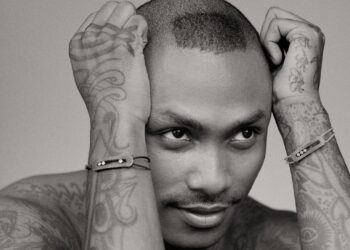
When he is not touring or in the studio, Soulja can be found involved in what is akin to field research. Presently in Nairobi, the Sudanese rapper – real name Usama Ashraf – spends his evenings in clubs and music lounges in whichever city he is in, gauging what moves the dance floor.
If a particular song or deft mix from an artist or the DJ gets the room going, Soulja takes out his phone, where an app measures the tempo change. The readings are then filed into a growing archive that already includes Cairo and Dubai.
“It is a different way of doing things,” he admits with a chuckle. “But it is fascinating what people are drawn to, and in many ways, it is not what you think. The studio, with all its technology and great audio quality, can at times trick you into believing you have the right sound. But it is only when you are in the clubs that you get the truth immediately in real movement, and you know if a beat really works.”
As for the information gleaned from those nocturnal sojourns, Soulja predicts the Sudanese rhythm zanig could have the same effect as South Africa’s amapiano – a sultry mix of house, electronic beats and gospel keyboard chords – in becoming the next hot sound to be heard in Ibiza.
He describes the genre – rooted in eastern Sudan and built on fast percussion, looping drum lines and close, call-and-response vocals – as capable of drawing the same reaction on international dance floors as in the wedding halls of Port Sudan and Kassala.
“Sudanese music, especially zanig, already has the elements a great sound needs – the drums are fast and the melodies are euphoric. It is not too complicated; when you hear it, you know exactly how your body should move. Amapiano spread because it came as a complete package: a type of music, a dance and an aesthetic. I see all those elements in zenji. I just need to find a way to bring it together as a full package.”
Until he lands on the formula, Soulja has already helped pushed Sudan’s musical identity forward. His catalogue of hip-hop delivered in Sudanese vernacular carries a directness that has raised awareness of the country’s sounds while portraying a proud nation in turmoil.
His latest single, the exuberant Location, rides on sprightly keyboard lines shaped by Sudanese folk melodies. Soulja uses football as a metaphor for resilience, turning it into a universal message while keeping the lyrics grounded in the instability created by Sudan’s civil war, with repeated lyrical nods to displacement.
It bookends a strong year of releases that began with February’s Argeen, named after the Sudanese–Egyptian border crossing, where he blends North African rhythms with vocals inspired by Egyptian and Sudanese folk traditions. The track reflects on the pain of displacement and how a sense of stability can be found with family and community.
The work joins other singles spanning five years and amassing nearly 60 million views on YouTube. Bringi (2022), built on zar rhythms – a trance-based spiritual tradition found in Sudan and parts of Egypt – enjoyed a viral spark soon after release, while Charleston, with its bright saxophone touches, drew from Sudan’s 1970s golden era of music.
If these sounds feel as fresh as they do familiar, Soulja says it comes from Sudan’s history and its wide geography.
“Sudanese music as we know it started in the 1940s, a period after the Second World War when British soldiers came with jazz and blues and Sudanese musicians mixed those with our folk sounds,” he says. “Every region has its own sound. In the west, people used to tie cans to their legs when they danced so the movement made a shaker sound. Everywhere you go, you hear a different colour. Many of those colours disappeared because of the lack of media broadcasting the music. So, I feel like the next phase of my journey is to shine a light on that.”
Indeed, Soulja’s songs, paired with his stage presence – part authoritative, part measured cool – have created a buzz that hints at where a new Sudanese sound could go, and how its culture can be carried to a world watching the devastation at home.
He says the ongoing civil war along with his wish to push Sudanese and wider Arabic hip-hop beyond its American influences, only intensified his drive to bring the sounds of home to the forefront of his music.
“I was in Sudan when the war started,” he says. “We are a big family and I am the eldest, so I was trying to get everyone out, and I feel I carry the same burden every Sudanese youth carried. I lived that struggle completely. That is why the war is still the main thing in my music. I lived the details.”
And that comes through in the central theme of movement, both in sound and in lyrics, including the title of his early EP Al Rahal (2019), meaning “the traveller,” drawn directly from his own life on the road.
Born in Jeddah in Saudi Arabia, Soulja undertook his university studies in the Malaysian capital Kuala Lumpur, as well as living in Cairo and Khartoum.
“Movement has been forced on me since childhood because of my father’s job; every time he changed offices, we moved with him,” he recalls. “As I have grown older, I feel I have become more nomadic. I move a lot, sometimes because of circumstances, sometimes because I just cannot stay in one place. After three months in a country, when people feel settled, I feel like I have to leave.”
He describes the rare constant in his life as the music studio. “It feels like the only place I can express myself,” he says. “When I am there, it feels like the world is locked outside. It can burn, flip or explode, but I am not thinking about it. I am inside the kicks, the snares, the melodies. That is how I escape the world and it feels like the only way I know how to speak and how to enjoy myself.”
Further grounding is provided by his mother’s advice offered in childhood. “She would tell me do not be afraid of being afraid. I have learnt that you should not be scared of your feelings, whatever they are,” Soulja says. “I apply that to my music, in that I am not scared to try new things while representing my culture. I am trying my best to reach a sound that feels vital and fresh, one we want to send out to the world.”
UAE currency: the story behind the money in your pockets
Formula Middle East Calendar (Formula Regional and Formula 4)
Round 1: January 17-19, Yas Marina Circuit – Abu Dhabi
Round 2: January 22-23, Yas Marina Circuit – Abu Dhabi
Round 3: February 7-9, Dubai Autodrome – Dubai
Round 4: February 14-16, Yas Marina Circuit – Abu Dhabi
Round 5: February 25-27, Jeddah Corniche Circuit – Saudi Arabia
Tips to keep your car cool
- Place a sun reflector in your windshield when not driving
- Park in shaded or covered areas
- Add tint to windows
- Wrap your car to change the exterior colour
- Pick light interiors – choose colours such as beige and cream for seats and dashboard furniture
- Avoid leather interiors as these absorb more heat
Sri Lanka’s T20I squad
Thisara Perera (captain), Dilshan Munaweera, Danushka Gunathilaka, Sadeera Samarawickrama, Ashan Priyanjan, Mahela Udawatte, Dasun Shanaka, Sachith Pathirana, Vikum Sanjaya, Lahiru Gamage, Seekkuge Prasanna, Vishwa Fernando, Isuru Udana, Jeffrey Vandersay and Chathuranga de Silva.
Batti Gul Meter Chalu
Producers: KRTI Productions, T-Series
Director: Sree Narayan Singh
Cast: Shahid Kapoor, Shraddha Kapoor, Divyenndu Sharma, Yami Gautam
Rating: 2/5
BLACKBERRY
%3Cp%3EDirector%3A%20Matt%20Johnson%3C%2Fp%3E%0A%3Cp%3EStars%3A%20Jay%20Baruchel%2C%20Glenn%20Howerton%2C%20Matt%20Johnson%3C%2Fp%3E%0A%3Cp%3ERating%3A%204%2F5%3C%2Fp%3E%0A
RESULTS
5pm: Maiden (PA) Dh80,000 1,600m
Winner: Raghida, Szczepan Mazur (jockey), Ibrahim Al Hadhrami (trainer)
5.30pm: Maiden (PA) Dh80,000 1,600m
Winner: AF Alareeq, Connor Beasley, Ahmed Al Mehairbi
6pm: Arabian Triple Crown Round-2 Group 3 (PA) Dh300,000 2,200m
Winner: Basmah, Fabrice Veron, Eric Lemartinel
6.30pm: Liwa Oasis Group 2 (PA) Dh300,000 1,400m
Winner: AF Alwajel, Tadhg O’Shea, Ernst Oertel
7pm: Wathba Stallions Cup Handicap (PA) Dh70,000 1,600m
Winner: SS Jalmod, Richard Mullen, Satish Seemar
7.30pm: Handicap (TB) Dh100,000 1,600m
Winner: Trolius, Ryan Powell, Simon Crisford
2020 Oscars winners: in numbers
- Parasite – 4
- 1917– 3
- Ford v Ferrari – 2
- Joker – 2
- Once Upon a Time … in Hollywood – 2
- American Factory – 1
- Bombshell – 1
- Hair Love – 1
- Jojo Rabbit – 1
- Judy – 1
- Little Women – 1
- Learning to Skateboard in a Warzone (If You’re a Girl) – 1
- Marriage Story – 1
- Rocketman – 1
- The Neighbors’ Window – 1
- Toy Story 4 – 1
WOMAN AND CHILD
Director: Saeed Roustaee
Starring: Parinaz Izadyar, Payman Maadi
Rating: 4/5
RESULTS
6.30pm: Handicap (TB) $68,000 (Dirt) 1,600m
Winner: Hypothetical, Mickael Barzalona (jockey), Salem bin Ghadayer (trainer)
7.05pm: Meydan Sprint – Group 2 (TB) $163,000 (Turf) 1,000m
Winner: Equilateral, Andrea Atzeni, Charles Hills
7.40pm: Curlin Stakes – Listed Handicap (TB) $88,000 (D) 2,200m
Winner: New Trails, Fernando Jara, Ahmad bin Harmash
8.15pm: UAE Oaks – Group 3 (TB) $125,000 (D) 1,900m
Winner: Mnasek, Pat Dobbs, Doug Watson
8.50pm: Zabeel Mile – Group 2 (TB) $163,000 (T) 1,600m
Winner: D’bai, William Buick, Charlie Appleby
9.25pm: Balanchine – Group 2 (TB) $163,000 (T) 1,800m
Winner: Summer Romance, James Doyle, Charlie Appleby
10pm: Al Shindagha Sprint – Group 3 (TB) $130,000 (D) 1,200m
Winner: Al Tariq, Pat Dobbs, Doug Watson
Mercer, the investment consulting arm of US services company Marsh & McLennan, expects its wealth division to at least double its assets under management (AUM) in the Middle East as wealth in the region continues to grow despite economic headwinds, a company official said.
Mercer Wealth, which globally has $160 billion in AUM, plans to boost its AUM in the region to $2-$3bn in the next 2-3 years from the present $1bn, said Yasir AbuShaban, a Dubai-based principal with Mercer Wealth.
“Within the next two to three years, we are looking at reaching $2 to $3 billion as a conservative estimate and we do see an opportunity to do so,” said Mr AbuShaban.
Mercer does not directly make investments, but allocates clients’ money they have discretion to, to professional asset managers. They also provide advice to clients.
“We have buying power. We can negotiate on their (client’s) behalf with asset managers to provide them lower fees than they otherwise would have to get on their own,” he added.
Mercer Wealth’s clients include sovereign wealth funds, family offices, and insurance companies among others.
From its office in Dubai, Mercer also looks after Africa, India and Turkey, where they also see opportunity for growth.
Wealth creation in Middle East and Africa (MEA) grew 8.5 per cent to $8.1 trillion last year from $7.5tn in 2015, higher than last year’s global average of 6 per cent and the second-highest growth in a region after Asia-Pacific which grew 9.9 per cent, according to consultancy Boston Consulting Group (BCG). In the region, where wealth grew just 1.9 per cent in 2015 compared with 2014, a pickup in oil prices has helped in wealth generation.
BCG is forecasting MEA wealth will rise to $12tn by 2021, growing at an annual average of 8 per cent.
Drivers of wealth generation in the region will be split evenly between new wealth creation and growth of performance of existing assets, according to BCG.
Another general trend in the region is clients’ looking for a comprehensive approach to investing, according to Mr AbuShaban.
“Institutional investors or some of the families are seeing a slowdown in the available capital they have to invest and in that sense they are looking at optimizing the way they manage their portfolios and making sure they are not investing haphazardly and different parts of their investment are working together,” said Mr AbuShaban.
Some clients also have a higher appetite for risk, given the low interest-rate environment that does not provide enough yield for some institutional investors. These clients are keen to invest in illiquid assets, such as private equity and infrastructure.
“What we have seen is a desire for higher returns in what has been a low-return environment specifically in various fixed income or bonds,” he said.
“In this environment, we have seen a de facto increase in the risk that clients are taking in things like illiquid investments, private equity investments, infrastructure and private debt, those kind of investments were higher illiquidity results in incrementally higher returns.”
The Abu Dhabi Investment Authority, one of the largest sovereign wealth funds, said in its 2016 report that has gradually increased its exposure in direct private equity and private credit transactions, mainly in Asian markets and especially in China and India. The authority’s private equity department focused on structured equities owing to “their defensive characteristics.”
Key facilities
- Olympic-size swimming pool with a split bulkhead for multi-use configurations, including water polo and 50m/25m training lanes
- Premier League-standard football pitch
- 400m Olympic running track
- NBA-spec basketball court with auditorium
- 600-seat auditorium
- Spaces for historical and cultural exploration
- An elevated football field that doubles as a helipad
- Specialist robotics and science laboratories
- AR and VR-enabled learning centres
- Disruption Lab and Research Centre for developing entrepreneurial skills
The specs: Fenyr SuperSport
Price, base: Dh5.1 million
Engine: 3.8-litre twin-turbo flat-six
Transmission: Seven-speed automatic
Power: 800hp @ 7,100pm
Torque: 980Nm @ 4,000rpm
Fuel economy, combined: 13.5L / 100km
The Perfect Couple
Starring: Nicole Kidman, Liev Schreiber, Jack Reynor
Creator: Jenna Lamia
Rating: 3/5
GAC GS8 Specs
Engine: 2.0-litre 4cyl turbo
Power: 248hp at 5,200rpm
Torque: 400Nm at 1,750-4,000rpm
Transmission: 8-speed auto
Fuel consumption: 9.1L/100km
On sale: Now
Price: From Dh149,900
Guide to intelligent investing
Investing success often hinges on discipline and perspective. As markets fluctuate, remember these guiding principles:
- Stay invested: Time in the market, not timing the market, is critical to long-term gains.
- Rational thinking: Breathe and avoid emotional decision-making; let logic and planning guide your actions.
- Strategic patience: Understand why you’re investing and allow time for your strategies to unfold.
UAE currency: the story behind the money in your pockets
The%20Little%20Mermaid%20
%3Cp%3E%3Cstrong%3EDirector%3A%3C%2Fstrong%3E%20Rob%20Marshall%3Cbr%3E%3Cstrong%3EStars%3A%20%3C%2Fstrong%3EHalle%20Bailey%2C%20Jonah%20Hauer-King%2C%20Melissa%20McCarthy%2C%20Javier%20Bardem%3Cbr%3E%3Cstrong%3ERating%3A%20%3C%2Fstrong%3E2%2F5%3Cbr%3E%3Cbr%3E%3C%2Fp%3E%0A
World%20Food%20Day%20
%3Cp%3ECelebrated%20on%20October%2016%2C%20to%20coincide%20with%20the%20founding%20date%20of%20the%20United%20Nations%20Food%20and%20Agriculture%20Organisation%2C%20World%20Food%20Day%20aims%20to%20tackle%20issues%20such%20as%20hunger%2C%20food%20security%2C%20food%20waste%20and%20the%20environmental%20impact%20of%20food%20production.%20%0D%3C%2Fp%3E%0A
UAE%20medallists%20at%20Asian%20Games%202023
%3Cp%3E%3Cstrong%3EGold%3C%2Fstrong%3E%0D%3Cbr%3EMagomedomar%20Magomedomarov%20%E2%80%93%20Judo%20%E2%80%93%20Men%E2%80%99s%20%2B100kg%0D%3Cbr%3EKhaled%20Al%20Shehi%20%E2%80%93%20Jiu-jitsu%20%E2%80%93%20Men%E2%80%99s%20-62kg%0D%3Cbr%3EFaisal%20Al%20Ketbi%20%E2%80%93%20Jiu-jitsu%20%E2%80%93%20Men%E2%80%99s%20-85kg%0D%3Cbr%3EAsma%20Al%20Hosani%20%E2%80%93%20Jiu-jitsu%20%E2%80%93%20Women%E2%80%99s%20-52kg%0D%3Cbr%3EShamma%20Al%20Kalbani%20%E2%80%93%20Jiu-jitsu%20%E2%80%93%20Women%E2%80%99s%20-63kg%0D%3Cbr%3E%3Cstrong%3ESilver%3C%2Fstrong%3E%0D%3Cbr%3EOmar%20Al%20Marzooqi%20%E2%80%93%20Equestrian%20%E2%80%93%20Individual%20showjumping%0D%3Cbr%3EBishrelt%20Khorloodoi%20%E2%80%93%20Judo%20%E2%80%93%20Women%E2%80%99s%20-52kg%0D%3Cbr%3EKhalid%20Al%20Blooshi%20%E2%80%93%20Jiu-jitsu%20%E2%80%93%20Men%E2%80%99s%20-62kg%0D%3Cbr%3EMohamed%20Al%20Suwaidi%20%E2%80%93%20Jiu-jitsu%20%E2%80%93%20Men%E2%80%99s%20-69kg%0D%3Cbr%3EBalqees%20Abdulla%20%E2%80%93%20Jiu-jitsu%20%E2%80%93%20Women%E2%80%99s%20-48kg%0D%3Cbr%3E%3Cstrong%3EBronze%3C%2Fstrong%3E%0D%3Cbr%3EHawraa%20Alajmi%20%E2%80%93%20Karate%20%E2%80%93%20Women%E2%80%99s%20kumite%20-50kg%0D%3Cbr%3EAhmed%20Al%20Mansoori%20%E2%80%93%20Cycling%20%E2%80%93%20Men%E2%80%99s%20omnium%0D%3Cbr%3EAbdullah%20Al%20Marri%20%E2%80%93%20Equestrian%20%E2%80%93%20Individual%20showjumping%0D%3Cbr%3ETeam%20UAE%20%E2%80%93%20Equestrian%20%E2%80%93%20Team%20showjumping%0D%3Cbr%3EDzhafar%20Kostoev%20%E2%80%93%20Judo%20%E2%80%93%20Men%E2%80%99s%20-100kg%0D%3Cbr%3ENarmandakh%20Bayanmunkh%20%E2%80%93%20Judo%20%E2%80%93%20Men%E2%80%99s%20-66kg%0D%3Cbr%3EGrigorian%20Aram%20%E2%80%93%20Judo%20%E2%80%93%20Men%E2%80%99s%20-90kg%0D%3Cbr%3EMahdi%20Al%20Awlaqi%20%E2%80%93%20Jiu-jitsu%20%E2%80%93%20Men%E2%80%99s%20-77kg%0D%3Cbr%3ESaeed%20Al%20Kubaisi%20%E2%80%93%20Jiu-jitsu%20%E2%80%93%20Men%E2%80%99s%20-85kg%0D%3Cbr%3EShamsa%20Al%20Ameri%20%E2%80%93%20Jiu-jitsu%20%E2%80%93%20Women%E2%80%99s%20-57kg%0D%3C%2Fp%3E%0A
‘The Coddling of the American Mind: How Good Intentions and Bad Ideas are Setting up a Generation for Failure’
Greg Lukianoff and Jonathan Haidt, Penguin Randomhouse
How to watch Ireland v Pakistan in UAE
When: The one-off Test starts on Friday, May 11
What time: Each day’s play is scheduled to start at 2pm UAE time.
TV: The match will be broadcast on OSN Sports Cricket HD. Subscribers to the channel can also stream the action live on OSN Play.
THE BIO: Martin Van Almsick
Hometown: Cologne, Germany
Family: Wife Hanan Ahmed and their three children, Marrah (23), Tibijan (19), Amon (13)
Favourite dessert: Umm Ali with dark camel milk chocolate flakes
Favourite hobby: Football
Breakfast routine: a tall glass of camel milk
Results
Final: Iran beat Spain 6-3.
Play-off 3rd: UAE beat Russia 2-1 (in extra time).
Play-off 5th: Japan beat Egypt 7-2.
Play-off 7th: Italy beat Mexico 3-2.
Iraq negotiating over Iran sanctions impact
- US sanctions on Iran’s energy industry and exports took effect on Monday, November 5.
- Washington issued formal waivers to eight buyers of Iranian oil, allowing them to continue limited imports. Iraq did not receive a waiver.
- Iraq’s government is cooperating with the US to contain Iranian influence in the country, and increased Iraqi oil production is helping to make up for Iranian crude that sanctions are blocking from markets, US officials say.
- Iraq, the second-biggest producer in the Organization of Petroleum Exporting Countries, pumped last month at a record 4.78 million barrels a day, former Oil Minister Jabbar Al-Luaibi said on Oct. 20. Iraq exported 3.83 million barrels a day last month, according to tanker tracking and data from port agents.
- Iraq has been working to restore production at its northern Kirkuk oil field. Kirkuk could add 200,000 barrels a day of oil to Iraq’s total output, Hook said.
- The country stopped trucking Kirkuk oil to Iran about three weeks ago, in line with U.S. sanctions, according to four people with knowledge of the matter who asked not to be identified because they aren’t allowed to speak to media.
- Oil exports from Iran, OPEC’s third-largest supplier, have slumped since President Donald Trump announced in May that he’d reimpose sanctions. Iran shipped about 1.76 million barrels a day in October out of 3.42 million in total production, data compiled by Bloomberg show.
- Benchmark Brent crude fell 47 cents to $72.70 a barrel in London trading at 7:26 a.m. local time. U.S. West Texas Intermediate was 25 cents lower at $62.85 a barrel in New York. WTI held near the lowest level in seven months as concerns of a tightening market eased after the U.S. granted its waivers to buyers of Iranian crude.
Company%20profile
%3Cp%3EName%3A%20Tabby%3Cbr%3EFounded%3A%20August%202019%3B%20platform%20went%20live%20in%20February%202020%3Cbr%3EFounder%2FCEO%3A%20Hosam%20Arab%2C%20co-founder%3A%20Daniil%20Barkalov%3Cbr%3EBased%3A%20Dubai%2C%20UAE%3Cbr%3ESector%3A%20Payments%3Cbr%3ESize%3A%2040-50%20employees%3Cbr%3EStage%3A%20Series%20A%3Cbr%3EInvestors%3A%20Arbor%20Ventures%2C%20Mubadala%20Capital%2C%20Wamda%20Capital%2C%20STV%2C%20Raed%20Ventures%2C%20Global%20Founders%20Capital%2C%20JIMCO%2C%20Global%20Ventures%2C%20Venture%20Souq%2C%20Outliers%20VC%2C%20MSA%20Capital%2C%20HOF%20and%20AB%20Accelerator.%3Cbr%3E%3C%2Fp%3E%0A