After building a business on billionaire romances, werewolves and secret lovers, the microseries industry is evolving into something closer to reality.
Fox Entertainment has adapted Season 3 of its reality dating show “Farmer Wants a Wife” – a title that could easily pass for a ReelShort scripted series – into a 101-episode short-form series on MyDrama. “The Bachelor”-style series chronicles a group of single women competing for the affection of four farmers in hopes of finding lasting love. Peacock has developed two original microseries featuring Bravo talent. And later this summer, microseries platforms like FlareFlow and yet-to-be-launched aTwist will release their own unscripted slates.
The shift marks one of the vertical industry’s first major genre expansions beyond the romance dramas that fueled the microseries boom into a $11 billion market, as studios see whether reality can attract new audiences and create original franchises built specifically for vertical viewing. It’s also a test of the medium itself, and whether it can support different genres, attract new audiences and meet the expectations of an industry that has sprung up seemingly overnight.
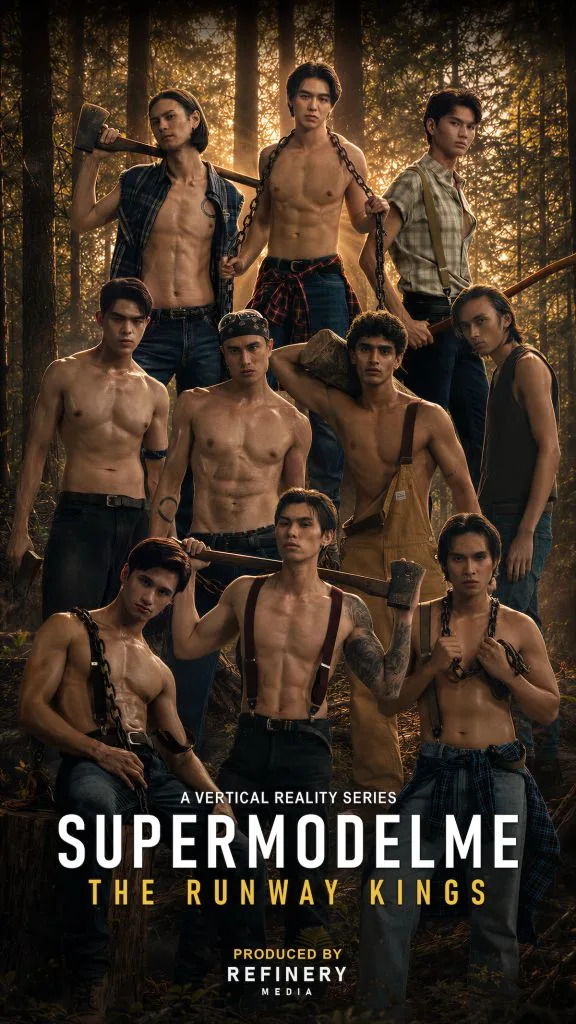
But, some executives say, moving into microseries isn’t a simple matter of shooting shorter clips. When Karen Seah, executive producer at Refinery Media, collaborated with FlareFlow and the COL group to bring her series “Supermodel Me” – essentially Asia’s “Top Model” franchise – to the vertical format, she learned quickly that producing for microseries was its own beast.
“It’s actually not that easy,” she told TheWrap of creating 100 minutes worth of short episodic content based on her reality competition show. “You can’t just transplant the entire format from long-form that people understood. It’s a 45-minute episode into two to three minutes.”
ATwist’s Head of Unscripted Josh Silberman, who came from the traditional reality TV world, agreed. His bosses and co-founders of the microseries platform, Jana Winograde and Susan Rovner, told him that in order to find success in the space he had to throw out everything he knew in traditional entertainment to create short-form unscripted.
“A show that is vertical is not just an aspect ratio. It is how a show is built, conceived and constructed,” he told TheWrap.
So why are verticals expanding to unscripted now? Seah believes the microdrama landscape has become too saturated with predictable romantic tropes and dramatic turns that the audience is ready for something fresh.
“The scripted drama in terms of vertical is very saturated, and it’s very formulaic,” she said. “People are generally going to get tired of the same genres in terms of the stage, the same formula over and over again.”
Throwing out the rulebook
Asian reality competition series “Supermodel Me” has launched the careers of aspiring models since 2009. The franchise aired its first five seasons through 2014, but as the world shied away from placing unrealistic body standards on a pedestal, this type of modeling series faded into the background.
Netflix picked up Season 6 of “Supermodel Me” in 2022 after a seven-year hiatus, but since then Seah, the creator and showrunner, felt that the franchise had lost momentum, telling TheWrap that networks “weren’t looking for IP or formats like that.”
Enter verticals.
Though Seah had a long tenure in unscripted, she had never dealt with the microseries format, but she knew her audience had something in common with the primary consumers of this content.
“The vertical space is shallow,” she admitted of the common viewer – and also mostly women.
The executive producer thought the format was ripe to try the franchise’s first all-male season, “Supermodel Me: Runway Kings.” As she was creating the series, she learned that she could not simply recreate the format she had used for six seasons. To appeal to vertical audiences she had to make content directly for them – filled with hooks, cliffhangers and juicy drama.
“Supermodel Me: The Runway Kings” (Refinery Media)
What changed in producing the series?
“Honestly, everything,” she said. “We have to throw out all the rules we need from the long-form world.”
ATwist’s Silberman echoed a similar mantra that he learned from the top down at his up-and-coming microseries platform.
“Because no one has made unscripted verticals before – now, obviously, lots of people are – but I can’t look at any shows out there right now and be like, OK, this one works,” Silberman said.
Silberman’s unscripted slate includes a house drama series a la “Big Brother” and “Survivor” called “Camp Bop,” and a documentary that follows a woman’s attempt to leave behind a toxic relationship for $50,000.
He found that creating for the vertical space was much different than traditional entertainment – not just in the aspect ratio but also in creating twisty hooks every two minutes.
Reinventing reality production for vertical
Microseries are known for their soapy, melodramatic twists and turns. The two-minute episodes end with a cliffhanger or hook that urges viewers to keep watching and keep paying for more. For unscripted content, the story is made in the edit. Rather than following a forumlaic script of twists and turns, they rely on the unpredictable talent and challenges to drive the drama.
ATwist’s Silberman found that many genres do not translate as well to vertical for this reason because the cliffhangers are not built in – procedurals being one. To combat this, Silberman weaved tension-building cliffhangers into the reality show’s challenges themselves.
“Whether it’s a ticking clock where the pressure is always on, or there’s a game or challenge coming up, there’s always something in these formats to make sure that we get those cliffhangers,” he said.

Josh Silberman on set for “Cash Out” (aTwist)
Just as with scripted microdramas, users will get the first 10 episodes or so for free but will have to pay through a subscription or digital credits for subsequent installments. Refinery Media producer Seah said that it raised the stakes to make every episode count but especially those first 10.
“There isn’t any time really to play out a backstory,” she said. “Every episode still had to follow the same formula, which wasn’t too difficult, because in the unscripted world, that’s actually one of the things we do anyway, very naturally, but we literally had to go back and scrub out all the fat.”
For that reason, aTwist’s team found that post-production was even more important. These low budget productions, often costing around $200,000, give creators more freedom to take risks, but it leads to more work on fewer shoulders in post.
Silberman told TheWrap that there’s no script and double the footage with “infinite storylines” to tell, so that edit process can take 10 to 15 weeks.
The Bravo team, meanwhile, worked with talent they were familiar with who knew how to create the drama, but they still found that the cliffhangers posed a unique challenge when they did not naturally appear in the shoot.
“The scripted microdramas have found a lot of success with big OMG moments, huge cliffhangers. And because they’re scripted, you can really plan for that,” Jenna Rosa, SVP of unscripted development at Bravo and Peacock, told TheWrap. “We’ve chosen microdramas with an eye toward emerging stories that we can hopefully lean into authentic moments of surprise and big life decisions, so we could hopefully have those moments built in.”
Madison LeCroy’s upcoming Peacock microseries “Salon Confessionals” is one example of breaking the unscripted format. The “Southern Charm” reality star will seat clients in her chair and let them reveal their salacious life stories. The series is more reminiscent of a TikTok-style storytime video, prodding viewers with several parts and cliffhangers that prompt them to scroll.
Other competition series like aTwist’s “Survivor”-style “Camp Bop” will more intentionally weave challenges, eliminations or even shady glances between contestants into the production to hook viewers to see more.
Developing IP
While many platforms see microseries as its own format, some entertainment companies are attempting to repurpose IP to fit the needs of the hungry audience.
Fox Entertainment was one of the first industry players to bet on its own IP to create unscripted microdramas with “Farmer Wants a Wife.” The microseries was repurposed from Season 3 of the Fox series, which originally came out in 2025, and is now available to watch on Holywater’s MyDrama in tiny installments.
“Vertical is evolving incredibly quickly with new audiences constantly discovering content,” Allison Wallach, head of unscripted at Fox Entertainment Studios, said in a statement TheWrap. “With the ‘Farmer Wants a Wife’ (Season 4) finale approaching, it felt like the right moment to experiment.”
Wallach said that the “Farmer Wants a Wife” microdrama has drawn audiences from the series’ fanbase as well as new viewers, who discovered it organically through MyDrama. She also noted that the microdrama has driven strong view-through rates.
“As a leader in unscripted, we believe it’s important to take those creative risks, learn quickly and continue refining how we bring our storytelling expertise into the vertical space,” she said
Fox leaned into the dating format as its first take on unscripted verticals because the company “naturally creates the kind of serialized storytelling that works well in short-form viewing,” Wallach said. The emotional investment and surprising twists and cliffhangers fit into the vertical storytelling ecosystem.
“Supermodel Me” producer Seah said that from her point of view, it was harder to re-edit existing seasons of her modeling competition series for vertical. She made the decision instead to create entirely new vertical-first versions of the franchise — one all female and for the first time, one all male.
“If you’re chopping up an existing series into this, that’s just social content,” she said. “The vertical space is a unique platform, and you have to go back onto the drawing board to craft specifically for it.”
Peacock and Bravo took their own twist on using their existing branding to create microseries. The Bravo fandom is highly engaged beyond just viewing the series. They attend conventions, engage on social media and eagerly watch aftershows and reunions.
The streamer has released one of two microdramas it announced earlier this year at upfronts. “Campus Confidential” stars Georgia Gay, daughter of “The Real Housewives of Salt Lake City” star Heather Gay and the other is LeCroy’s “Salon Confessionals.”
For Jenna Rosa, SVP of unscripted development at Bravo and Peacock, it was natural to have its reality stars, known as “Bravo-lebs,” in the vertical content.
“We felt like it would be a good way for fans to have a new way to enjoy their favorite Bravo-lebs and worlds and talent that felt like a natural extension,” she said. “Those fans don’t just watch content, they are living with it socially, culturally and daily.”
“NBC and Bravo and Peacock, in particular, have an ecosystem of talent that we’re very strategic and thoughtful around as we move them from show to show,” she added. “We know great IP can travel across formats when you respect how audiences use each platform.”
Rosa also specified that the streamer intentionally launched the college unscripted drama series timed to the platform’s premiere of “Love Island USA” to take advantage of the wave of downloads of the Peacock app. (It topped the App Store’s free app chart upon release.) Because “Campus Confidential” is only available on the app, Rosa’s team bet that some “Love Island USA” fans would turn to the show out of curiosity.
“We’re not asking this audience to change their behavior, we’re really building it for the behavior they already have,” she said. “For many consumers, mobile is the primary entertainment screen throughout the day.”
The rise of unscripted in microseries is evident of a bigger change in the industry. Viewers are hungry for more vertical series but not necessarily the same tropes on repeat. As microseries mature past their romance roots, streamers and networks will have to assess which of their content may best fit the vertical format and how to slot into the crowded landscape.
“What’s exciting is that vertical storytelling has become a meaningful entertainment destination in its own right,” Fox’s Wallach said. “Millions of viewers are choosing to spend time with premium, serialized content on their phones, and we see a real opportunity to understand how established television brands can participate in that ecosystem.”
The post Reality Shows Are Tapping Into the Microseries Boom appeared first on TheWrap.
‘ The preceding article may include information circulated by third parties ’
‘ Some details of this article were extracted from the following source www.yahoo.com ’