Video game review
The first Resident Evil game, in which you play as two members of an elite special forces division as they try to escape a nonsensical mansion filled with zombies and other horrifying creatures, was released on the original PlayStation in 1996. It’s since defined the survival horror genre, and kicked off a massive franchise. Thirty years later, with Resident Evil Requiem — the ninth mainline entry in the series, available now on modern consoles and PCs — it’s easy to see what’s changed along the way. Surprisingly, it’s also easy to see what hasn’t.
First and foremost, Requiem is a fantastic game. It’s a stellar blend of action-oriented horror sequences and pure horror elements, jaw-dropping visual and audio design, and enough of that old-fashioned RE charm — so many dorky one-liners! — to make you want to replay the whole series all over again once the credits roll. That’s the rub, though: As amazing as Requiem is, it often feels less like its own game and more like a glorified homage to previous entries.
From its narrative structure and level design to its boss fights and stealth mechanics, I often found myself saying, “That’s just like RE2!” or “I remember this from RE4!” And it makes sense, thematically: At its core, Requiem is nostalgia incarnate, full of callbacks and Easter eggs and efforts to wrap up long-standing story threads. It’s not a complaint, per se; I thoroughly enjoyed my 14-hour adventure in Requiem. I’m just not sure it’s a compliment, either.
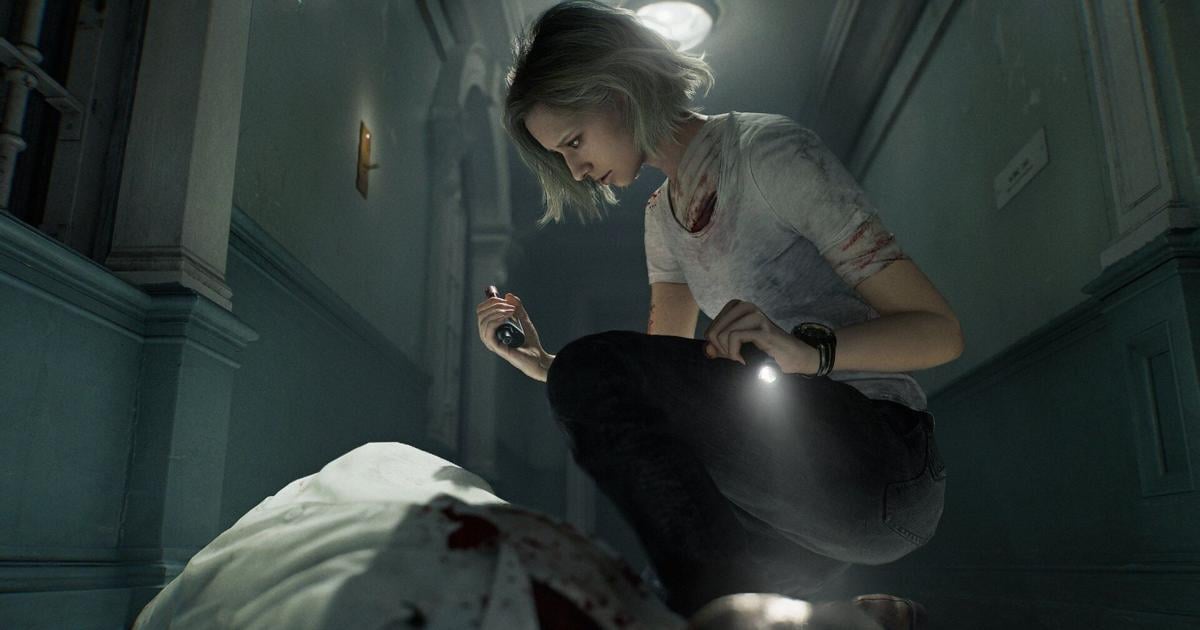
Let’s start with what’s new. Requiem is set in 2026, 28 years after the initial T-virus outbreak in the first Resident Evil that led to the rise of the undead and the destruction of the fictional town of Raccoon City. We’re quickly introduced to the first of our two protagonists: Grace Ashcroft (voiced and motion-captured by Angela Sant’Albano), an FBI analyst who’s new to the series. She’s tasked with looking into mysterious deaths caused by a mutating T-virus, called Raccoon City Syndrome. But she’s not doing that from the field office. Instead, her boss sends her to investigate a body found in the same abandoned hotel where her mother was murdered. (If that’s not an HR nightmare, I don’t know what is.)
Before long, Grace finds herself captured and trapped in a facility that’s eerily reminiscent of the Raccoon City police station from RE2. Anxious and not particularly skilled in combat, Grace’s initial sections heavily revolve around stealth and runaway mechanics. But like any typical RE protagonist, she eventually becomes better equipped and more able to deal with the nightmarish monsters in her way.
The second protagonist is a longtime RE favorite, coming home to his roots: Leon S. Kennedy (voiced and motion-captured by Nick Apostolides). Leon was first introduced in RE2 as a rookie cop who shows up late to his first day of work in 1998: a Raccoon City police officer. Since then, Leon’s been a major fixture in the franchise — a protagonist in RE4 and RE6 (and the remakes of RE2 and RE4), along with starring in multiple live-action and animated movies.
In Requiem, Leon is also dealing with Raccoon City Syndrome and its fallout. When he’s on screen, action takes precedence over horror (though there’s still plenty of that going around). Unlike Grace, Leon is well-versed in hand-to-hand combat and firearms, and his sections reflect that. He’s more likely to kick a zombie square in the chest than hide from it; it makes for a gloriously fun time.
Over time, their paths cross — including in Raccoon City — and their fates become intertwined. I won’t say more for risk of spoiling, but it’s a pretty thrilling (if somewhat convoluted) adventure.
Plenty of RE games have had multiple protagonists, and Requiem doesn’t offer too much new in that regard, with the exception that the game is designed for Grace’s sections to be played in first person (to heighten the fear factor) and Leon’s in third person (to amp up the action). You can change those options, however, if you want.
Speaking of playing, Requiem feels just as polished when it comes to its gameplay mechanics as the recent remakes of RE2 and RE4. The guns feel hefty, particularly this game’s version of the powerful magnum; there’s a delightful twist on how Leon’s weapons get upgraded later in the game; and, as always, resources are scare. (And yes, Leon’s famed attaché case from RE4 returns as his inventory system in Requiem.)
And much like RE7 and RE8 (plus the original three games in the franchise), Requiem maintains the same type of exploration and level design. Translated, that means you’ll often find yourself in one large area that has plenty of places to check out, which you’ll need to do because that’s how you find key items to help you progress to the next area. It’s a lot of backtracking and trying to remember where certain keys go, but it mostly works throughout. (A few sequences felt a little obtuse, even for someone who’s been playing these games for years.)
And also like its predecessors, Requiem is a visual and audio gem. RE Engine — originally built for 2017’s RE7 — still puts out an amazing-looking (if slightly shimmery) game; Leon and Grace’s character models are absolutely stunning, and the environments, from creepy corridors to ruined cityscapes, are top-notch. The sound design is equally impressive, especially when you hear a remix of some haunting scores from the previous games.
So maybe now you see what I mean about Requiem not exactly being its own game but how that’s not really a negative. Everything it takes from previous entries is elevated to a new high. And what it does offer of its own feel like well-placed additions. Still, I can’t help but wonder what a little more creativity, a little more risk, would have offered. If you’re a fan, you’re in for a treat. For everyone else, pull a Leon and start at the beginning.
‘ The preceding article may include information circulated by third parties ’
‘ Some details of this article were extracted from the following source www.yakimaherald.com ’