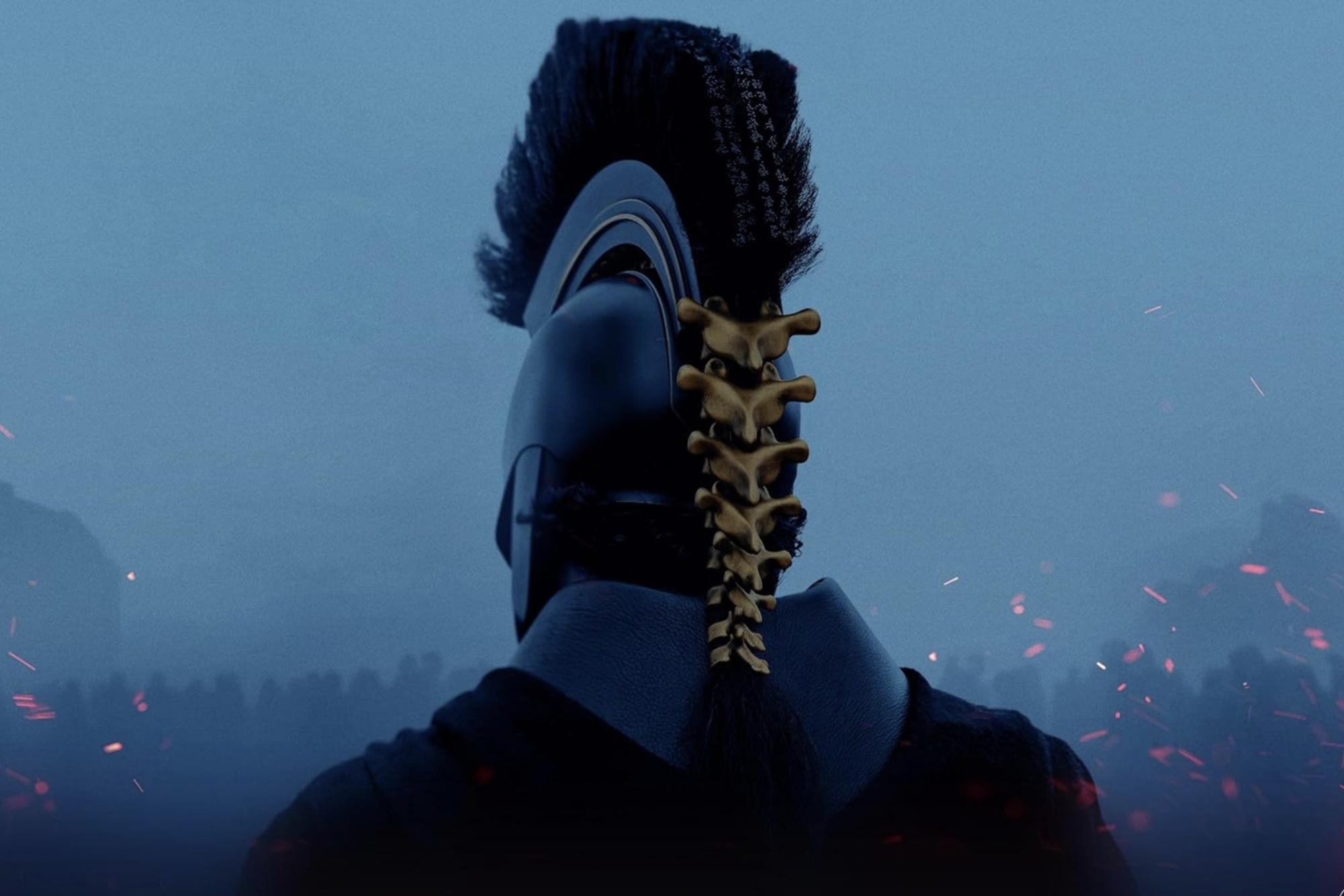
“Tell me, O muse, of that ingenious hero who traveled far and wide after he had sacked the famous town of Troy.”
These words mark the opening of Homer’s “The Odyssey,” one of the most important stories of all time. Its emphasis on human resiliency, shift in heroic standards and introduction of a new style of narrative trope revolutionized Western storytelling from its inception nearly 3,000 years ago.
Naturally, with a story with this much influence and history, there are bound to be innumerable adaptations, interpretations and translations that each bring something new to the table. From Virgil’s “Aeneid” framing Odysseus as a villain to Samuel Butler’s translation using 19th century prose, this timeless story has sparked endless reinventions in every era.
Nolan’s “The Odyssey” is not quite Homer’s ancient epic. Still, Nolan’s new film uses this story as a foundation to relay his own tale of the end of a world and deliver an adaptation worthy of its epic source material.
“A face, a fleet, a war, a man, a thought, a trick — a trick to break the walls of Troy and burn it screaming to the ground,” says Travis Scott’s bard in “The Odyssey.”
Though not remotely the same phrasing, these opening lines to Nolan’s film mirror those of Homer’s epic poem in their own unique way. In much the same way the original story was passed down through oral tradition, the bard recounts Odysseus’ war story in song fashion.
Scott being the one to present the songs of heroes in the film is an inspired idea. He has collaborated with Nolan in the past on his 2020 film “Tenet” for its soundtrack, but I love to see him as the oral storyteller, showing how rap musicians are the bards of our own generation, an idea supported by Nolan in his interview with Time Magazine.
Music plays a major role in the movie, whether it be through the tradition of hero songs or in the score itself. Swedish composer Ludwig Göransson creates a rich soundscape, combining ancient instruments with a few modern sounds. The soundtrack does a masterful job at elevating each scene so they hit that much harder.
Thundering drums and chants back the siege of Troy, battering every pounding heartbeat and sword slash right into your soul to make you feel like you are on the battlefield alongside the soldiers.
Intimate scenes between Odysseus and his wife Penelope have a gorgeous backtrack that features a melancholic and wistful sound — made all the more poignant when the motif is reused in the sirens scene.
One of the best bits of sound Göransson implements is with Odysseus’ bow. Each time he plucks the string, the strum of a lyre works its way into the instrumentals. This choice is just brilliant, driving home the Bronze Age sound and giving the character an exciting and recognizable leitmotif.
This soundtrack also works to make the horrifying scenes even more harrowing. On my wishlist following this film is for Nolan to try his hand at a horror movie, because two particular scenes stand out as the scariest in a non-horror movie I have seen this whole decade.
First and foremost is the Polyphemus meeting. Nolan captures the terror of a man-eating cyclops by keeping him mostly mute and shrouded in the dark of the cave. When you finally get a decent look at him, his face is creepily contorted as he mindlessly chews through Odysseus’ men in a visual akin to that of Francisco Goya’s “Saturn Devouring His Son.”
Another scene that evokes disgust and fear is when the seafaring Greeks reach Circe’s island. The slow buildup in which the witch is revealed is masterful work, and when her spell begins to take hold of Odysseus’ crew, I began to squirm in my seat.
Circe molds and pulls on these men, turning them into pigs as they cannot physically stop eating a stew she prepared. How their bodies distort as she transforms them is a sight that must be seen to believe.
What makes this Circe scene so effective is due in no small part to Samantha Morton’s performance. She gives the role a level of pain and intensity that is required from it.
Most of the acting in the film is nothing short of fantastic. Robert Pattinson’s Antinous and Anne Hathaway’s Penelope are obvious standouts for their own reasons. Pattinson brings a snaky frat boy personality to the conniving suitor that makes him, above all else, flat out fun to watch. On the flip side, Hathaway is astounding at masking her volatile emotions with a veil of dignified grace. When she has to let loose, boy, does she.
All of the supporting cast does their thing with the little time they have: Benny Safdie has an unmatched presence as Agamemnon, Lupita Nyong’o is subtly intense as Helen and her twin sister Clytemnestra, and Elliot Page offers a moving role as young soldier Sinon.
I am mostly pleasantly surprised by both Matt Damon’s Odysseus and Tom Holland’s Telemachus. I do not blame Holland for being almost lost in the sea of phenomenal actors around him, because even in that context he plays the unimposing boy trying to be tough incredibly well.
Damon does an impressive job portraying this enduring hero as the regretful orchestrator of horrible tragedies. Damon’s Odysseus and Zendaya’s Athena have a pivotal moment near the end of the film that recontextualizes her character and the whole legend of the Trojan War as something ultimately fruitless and tragic.
The most interesting reinterpretation Nolan takes is turning the story into an anti-war tale. Much like the characters in “Oppenheimer,” Odysseus is reckoning with his role in setting off a chain of events to destroy people on a scale not seen before in support of the powers that be. In the end, this is a tale of the importance of Zeus’ law, or xenia, which holds that even in horrible times, it is still prudent to treat strangers with kindness and respect.
Nolan flips it to mean that using the Trojan Horse was a violation of this law, and this move by Odysseus has not only cursed his men, but left the world worse for wear. Greek gods largely take a backseat in this film to tell a story that is bleakly human. Odysseus is left hoping that this darker age will fade and become one of hope and a recurrence of xenia.
This is a film that is absolutely meant to be seen on a large screen. Find your nearest IMAX, and prepare to cheer, laugh and cry along with a film of epic proportions.
10/10
‘ The preceding article may include information circulated by third parties ’
‘ Some details of this article were extracted from the following source lsureveille.com ’