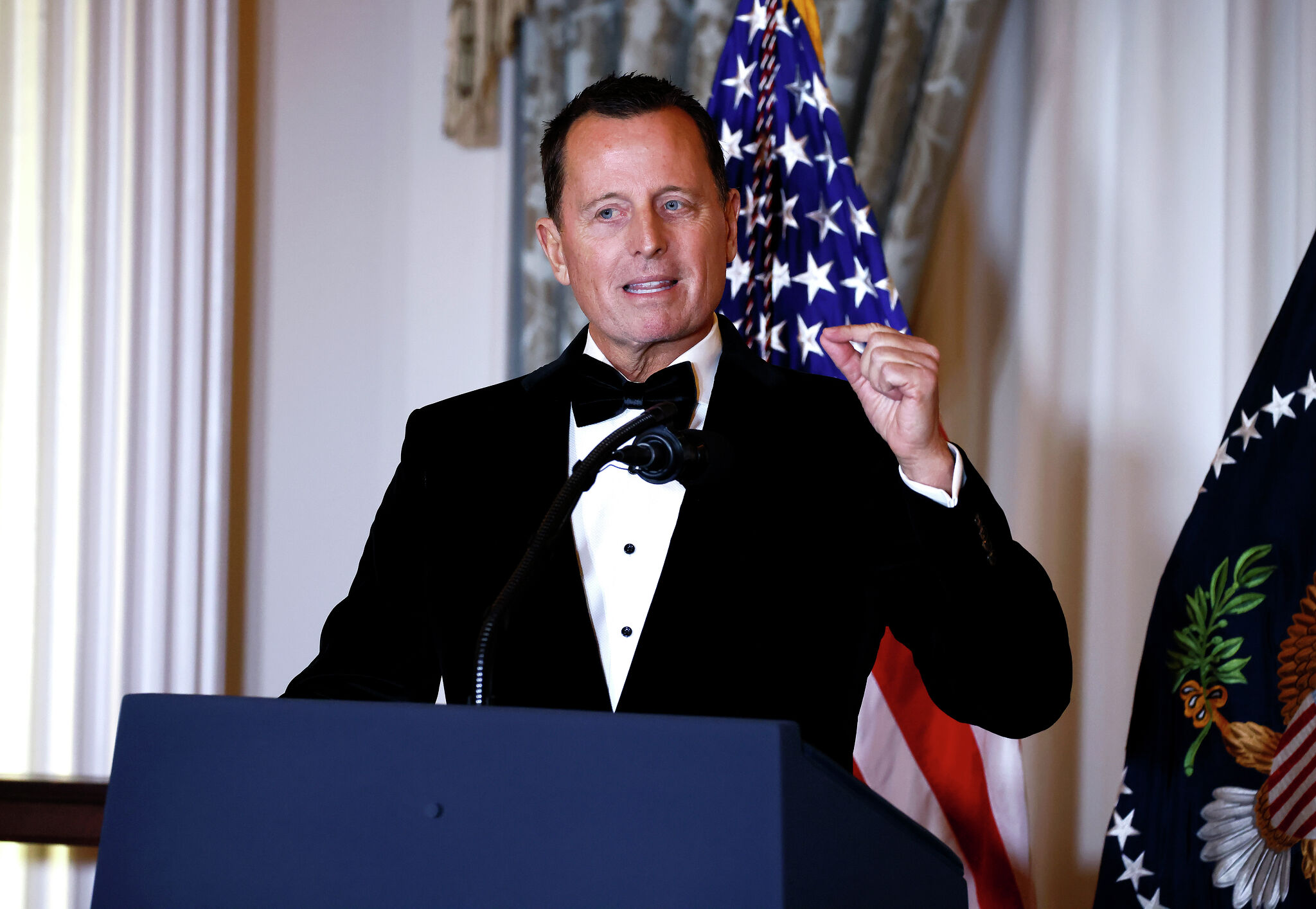
Richard Grenell was never an arts leader.
From the time he was appointed interim executive director of the Kennedy Center, last February, he’s seemed to think he could bully his way into success on the job. He repeatedly insulted artists and arts organizations across the country who didn’t fall in line with President Donald Trump, who appointed himself the organization’s board chair within weeks of his second term and later renamed the center after himself.
Now, with Grenell’s abrupt exit from the post on Friday, March 13, there’s no more pretending otherwise: His strategy was an abject failure — despite what Trump wrote on social media.
“Ric Grenell has done an excellent job,” the president wrote. “I want to thank him for the outstanding work he has done.”
The same post named Kennedy Center Vice President of Facilities Operations Matt Floca as Grenell’s replacement.
The number of artists and arts organizations who have canceled Kennedy Center performances during Grenell’s and Trump’s tenures is striking. In the Bay Area alone, San Francisco Ballet, the producers of “Eureka Day” (written by Oakland playwright Jonathan Spector) and the International Pride Orchestra all made that move. They join Renée Fleming, Stephen Schwartz, the cast of “Hamilton,” Philip Glass and more.
The center’s box office suffered in parallel. By October, ticket sales reached lows not seen since the pandemic — down almost 40% from the previous year — challenging a statement that Grenell made to the Washington Reporter: “We are doing the big things that people want to see.”
The trouble is, welcoming artists and audiences is a huge part of an arts leader’s job, especially amid the butts-in-seats concerns of post-pandemic recovery. You can’t lure audiences back with an ethos of fear and recrimination. Grenell gave Kennedy Center stakeholders the message that they’d be better received elsewhere.
“Any performer who isn’t professional enough to perform for patrons of all backgrounds, regardless of political affiliation, won’t be welcomed,” Grenell told Entertainment Weekly in May, calling “Les Misérables” cast members as “vapid and intolerant” when they announced they’d boycott a performance that Trump attended.
In an April email to guitarist Yasmin Williams, he called DEI “bulls—” and accused her of “vapidness” as well, signing off, “Don’t be a victim.”
His own understanding of arts nonprofit finances seemed to be in flux. In May, he called for an inquiry into the center’s finances. In an NPR interview in January, he called it “immoral” to pay for staff with reserves — a common practice at arts nonprofits rebuilding their audience bases. In that same interview, he seemed to contradict himself, saying, “We cannot do programming that loses money,” only to add, “No art institution is able to pay for programming with ticket sales alone.”
The Center’s planned closure for renovations, starting on July 4, means Floca won’t have to plan programming or attract spectators and artists in the immediate future.
In the meantime, Trump opponents can take comfort in the fact that there’s at least one arena where his taunting and hate don’t work. He and his minions can’t force artists to sell what they don’t want to sell, and they can’t force artists to buy what they don’t want to buy.
‘ The preceding article may include information circulated by third parties ’
‘ Some details of this article were extracted from the following source www.sfchronicle.com ’