Nobody’s perfect, and umpires are human and make mistakes. But MLB hitters and pitchers have had to live with those mistakes behind the plate. Until 2026.
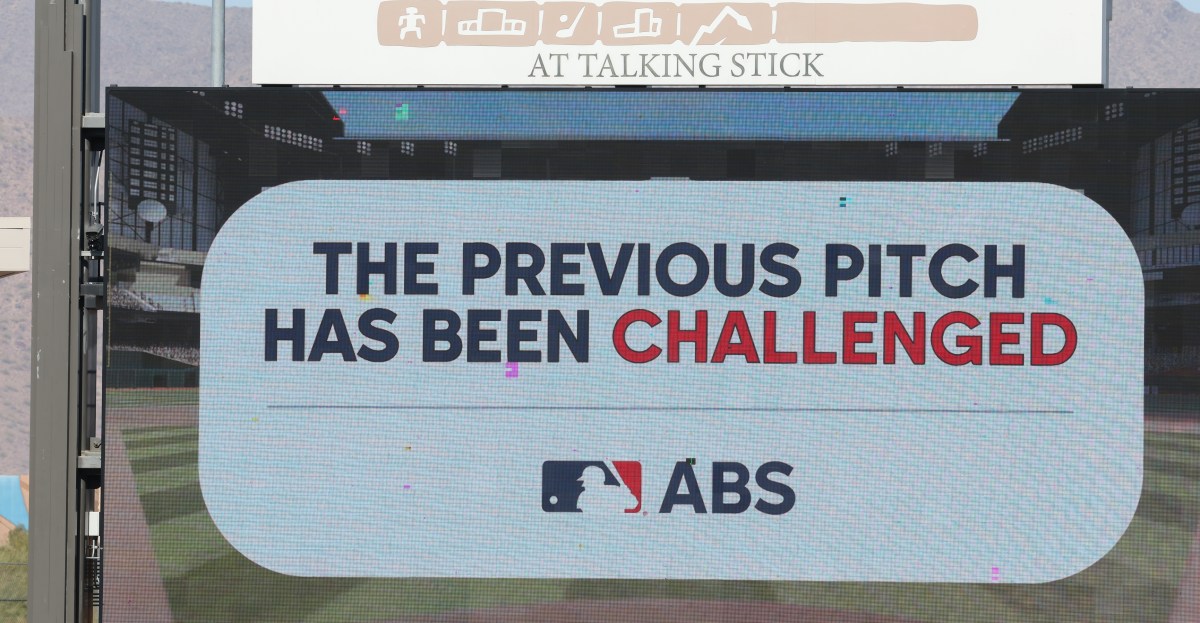
Balls and strikes will still be called by a human umpire behind the plate. But a pitcher, catcher, or hitter (not the manager!) can challenge the ruling on a pitch by tapping his hat or helmet. Each team will be given two challenges during the first nine innings, with one challenge in each extra inning. The home plate umpire will announce the challenge, and the replay will be displayed on the ballpark video board. It should take no more than 15 seconds for the Automatic Ball Strike ruling to be issued. If the call is confirmed, the challenging team loses its challenge, but a team with a successful challenge will retain its challenge.
According to MLB, players in spring training challenged 2.6% of all called pitches, and the overturn rate was 52.2%, higher than the 50% overturn rate at Triple-A this year.
The ABS strike zone will be 17 inches wide, like the plate. The top end of the zone is at 53.5% of the player’s height, while the bottom is at 27% of the player’s height. The depth of the zone is 8.5 inches from both the front and back of the plate. According to research by MLB, a human umpire has a more rounded strike zone that is more lenient to pitchers. In 2-2 counts, the umpire-called zone was 449 square inches, while the ABS zone was 443 square inches.
Some additional data based on MLB research in spring training:
The MLB Joint Competition Committee approved the change in a meeting today.
“We used the same process with ABS that started with listening to fans, conducting extensive testing at the Minor League level, and trying at every step to make the game better. Throughout this process we have worked on deploying the system in a way that’s acceptable to players. The strong preference from players for the Challenge format over using the technology to call every pitch was a key factor in determining the system we are announcing today.”
‘ The preceding article may include information circulated by third parties ’
‘ Some details of this article were extracted from the following source www.royalsreview.com ’