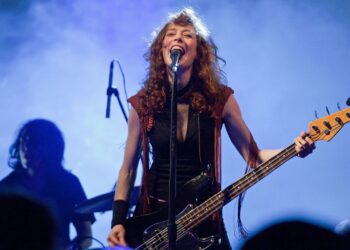
Way before the idea had solidified in her mind to write an album, Ashley Daneman sat at her keyboard in a pessimistic sort of mood.
She was on the edge of burnout, as a performing artist, as a musical teacher, as a mother, as a person—as most people were during and after COVID-19 quarantine.
The big dreams that she had had for herself had not come true in the straight line she had always imagined. She’d thought, then, that big dreams, died slowly.
“It wasn’t even a song title then, just a phrase,” Daneman said. “I realized how deeply that phrase kind of defined where I was in life. Not to say my dreams wouldn’t ever come true, but sometimes you’re like, wow, the way I thought it would be isn’t really what happened.”
“Big Dreams Die Slowly” became the name of the song she wrote out of those feelings, documenting a time when she said she felt deeply lost.
Then, it became the name of her third album, which releases on Jan. 30, 2026.
Daneman describes her style as intimate jazz-folk music. Music that feels like catching up with an old friend into the wee hours of the morning, where everything is still but the conversation is unfiltered, honest.
“Doing this album has helped me regain a sense of my identity as an artist,” Daneman said. “And really articulate those pain points of feeling lost and struggling.”
‘Different is good’
When Daneman was a kid in Toledo, Ohio, her family had a grand piano in the living room, where her mom played and sang, and she and her siblings practiced their piano lessons. Her dad had a wide-ranging and eclectic record collection, fueling the family’s love of music.
Although her personal style is inspired by artists such as Joni Mitchell — in 2015, she won the Joni Mitchell/Laura Nyro “MOJO” Award from Oregon NPR 89.7 FM (KLCC) — her dad loved Lionel Richie and other Black pop artists of the 1980s, which he would blast when they were in the car.
Writing and music has been a guiding force in Daneman’s life, integral to her identity, which she felt out of touch with during and following COVID quarantine. At the time, she had three kids in the household (the oldest is out of the house now), and she and her husband, trumpeter Benje Daneman, were running a music school in Kalamazoo, Mich., through the pandemic, on top of her already chaotic life as a performing artist. The combination of stress from the three areas of her life took their toll. About the time she and Benje moved to Savannah in 2023, she took a career break.
“In trying to sort ‘what was wrong with me,’ why I couldn’t work anymore, why I couldn’t function, I had extensive testing done,” Daneman said. “They were saying you’ve got this neurocomplexity happening, which is why you’re struggling.”
Neurocomplexity is a term coined by psychologist Lindsey Mackereth, used as an umbrella term for people who might have multiple neurodivergences. Common traits of neurocomplex nervous systems, are giftedness, autism, ADHD, learning differences (dyslexia, dyscalculia), synesthesia, gender fluidity and chronic illness. Neurocomplexity also tries to explain why and how people change diagnoses throughout their lifetime.
Figuring that out helped her untangle the wires of burnout, and writing music helped Daneman find her way back to herself.
“I was just like you have to write music,” Daneman said. “You have to do an album, so I put the dates to book the studio, got a band together. I almost canceled it like three times,”
Writing the song “Different is Good” helped her get those feelings out. “Different is Good” is talking through being similar to her peers talent-wise but feeling so different and incapable on the inside. The song starts with the rhythmic strum of a guitar with Daneman voicing fragments of thoughts: “never enough,” “never on top” and “always on the mend.” It sounds contemplative and dreamy, like watching others accomplish the things you want to do while watching them through the window.
“It’s kind of negotiating with my struggles, and just being like here’s how I feel,” Daneman said. “I’m wired differently, and I have different struggles. Even if my talent is strong, I think I’ve always been super capable, but through this neurocomplexity, I had a lot of limitations as a person in terms of just like my bandwidth. So, it’s been hard to have these gigantic dreams.”
But at the end of the song, which is her favorite on the new album, she sings out that everything’s going to be alright. She will figure it out.
“It was definitely healing for me, because I think people feel like they’re supposed to hide their vulnerabilities,” Daneman said. “I’m just kind of like the opposite. I feel like if I share it, it kind of neutralizes it.”
Daneman is doing better now, has her nervous system regulated with supplements and exercising more often, but she hopes when people listen to the album they feel that they are not alone in their struggles.
“I think Ashley is really a very authentic and honest artist,” said her husband Benje, who helped her work on the album. “I’m continually impressed with her, always working to dig something out.”
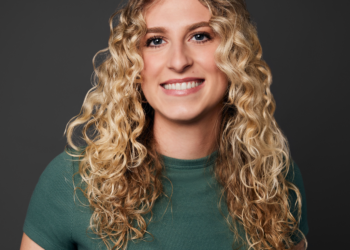
Destini Ambus is the general assignment reporter for the Savannah Morning News, covering the municipalities, and community and cultural programs. You can reach her at [email protected].
‘ The preceding article may include information circulated by third parties ’
‘ Some details of this article were extracted from the following source www.savannahnow.com ’