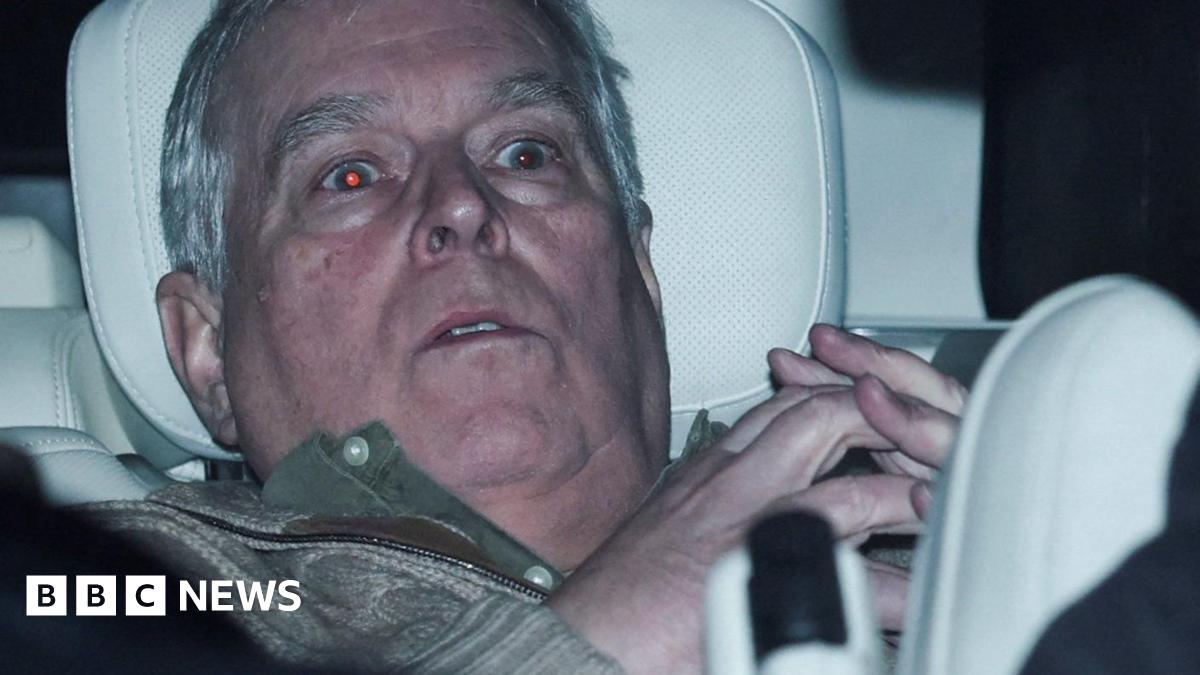
Earlier, Andrew Mountbatten-Windsor had become the first senior member of the Royal Family in modern history to have been arrested. It was another catch your breath moment.
It was followed by an unprecedented statement from his brother, King Charles. “Let me state clearly: the law must take its course,” read the unambiguous statement from the King, offering no hiding place or royal get-out clause.
The arrest, on suspicion of misconduct in public office, relates to Andrew’s time as the UK’s trade representative between 2001 and 2011. It follows a series of allegations, prompted by the release of the Epstein files, that Andrew shared official documents.
That included sharing reports from trade visits and a confidential briefing on investment in Afghanistan with the sex offender Jeffrey Epstein, and passing a Treasury briefing to a personal business contact.
Being a member of the Royal Family will make no legal difference to how his case is assessed.
Andrew Mountbatten-Windsor has consistently denied any wrongdoing in his associations with Epstein.
The no-nonsense police statement on Thursday morning was a bluntly worded news earthquake: “The man remains in police custody at this time.”
Whoever thought we’d read that sentence when the man in question is still in the line of succession to the throne, and in theory, if not in practice, remains a counsellor of state?
Andrew’s explanation of his behaviour won’t be in a TV interview. The public will not have forgotten the BBC’s Newsnight interview, which remains the last time Andrew spoke publicly about his relationship with Epstein.
This time, it will have been in the presence of a lawyer and the investigating officers, rather than under the TV lights, and the consequences of any untruths will be much more serious.
‘ The preceding article may include information circulated by third parties ’
‘ Some details of this article were extracted from the following source www.bbc.co.uk ’