One of the Park City Song Summit’s focuses, in addition to wellness, is the power of storytelling.
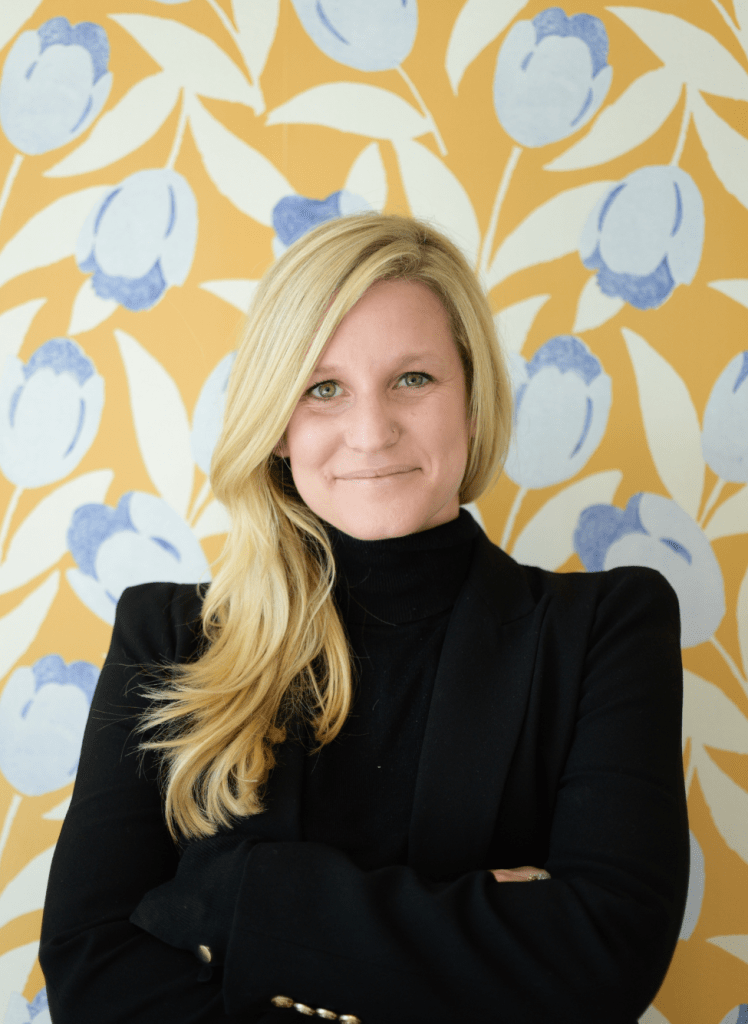
And one of the biggest mediums for doing this is film. That’s why one of this year’s lab discussions, “Through a New Lens: Film and Culture as Catalysts for Change,” will feature Amanda Farrand, Imagine Entertainment executive vice president of brands and business development.
Farrand will join Derek Johnson, executive vice president of Stand Together, an organization that helps changemakers address the United States’ biggest issues, in the lab that will start at 11:15 a.m. on Friday, Aug. 15, at the Park City Library’s Jim Santy Auditorium. The two will discuss how film and culture can usher in change for a “more united future,” according to the Song Summit description.
“I’m a big fan of Derek’s, and we’ve been working together for over two years,” Farrand said. “The partnership Imagine has more broadly with Derek is all about the role artists play in changing the world and helping us recognize who we really are, and my particular cut into the Earth is through media and film.”
Imagine Entertainment, which was founded in 1986 by film producer Brian Grazer and filmmaker Ron Howard, got involved with the Park City Song Summit through Stand Together, according to Farrand.
“Park City Song Summit and Stand Together have a great partnership, and I’m also a partner with Stand Together in a different lens, doing mostly movies,” she said. “As the Song Summit opened the lab to talk about how art can impact culture, they said, ‘Let’s bring some movie people. Let’s bring some music people and talk about the artists and what roles they can play to help shape culture and impact the world.’ I’m excited to be there, because I know we’re going to be surrounded by musicians and bands. And that’s interesting.”
Imagine is also working on a new project that is centered around music and the role music has had shaping the United States as a country, according to Farrand.
“I was delivered a 25-page report on the history of music in America, and we’re digging into that as an opportunity to tell more stories through a music lens,” she said. “As we round the corner of next year, the 250th birthday as a country, we have been going to artists, musicians, storytellers and creators and asked what does it mean to be American and what are we all about?”
Farrand believes film and music are strong paths to bridge divides.
“So we want to be where music is because apathy has no place in music,” she said. “We bring people together, so which stories are we telling? How are we elevating human potential? How are we helping people recognize what we could be doing to bring people together?”
During the lab, Farrand plans to dip into her two-decades in the entertainment industry.
“My 20-year career has been a tripod — one leg in entertainment, one leg in brands, business development and partnerships, and the last leg being in impact,” she said.
Farrand’s resume includes working with an array of media organizations and companies, including Reese Witherspoon’s Hello Sunshine and Jeff Skoll’s’ Participant Media.
“I’ve (also) worked on the studio side with Sony and Paramount, and I’ve represented brands at an Omnicom agency, called The Marketing Arm,” she said. “So there’s been a 20-year culmination of how to bring those three things together to cut a new path and share what people are believing in and hoping for. I’m so honored to have been on that journey.”
One of the storytelling projects Farrand is most proud of came up through Hello Sunshine, when she met Eve Rodsky, author of the book “Fair Play.”
“The book is all about how to divvy up the work at home so no one is doing it all, and it was a game changer in my life,” she said.
After meeting Rodsky, Farrand and Imagine began working on finding ways to bring the book’s idea and message to the public through storytelling.
“We adapted that book into a documentary and a podcast in a story-rich social community,” she said.
Then she worked on branding by bringing partnerships into the fold to scale its mission.
“I did a three-partnership with Procter & Gamble, which is arguably the biggest brand in our home, and together we were able to make those stories, find the influential voices and put Eve on the right stages and the right scales,” she said.
Farrand witnessed the impact of the project through how the book changed people’s lives like it changed hers.
“We didn’t have, at the time, the ability to work family by family or person to person, so we developed a training curriculum on the train-the-trainer model, where we trained therapists, executive coaches and executives in human resources so they could bring the curriculum into their communities in a one-to-one manner,” she said. “So through those three legs of the (tripod), we watched this idea move from a book by a first-time author into a documentary that reached No. 1 on Hulu and a movement that reached over 300,000 families and 200 therapists.”
Other projects helmed by Imagine over its 40-year history include the documentary and podcast “We Feed People,” which focused on Jose Andres, who goes into places that have been torn apart by war and catastrophe; “A Beautiful Mind,” which tells the story of mathematical genius Josh Nash; and “Thirteen Lives,” a film about the 2018 efforts to rescue a boys soccer team from the Tham Luang cave.
“As we look at Imagine and the power here, it has always believed in and told inspiring stories about human achievement,” Farrand said. “Oftentimes these are based on true stories. So Imagine has been telling illuminating stories about human potential, and being able to apply more of a specific impact lens has been a dream come true.”
Farrand also said many of the subjects in these films are often flawed.
“The flaw gives us dimension, reality and accessibility,” she said. “In ‘A Beautiful Mind,’ his flaw is his mental-health issue, and it’s actually the centerpiece that created the propulsion of the story we wanted to tell. I think the rawness of the stories that Ron and Brian have set out to tell from the very beginning, and in an ongoing capacity, shows all of the complexity of the human experience and shows all of its facets.”
Inspiring storytelling such as these films and the lyrics of songs can be used to dispel the myth that the American Dream is dead, Farrand said.
“I think this is something artists are grappling with, and I think through all of this storytelling, we’ll find what our True North is, and that’s the journey we’re taking over the next year,” she said. “There’s a quote by George Gerber, a media scientist, that says, ‘He who tells the stories of the culture really governs the behavior.’ and I think that’s true of the responsibility of the filmmakers, creators, musicians who are writing right now. It’s about how we can utilize our gifts to paint the picture of what we want the world to be.”
Park City Song Summit
Also:
‘Through a New Lens: Film and Culture as Catalysts for Change’ — Park City Song Summit Lab with Amanda Farrand and Derek Johnson
Related Stories
‘ The preceding article may include information circulated by third parties ’
‘ Some details of this article were extracted from the following source www.parkrecord.com ’