In a career marked by bold choices and full-measure risk-taking, it was a geographic half-step to Hollywood that helped Japanese actor Takehiro Hira establish a home base for international stardom.
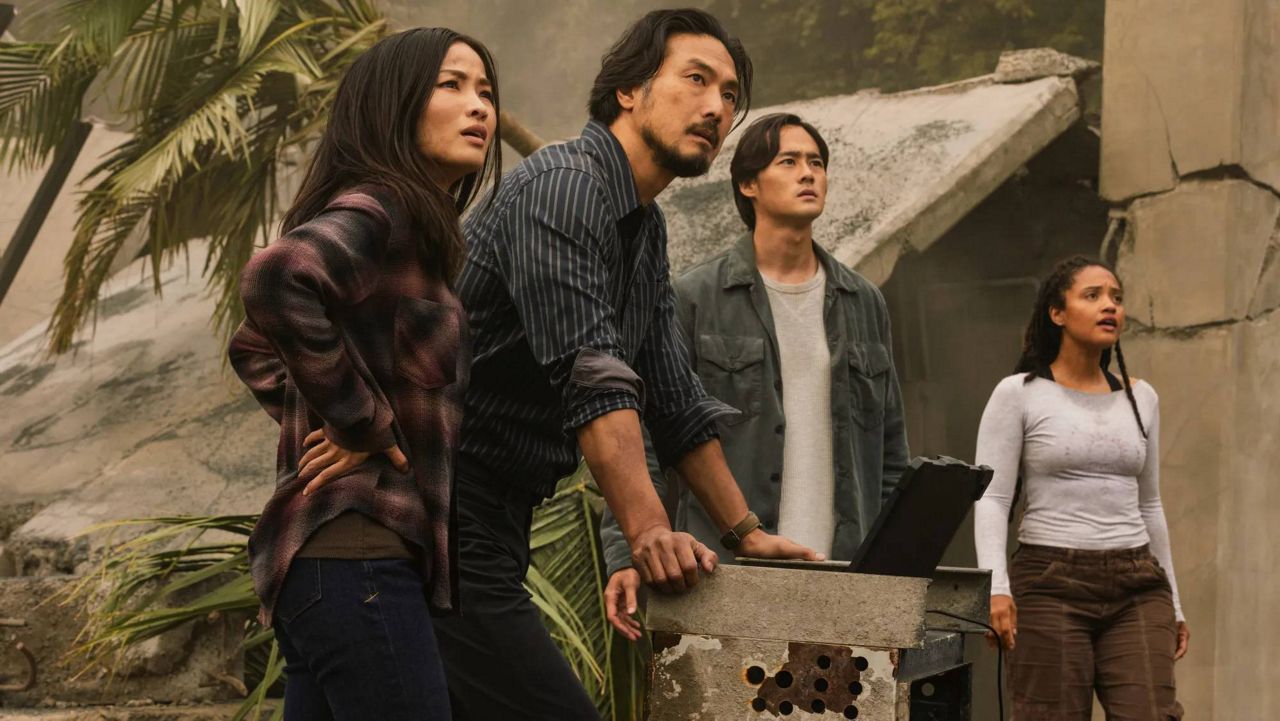
The versatile Hira has been on something of a run over the last couple of years. Seemingly immune to typecasting, he’s gained critical and popular acclaim for his performances as diverse as the scheming Ishido Kazunari in the FX limited series “Shogun”(for which he earned a Primetime Emmy nomination for best supporting actor), Brendan Fraser’s wryly pragmatic employer Shinji in the film “Rental Family,” and most recently the morally ambiguous Hiroshi Randa in the Apple TV+ series “Monarch: Legacy of Monsters,” now in its second season.
“If you take a step back and you look at my career, you might feel this is not something I would play, or this is more like my character, but when I actually work on a project, I believe 100% in my character,” Hira said. “I feel it’s very natural for me to play (Shinji) in ‘Rental Family’ or this Hiroshi Randa in ‘Monarch.’ When I actually work on the project, I feel natural.”
The son of established Japanese actors Mikijiro Hira and Yoshiko Sakuma, Hira was born and raised in Japan and moved to the United States as a teenager, graduating from Moses Brown High School in Rhode Island and earning a bachelor’s degree in applied mathematics from Brown University.
After an abortive stint in graduate school and a dip in the corporate world, Hira turned to acting in 2002, racking up some 19 theatrical roles over the next 15 years playing everything from the villainous Iago in “Othello” to the uptight Dr. Higgens in Pygmalion.
The work came quickly and with increasing abundance. Hira broke into television in 2008, playing the last shogun, Tokugawa Yoshinobu, in the historical drama “Atsuhime.” Film acting soon followed with a pair of movies based on the TV crime series “SP.”
By 2020, after attracting international attention in the British crime drama series “Giri/Haji,” Hira was ready to expand his acting horizons. That year, he starred opposite Alexandra Daddario in the film adaptation of Catherine Hanrahan’s “Lost Girls and Love Hotels.” A year later, he made his American big-screen debut as the villainous Yakuza boss Kenta in the G.I. Joe film “Snake Eyes.” He’s since racked up credits in films such as “Gran Turismo” and “Captain America: Brave New World.”
Hira’s breakthrough in the United States coincided with his move from Japan to Honolulu six years ago.
Whereas many actors gravitate to Los Angeles for jobs and networking opportunities, Hira has found he can ably manage both career and sanity from his home in Kakaako. Auditions can be handled remotely. Networking can be, well, overrated.
“In LA, there are lots of actors,” he said. “You run into them on the street, in the restaurant, movie theater, theater, park, kids’ school, you know? And they will be like, ‘What project are you working on?’ If you’re working constantly, you can say, ‘Oh, I’m doing this,’ and ‘This is so exciting,’ and all that. But if you’re not, that can be really stressful? Actors go up and down. You’re in, you’re out. In Hawaii, nobody asks me what I’m working on. Nobody really cares except my friends.
“I’m here as a person, as who I am, and not as an actor,” he continued. “People treat me as Takehiro, the father of my daughter at school. It helps me greatly to be able to live here.”
So it was that Hira was the unofficial host when cast and crew of “Monarch” arrived in Hawaii in 2022 to film scenes for its first season in Sherwood Beach and Kualoa Ranch.
With “Monarch,” Hira’s real-life straddling of East and West and his ability as an actor to draw the humanity of characters swept up in wild narrative currents have come together in potent form.
Hiroshi is a character at the seams of time, culture, family and loyalty. His mother, Keiko (Mari Yamamoto) disappeared and was assumed dead during a scientific expedition to the mysterious world-within-a-world called Hollow Earth, the point of origin for Godzilla, King Kong, and other so-called titans. Like Hira in real life, Hiroshi is raised first in Japan and later in the United States, eventually becoming a scientist for Monarch, a scientific organization dedicated to studying titans.
The separate families underscore Hiroshi’s divided nature he secretly maintains in Japan and America, from which his children Kentaro (Ren Watabe) and Cate (Anna Sawai) are produced.
“He has really had a dark corner in his heart, but he also has this bigger agenda of chasing or studying the monsters and saving humanity,” Hira said. “That sort of dilemma made (Hiroshi) a really attractive as a character to portray.”
The role has required Hira to become a master of reacting to the unseen and the uncanny. In one scene, Hiroshi watches protectively over a sleeping Keiko, a middle-aged man longing for connection with a mother wrought straight from childhood memory. In another, he is scrambling desperately in the gargantuan footprints of a CGI-generated, Michael Bay-scale clash between Kong and Titan-X.
That balance, Hira said, provides added dimension to the decades-old legacy of King Kong and Godzilla and the modern melding of both franchises in Legendary Entertainment and Warner Bros.’ so-called MonsterVerse.
“It’s a different take on the Godzilla series,” Hira said. “We focus much more on the human drama surrounding the Godzilla, not just the chaos of Godzilla. The Godzilla movies were more focused on the monsters and the fight between monsters. As a TV drama, we’re more focused on people’s relationships. It’s different.”
Michael Tsai covers local and state politics for Spectrum News Hawaii. He can be reached at [email protected].
‘ The preceding article may include information circulated by third parties ’
‘ Some details of this article were extracted from the following source spectrumlocalnews.com ’