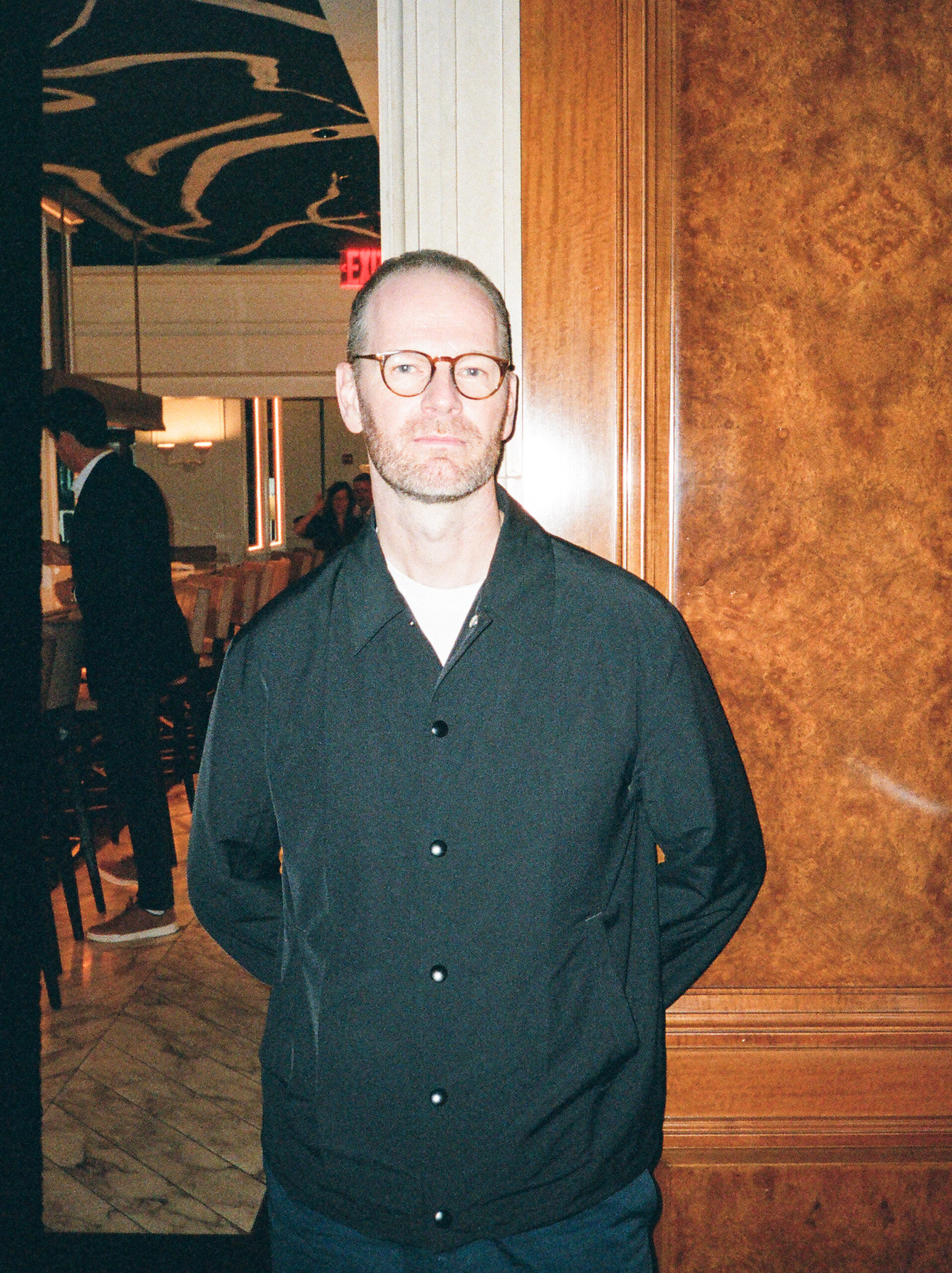
It might surprise you to hear that one of this year’s awards season contenders is a Norwegian film. But it’s not the first time. In 2022, Joachim Trier’s sly, POV-shifting relationship drama The Worst Person in the World snuck into the Academy Awards with nods for Best International Film and Best Original Screenplay. His family-anchored follow up, Sentimental Value, has been pegged as an Oscar hopeful since its big Grand Prix win at Cannes, alongside a number of other European accolades.
Trier’s newest film is tied up in the mess of parental issues. Gustav Borg (Stellan Skarsgård) plays a negligent father and a filmmaker himself who has returned with his magnum opus: a script written about his own mother who died by suicide. He’s written the lead role for his daughter, Nora (Renate Reinsve, a frequent Trier collaborator). But she’s less than forgiving of her father’s absence and ultimately passes on the part.
As much as Trier’s film operates as a pair of moving character portraits, he believes his use of space and location are just as important. The house where much of the movie takes place is treated as much as a character itself. “It’s like you can smell it, you feel it. And that is cinema to me,” he tells me. (Longtime Trier fans might even recognize the house from a critical scene in Oslo, August 31st, the second of three films in his Oslo trilogy.)
The director talked with The Verge about how he used what he calls a “polyphonic structure” to move Sentimental Value’s narrative through his protagonist’s pain, the key to spotting a good actor in just two minutes, and how process brought together this awards season contender.
I heard that you and [cowriter] Eskil Vogt watch a lot of films while you’re writing. What were you watching while you were writing Sentimental Value?
Joachim Trier: Not as specific references, but I think we love kind of human story films. It’s just inspiration of something being human and entertaining and intimate. I showed the team Opening Night by [John] Cassavetes. This is a great performance piece, and it’s also about someone who is grappling with creativity and the crisis in personal life.
Is that how you like to set the tone?
Yeah, I’m trying not to emulate other films. We do our own thing, but I want to remind people on the team — all of them, my great collaborators, all their assistants and everyone — that we’re shooting on film, 35mm. And there’s a beauty to that and watching on a big screen. So we’ve got a 35mm copy and just the vibe of that film was really beautiful.
Correct me if I’m wrong, but was that the same house from Oslo, August 31st that you shot in?
Ah, you’re very attentive.
I haven’t told anyone, but, well, you can speculate. Let’s put it like that.
It feels like you have such a tender relationship with that place, and I’m wondering what it is about that specific house that you love.
It’s so weird. It’s like another human being. You just like someone. You think it’s got something. I don’t know what, and that house is very close to where I live. I know the people that live in the house and we looked at a hundred houses to return to that one and look at it. And I walked in and, in 30 seconds, I said, “We’re doing this.”
How does architecture play into how you’re composing shots? What I love about this film is that your exteriors are nice, but your interiors have sort of a romance to them. How do you compose that shot list?
That’s the most intuitive thing that we do, me and the team and the cinematographer, Kasper Tuxen. But I think without sounding too academic, I know for a fact that mise en scène, like the composition of images in the film, the way we structure repetitions, of the way we look at spaces and all that stuff — it matters tremendously. When talking about it, it sounds terribly intellectual, but actually experiencing films, the most exciting thing about them are the moods and the people and the light that hits a special way in a room that reminds us of something.
The triggering of specifics of the tactile nature of the place matters tremendously. It’s like you can smell it, you feel it. And that is cinema to me. And the problem, I just hate talking about it because people think, “What are they talking about?” Close your eyes and look. Think of a David Lynch film. It’s the most mood-saturated cinema you can get. And then people suddenly say, “Oh, wow.” But that’s an aspect in old films regardless of intention.
And sometimes I’ve watched old Norwegian films from Oslo, like stupid gangster comedy series that everyone watched, super mainstream, no critical acceptance. But I love them because they showed Oslo summers in the ’80s during my childhood. And I just look at the backgrounds and I feel something deep in those films even without the narrative being terribly interesting. So that aspect we play with when we make movies and telling a story of a place, of a specific house. You try to capture this specific house for all ideas of a childhood home that people could bring.
In the film, Gustav Borg says he knows a good actor in about two minutes. Is it the same for you? What makes a good actor for you?
It could be so many different things, but sometimes Renate Reinsve came into a casting for Oslo, August 31st, and I saw the tape and I was like, “Wow, cool energy. Like, who is she?”
It’s an energy, but it’s also, for example, looking at someone and being curious about their thinking. That’s maybe number one: a good listener and thinker. You look at them and you’re like, “What’s going on in that person’s mind?” Because that draws the audience into interpretation.
Acting, as is all filmmaking, is the shown and the unshown. And good actors will draw you into a space of their interior being a mystery you want to get into.

Courtesy of Neon
You move the story along through periodically fading to black. It’s a fun move and it also feels a little slimmed down from Worst Person where you’re explaining the chapters throughout.
True.
Why did you want to move the story through that way?
The story almost starts from what we hope are entertaining fragments of different lives in a family, and then it moves into cohesion and kind of one story of the two sisters and the father. It gets into a sense of flow toward the end, but we’re doing it also to leave space for interpretation and what I call a “polyphonic structure,” where our dramatic is not about pushing the plot all the time but to try to make entertaining enough songs on the album so you listen to the next one and have that as a driving force in the first half. So also emphasizing those ellipses, there’s an absence and then you’re back in and you have to reorient yourself. It creates kind of an interesting energy, I think, in storytelling.
How do you find the right time to introduce those pauses? They happen at the end of moments but are spread throughout the edit too.
No, it’s in the script and then you reinterpret the structuring throughout the edit and find it there. That’s the art of it. That’s the music. It’s hard to explain. It’s an emotional thing.
Do you keep pretty tight to the script while you’re shooting, or you loosen—
We loosen it up. First we rewrite the script while doing some rehearsals just to get the actors to wear the dialogue, bring their own stories. In this case, I felt, for example, that Inga, the younger sister, when I cast her — I think she’s remarkably good, and I hadn’t worked with her before. She’s not very famous, but she was also different than the written character. So we had to adjust. The character of Agnes was written more jovial and wholesome, but she was a little bit more grounded and deep and silent, and I thought, “Oh, that’s more interesting.”
That was a surprise. I’d rather have that. Taking the gifts rather than being sort of anal about your vision. I am all about process.
Because you’re shooting on 35mm, which costs more than digital, do you ever have anxiety about being loose around that? Or do you just kind of let yourself have that space?
Sometimes if we have long rolls of nine minutes and short rolls of four and a half, so if I have a short roll, I can get a roll out if I just loop scenes. But I have in my instincts. Most of my films except for one — like five out of six were shot on 35 and short films on 16 — so that’s how I structure it.
Sentimental Value is such a steady film. With all of its tension, there are no crazy outbursts. Can you talk about striking that balance?
It’s true, and it’s built from more chaos in the beginning when they’re panicked and all that, but it goes into silence almost. This deep intimacy that I’m trying to yearn for with the sisters and all that… I think life’s biggest dramas happens in those silences sometimes. Yes, we can scream and shout, but we turn ourselves off when it’s that level of something aggressive.
So I’m interested in cinema’s capability of trying to reach into those intimate spaces between people. And also we’re allowed to look at each other differently in a movie theater. So the close-up, for example — [Trier leans in] — like in real life, if you sit and stare at someone like that, it’s almost either you’re psychotic or you’re deeply in love or something. But in movies, we’re allowed to look at someone, really their behavior and their pain and their joy and everything in a very intimate space.
Sentimental Value is in theaters now.
‘ The preceding article may include information circulated by third parties ’
‘ Some details of this article were extracted from the following source www.celebrity.land ’