At school on Saturday mornings in the 80s and 90s, the BBC always came into its own as a great purveyor of culture. My schoolmasters were a high-brow lot, and when they were too sleepy or hungover to teach properly on Saturdays, they knew they could trust the Beeb to pass on “the best that had been thought and said” as well as they did when they were fully awake.
Out came the big TV on wobbly castors, in went a VHS tape from the common room’s carefully-curated stash of BBC documentaries, and the morning would pass in wide-eyed contemplation of serious art, literature, and history.
There was always something challenging, mind-expanding, revelatory. We followed the Roman emperors though I, Claudius. We watched Michael Wood pursuing Achilles in his six-part series In Search of the Trojan War, or John Morrison in his quest for the Greek Trireme.
If there was a grand idea, a play, an artist, a composer, there was a BBC programme about it. There was no sense that high culture was too much for a wide audience, or that there was any shame in the promotion of Western tradition.
Programmes and series stay with me from that time. For example, Radio 3’s broadcasts for the tercentenary of Henry Purcell in 1995, or its later 2005 “Bach Christmas”, where it played the entire works of JS Bach for 10 days. I couldn’t leave the house, nor sleep.
How much things had changed came home to me a few years ago when I was myself a school teacher. What to show the pupils on those sleepy Saturday mornings? The old editions of Omnibus, documentaries on Greek tragedy and the like, were all still there on VHS tapes in the cupboard. They also lurked on YouTube. But had the BBC made anything new that was equally highbrow, ambitious and challenging? It had not.
This isn’t me regarding my youth with rose-tinted spectacles. Go and look at the old schedules. Radio 4 in March 1982, for example, offered readings or adaptations of Somerset Maugham, Dickens, Plautus, and discussions on theology with the Bishop of Winchester.
Run down the list of Omnibus documentaries (axed in 2003). You have Janacek, Gauguin, the Brothers Grimm, Titian, Japanese opera, Orpheus, Balzac, Thomas Mann. There is little of this now, aside from a few corners of radio output and BBC 4.
The BBC can still produce blockbuster television like Celebrity Traitors, but the consistent arts and cultural programming which used to be a staple of our national broadcaster is a distant memory. The primary reason is a two-pronged lack of confidence: in audiences themselves to enjoy high culture, and the Western tradition itself.
The leaked Prescott memo has shown that the BBC had ignored Oxford and Cambridge dons who had critiqued the organisation’s factual programming for consistent woke distortions, expressing disdain for British history and the West.
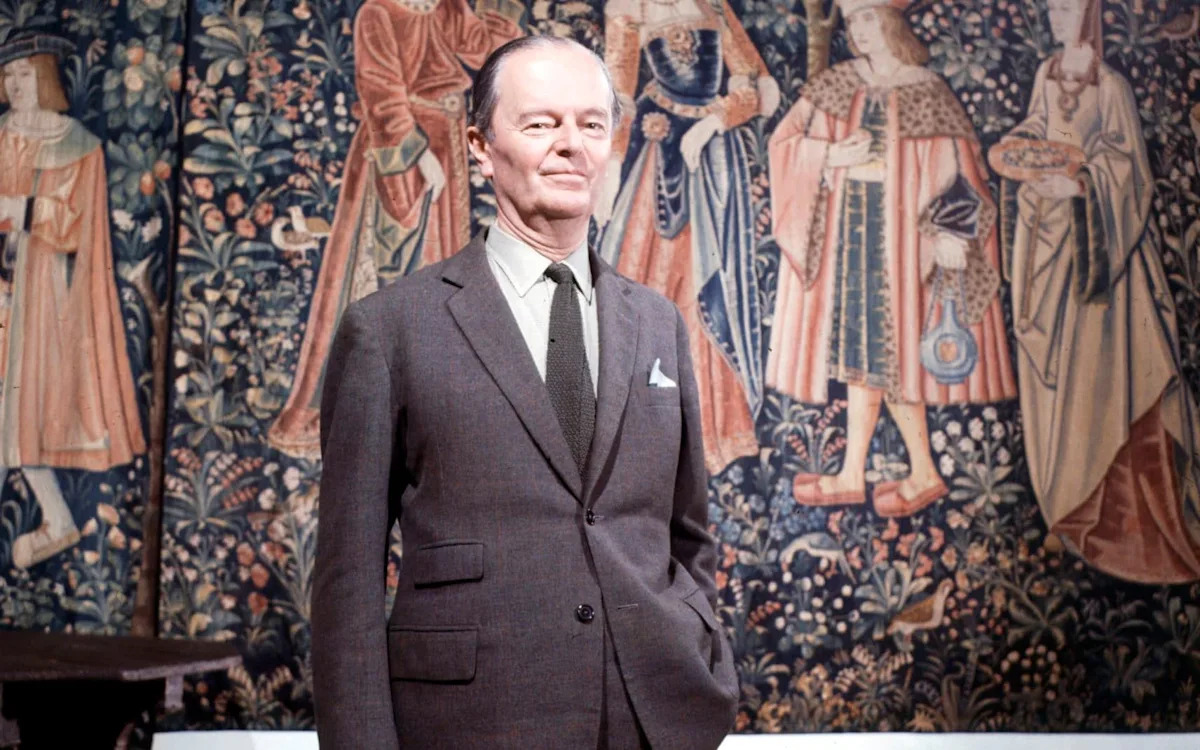
In such an atmosphere, it is no surprise that the Corporation feels disinclined to make programmes explaining and promoting the wealth of Western culture that can bring society together. We won’t get a new Kenneth Clark Civilisation if this is their mindset. But if the BBC only wants to serve up Traitors rather than Civilisation, does it any longer have a public service purpose?
Bijan Omrani is the author of God is an Englishman: Christianity and the Creation of England
‘ The preceding article may include information circulated by third parties ’
‘ Some details of this article were extracted from the following source www.yahoo.com ’