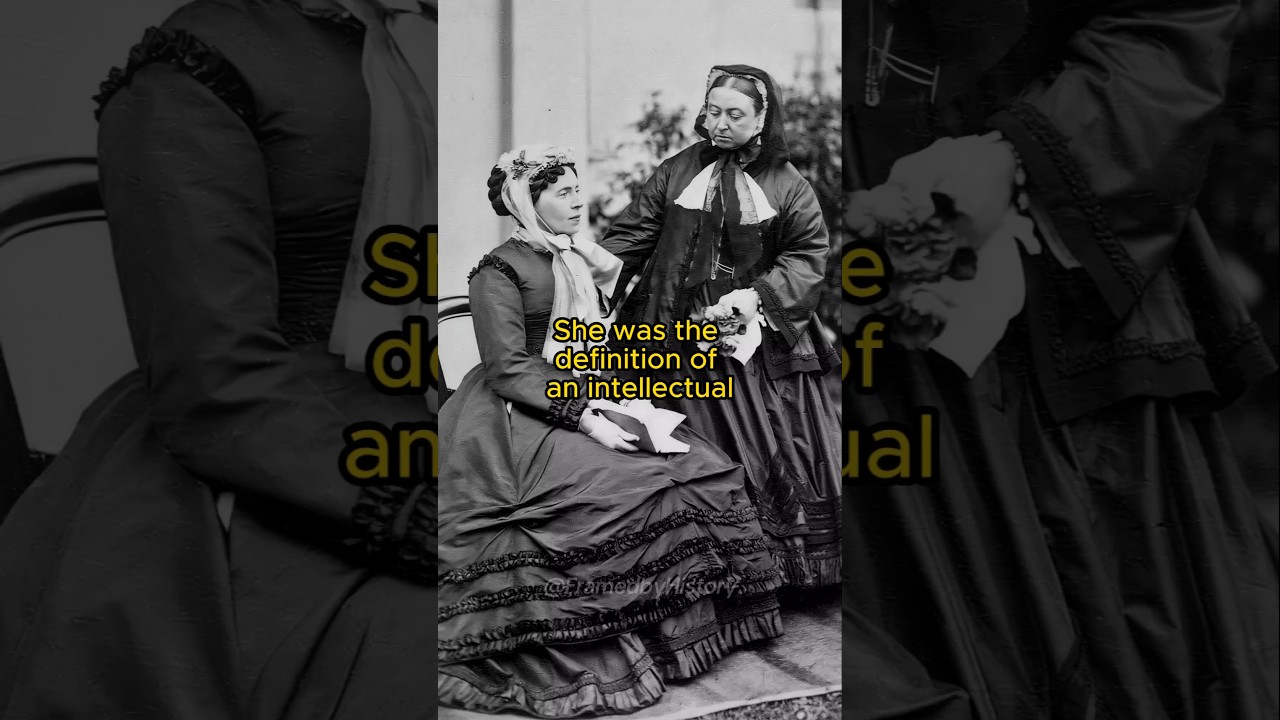
Augusta grew up in Weimar, the city of poets and thinkers, where Goethe himself was a mentor to her. She was a liberal, an intellectual, and a pacifist. But fate played a cruel joke on her: she was married off to Wilhelm of Prussia, a man who cared only for parades, uniforms, and the army. It was a marriage of oil and water. She quoted philosophers; he talked about guns. In the soldier-filled palace of Berlin, she was dying of boredom and loneliness.
But her real battle was not with her husband, but with his “Iron Chancellor,” Otto von Bismarck. It was a battle for the soul of Germany. Bismarck believed in “blood and iron,” in unification through war and force. Augusta believed in peace, culture, and liberal reforms.
They hated each other with a fierce passion. Bismarck called her “the old frigate,” fearing her influence on the aging King. He spied on her, slandered her in the press, and tried to isolate her. Augusta, in turn, did everything she could to turn her husband against the Chancellor’s brutal policies. She famously wore mourning clothes after Prussia’s military victories, because she saw them not as triumphs, but as tragedies of lost lives.
The irony of her life was absolute. It was Bismarck’s wars that made her the first Empress of a united Germany—a title she accepted without joy. Powerless to change the politics, she channeled her energy into mercy, founding numerous hospitals and the Women’s Association of the Red Cross.
Augusta was the “moral opposition” on the throne. She was a woman who hated the militarism of the very empire whose crown she was forced to wear.
#history #queen #royalty
Video Source