As this is the hard-chalk time of year, dashed by waves of seasonal loss, I’ve tried to revive thankfulness.
I re-started about a week ago, expressing gratitude for The Orangutan Project. Though my modest donations amount to the price of maybe three or four lunches, I’d cancel every streaming service, internet, cable and possibly electricity before curtailing donations for the literally life-giving work this group does. I’ll likely never get to Borneo, but knowing the work is happening fulfills.
Then I found myself thankfully in sync with the lonely grasping of John Steinbeck:
“In utter loneliness a writer tries to explain the inexplicable. And sometimes if he is very fortunate and if the time is right, a very little of what he is trying to do trickles through — not ever much.
“And if he is a writer wise enough to know it can’t be done, then he is not a writer at all. A good writer always works at the impossible.”
And
“When a man comes to die, no matter what his talents and influence and genius, if he dies unloved his life must be a failure to him and his dying a cold horror.
“It seems to me that if you or I must choose between two courses of thought or action, we should remember our dying and try so to live that our death brings no pleasure to the world.”
And
“We are lonesome animals. We spend all our life trying to be less lonesome.
“One of our ancient methods is to tell a story begging the listener to say — and to feel — ‘Yes, that’s the way it is, or at least that’s the way I feel it. You’re not as alone as you thought.’ “
Then just when I’m trying to look beyond grief and into gratitude, Tom Stoppard dies.
I’ll wait while you Google, if the name isn’t familiar, or if it tickles something, but you’re not certain what. Here’s a solid place to start. Though most hailed him as the erudite, witty creator of theatrical art, he was an entertainer at heart, writing also for film, TV and radio. Like all the best, he had gears
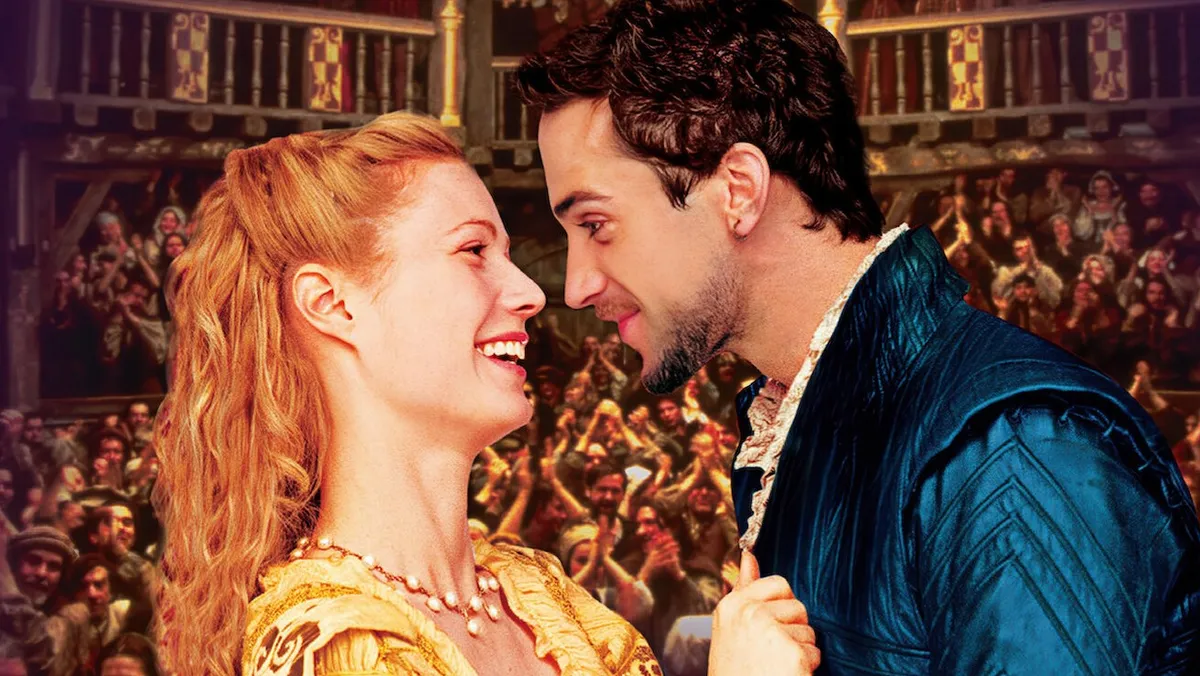
While “Things the Oscars Shouldn’t Have Done” could be a running “Jeopardy” category from Big Bang to infinity, this idea that the Stoppard-penned “Shakespeare in Love” somehow cheated “Saving Private Ryan” is one of the stranger hills to let Tom Hanks die on.
They’re wildly different, of course. One is harrowing, the kind of razor’s edge balancing that could trigger PTSD in certain folks, wring tears from a stone.
For theater kids, or anyone who experiences life at average cortisol levels. And Stoppard nailed theater’s mystery.
The other’s a melodramatic war flick, with a disconcertingly realistic D-Day depiction, wrought with Steven Spielberg’s usual fine art and cinematic craft.
One’s rewatchable, a meditation not just on the greatest writer our language has yet produced, but an examination of the follies of plays and players, aka all of us, what with the world being a stage, as written by one of the next-greatest writers, Stoppard.
Yeah, it’s heart-breaking when the other Tom — Hanks’ Captain Miller — stops shy of his goal, like Charlie Brown and home plate, but the latter parts of that flick are treacle, heart-tugging in blitheringly obvious ways. War is hell, yeah. No doubt, and no disrespect, but that’s a been-then, done-that for Hollywood since at least “All Quiet on the Western Front.”
I had to look up Hanks’ character name, because while I shivered through the in-theater experience back in 1998, I’ve felt zero interest in re-watching. Some films don’t bear it, or require it. Another Spielberg up in that ether is “Schindler’s List,” for many of the same reasons: It was an indelible, unrepeatable experience. Once was full, sufficient, unmistakable. Both remain with me.
But I can revisit “Shakespeare in Love” as I can “The Great Gatsby,” or impressionists at the MOMA, or Beethoven in a concert hall. There are reasons the top box office flicks, all-time, swing toward the fantastic, with action, adventure, drama, melodrama, life, death, love and loss, yes, all screened through shimmering silver veils.
Of course, it’s important to bring art, hard truths, to film.
But that doesn’t outweigh, or discount, joyful escapism. It’s not just about remove; it’s about being able to reflect on realities via a broad spectrum of emotions, actions, personalities. Tangled-up, like life, but with the boring parts cut.
The Venn diagram of those who dislike “Shakespeare in Love” is a near-perfect overlap with those who think Shakespeare himself feels like algebra on stage.
But Will wrote entertainment at a time when bear-baiting would have been chief competition, so he had to be pretty sharp. Not unlike Spielberg, he rose from slapstick and dueling-wits farce (“A Comedy of Errors,” “Much Ado About Nothing”) to romantic insanity (“Pericles,” “Romeo and Juliet”), then onward and upward. At what many consider his peas, he exhumed the best and worst of humanity, mired with its filthy, hairy in-betweens, soaring higher than any Oscar: “King Lear,” “Hamlet,” the Henriad, “Titus Andronicus,” “Twelfth Night” and “Macbeth.”
Of those, the last three might more likely grab a modern audience, full of bad craziness that could have made Hunter S. Thompson think “Whoa; too far.” In the case of my favorite, “Macbeth,” ripping action abetted to incisive character study, lofted by words that could sing a tale by vowels and consonants alone.
Stoppard, comfortably in the pantheon with Shakespeare, was in fact more complex often, in terms of ideas, wide-ranging philosophies. “Arcadia” alone could stand from re-reading, rewatching, time alone pondering, then re-reading and -watching again.
Even then you might feel dizzy. But entertained.
Stoppard also cranked out “Rosencrantz and Guildenstern are Dead,” Terry Gilliam’s “Brazil,” and one of the most coherent adaptations of “Anna Karenina.”
None of those require special lenses, or arcane knowledge. Just curiosity, and willingness to play.
Reach Mark Hughes Cobb at [email protected]. To support his work, please subscribe to The Tuscaloosa News.
‘ The preceding article may include information circulated by third parties ’
‘ Some details of this article were extracted from the following source www.usatoday.com ’