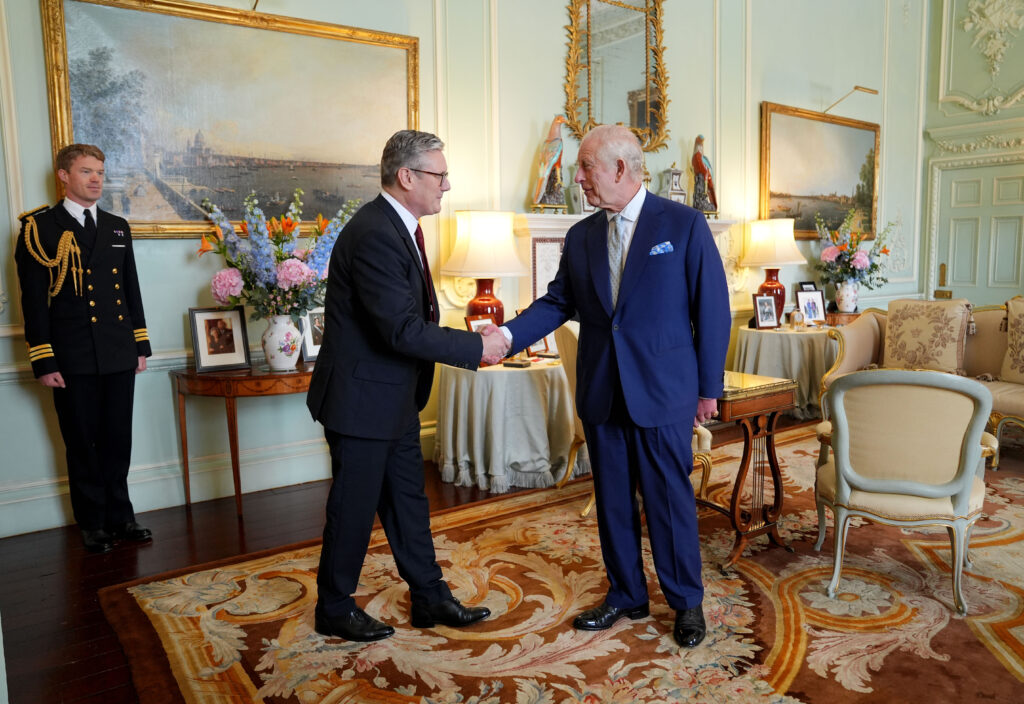
It is one of the shortest yet most significant ceremonies in
British public life. Lasting only a matter of minutes, the audience
between the Monarch and an incoming Prime Minister marks the
peaceful transfer of political power at the very heart of the
constitution.
Although the cameras capture the arrivals and departures at
Buckingham Palace, what happens behind the Palace’s famous gates
remains a private affair.
The process begins only after the outgoing Prime Minister has
formally resigned. Sir Keir Starmer will first travel to Buckingham
Palace to tender his resignation to King Charles III during a
private audience.
Once Sir Keir has departed, Palace officials prepare for the
arrival of Andy Burnham, who will become the next Prime
Minister.
Mr Burnham is escorted into Buckingham Palace and shown to the
Audience Room, where The King is waiting. There are no officials
present during the meeting, ensuring the conversation remains
entirely confidential.
The Monarch then invites the incoming Labour leader to form a
government.
The traditional wording is understood to be along the lines of:
“Will you form a government?” Once the invitation is accepted, Mr
Burnham immediately becomes Prime Minister and First Lord of the
Treasury.
For centuries, the appointment was known as the “kissing of
hands”. Historically, new Prime Ministers would kiss the
Sovereign’s hand as a sign of loyalty. Today, however, the ceremony
has been modernised, with a simple handshake replacing the
centuries-old custom, although the historic name remains.
A Palace photographer is then invited into the room to capture
the official image of the Sovereign greeting the new Prime
Minister. The photograph is usually released within minutes and
becomes part of the historical record of the reign.
The audience itself is brief, typically lasting between 20 and
30 minutes, although it can occasionally be longer depending on the
circumstances.
Before leaving Buckingham Palace, the new Prime Minister will
also receive important constitutional and security briefings from
senior officials, including matters relating to national security
and the operation of government.
Mr Burnham will then leave Buckingham Palace for the short drive
to 10 Downing Street, where he will deliver his first speech as
Prime Minister before crossing the famous black door to begin
appointing his Cabinet.
The entire process is carefully choreographed and has been
refined over generations. While governments may change, the
Monarch’s role remains unchanged: to ensure the smooth and peaceful
transfer of power by appointing the person best placed to command
the confidence of the House of Commons.
‘ The preceding article may include information circulated by third parties ’
‘ Some details of this article were extracted from the following source royalcentral.co.uk ’