In Tuesday’s Daily Telegraph Eric Idle said that television is now full of people “trying to bonk each other on islands.” He blamed streaming television but that’s quite wrong. In the week that Apple TV launched the latest series of Slow Horses, you could argue that streaming TV is where the real creativity is in British television.
The problem, instead, is with the mainstream channels. All of them. And in every area of TV, from drama and sport to news and comedy.
Of course, there are exceptions. The BBC marked the anniversary of the liberation of Belsen with The Road to Auschwitz, a moving documentary about the Holocaust presented by Sir Simon Schama, and What They Found, a documentary about Belsen directed by Sam Mendes.
A few years ago BBC4 showed a wonderful tribute to the documentary maker Christopher Nupen. But this is the point. Nupen made his greatest music documentaries back in the golden age of Music and Arts at the BBC, from the 1960s when he made his famous film of a performance of Schubert’s Trout Quintet by Jacqueline du Pré, Daniel Barenboim, Itzhak Perlman, Pinchas Zukerman, and Zubin Mehta on 30 August 1969, to 2004, when he made We Want The Light, focusing on the relationship in music between Jews and Germans.
There are great TV dramas from yesteryear on BBC iPlayer. Dramas like Elizabeth R and All Passion Spent, recently repeated on BBC iPlayer, but they were also made more than forty years ago.
That was the era of dramas like Colditz, Days of Hope, Dennis Potter’s Pennies from Heaven and Frederic Raphael’s The Glittering Prizes, all on the BBC; Minder, The Sweeney, Brideshead Revisited and The Jewel in the Crown, all on ITV.
When Alan Yentob died, the BBC repeated a number of episodes of Imagine as a tribute but hardly any of the great films that Yentob, Nigel Finch and Anthony Wall produced for Arena, one of the BBC’s great arts documentary series.
It’s about quality of course, but it’s also about the range of programmes. From dramatisations of Plato (Jonathan Miller’s The Drinking Party) and Alice; broadcasts of The Merchant of Venice, Rigoletto and The Mikado; a series on BBC2 about the history of medicine and madness; art documentaries with Susan Sontag and Herbert von Karajan; Francis Bacon and Michael Powell.
The last hurrah was arguably BBC 2’s The Late Show (1989-95) and Melvyn Bragg’s The South Bank Show, documentary strands like Timewatch and Horizon , great comedy series like Monty Python, Spitting Image and The Young Ones.
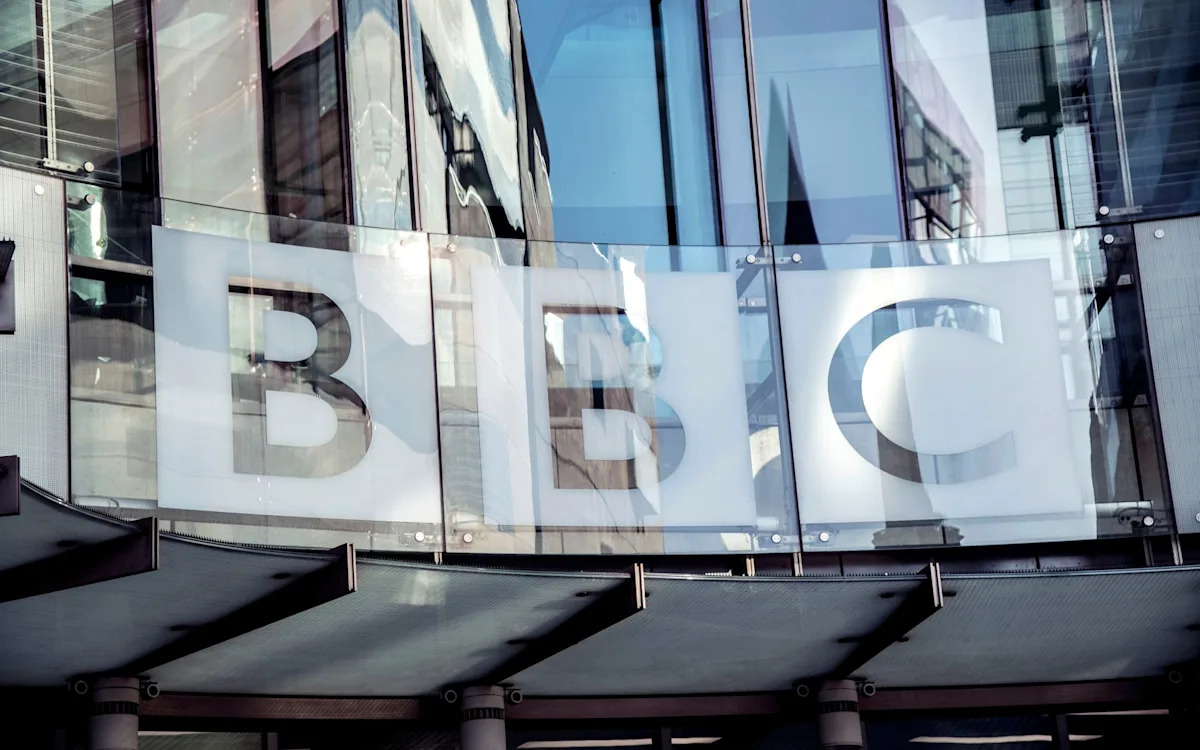
The BBC constantly advertises its news programmes but its coverage of Israel has been riddled with bias since October 7, their obsession with President Trump knows no bounds, Question Time is no longer what it was, and the BBC struggles to find good presenters for its election coverage.
That all feels a long time ago before reality shows, endless cop shows and middlebrow dramas about cops ‘n’ docs, took over terrestrial TV. When Sir David Attenborough finally retires, it will be the end of an era. How will the BBC dare to charge a licence fee? Who will still be watching Channel 4 or ITV?
One of the great cultural forms of postwar Britain will have passed away. As a schoolboy in the 1960s and 1970s, as a producer at Channel 4, BBC2 and ITV, I loved watching and making these programmes. I blame today’s TV executives and governors, the government ministers who have all failed us. They have been spineless, middlebrow and clueless. We deserve better.
‘ The preceding article may include information circulated by third parties ’
‘ Some details of this article were extracted from the following source www.yahoo.com ’