We’re used to seeing royals at Wimbledon, with the Princess of
Wales now patron of the All England Club. But rewind nine decades
and another royal was a familiar face on Centre Court. A princess
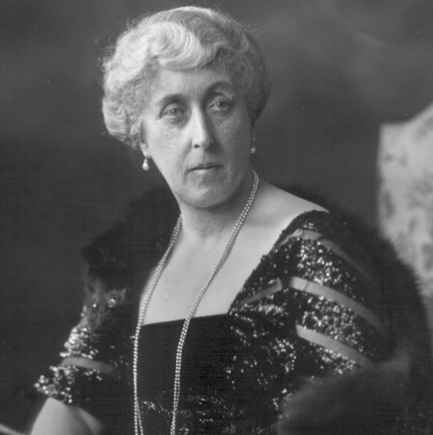
known to her family as Thora regularly appeared on
Pathe newsreels presenting trophies and cheering on the tennis
stars of the day. She was a granddaughter of Queen Victoria, a keen
sportswoman and a royal who witnessed first-hand the transformation
of the monarchy from the Victorian age into the modern era.
An unusual nickname for an unusual
princess
Her story began much like those of so many of Queen Victoria’s
descendants. Born at Frogmore House on 3 May 1870, she was
christened Victoria Louise Sophia Augusta Amelia
Helena. As was almost compulsory among Victoria’s
grandchildren, she was given her grandmother’s name. She was the
third child and first daughter of Princess Helena, Queen Victoria’s
third daughter, and Prince Christian of Schleswig-Holstein, who had
been permitted to marry Helena in 1866 on the condition that the
couple lived permanently in Britain. Thora therefore grew up in
England, surrounded by her many royal cousins.
One of those cousins would shape the course of her life. Like
every other granddaughter of Queen Victoria, Thora was considered a
potential royal bride from an early age. The groom her family had
in mind was George, the second son of the future Edward VII and
Alexandra of Denmark. But his mother had other ideas.
Alexandra never forgave Prussia for the Schleswig-Holstein wars,
in which her native Denmark had suffered defeat. Thora’s paternal
lineage was therefore always going to be an obstacle. The Princess
of Wales, still regarded as one of Europe’s great beauties, was
also dismissive of her niece’s appearance, nicknaming her “Snipe”.
Writing to her son, Alexandra mocked the prospect of the match,
remarking: “Well, it would be a pleasure to welcome that ‘beauty’
as your bride.”
From potential bride to overlooked
bridesmaid
Instead of becoming George’s wife, Thora was one of the
bridesmaids when he married Mary of Teck in the Chapel Royal at St
James’s Palace on 6 July 1893. At just 23, she still hoped she
might one day become a royal bride herself.
Those hopes gradually faded. Another prospective suitor, Prince
Ernest of Hohenlohe-Langenburg, instead married her cousin,
Princess Alexandra of Edinburgh, and as Thora approached her
thirtieth birthday she remained unmarried.
Even so, Queen Victoria never entirely gave up on finding her
granddaughter a husband. In 1899, the Queen wrote to her eldest
daughter about another possible match with Prince Johannes of
Hohenlohe-Langenburg. Religion proved an insurmountable obstacle,
however, as he was Roman Catholic, and the marriage never
materialised. Instead, Thora settled into a life devoted to her
mother, her grandmother and public service.
She spent much of Queen Victoria’s final years by her side,
helping organise and record some of the monarch’s memoirs and
diaries. Those writings would later be edited with the assistance
of Princess Beatrice. At the same time, Thora became increasingly
involved with many of the charitable organisations supported by her
mother, beginning a lifetime of public service.
A princess with a passion for
sport
Yet hers was far from a sheltered existence. Thora loved the
outdoors and developed a lifelong passion for sport, particularly
tennis.
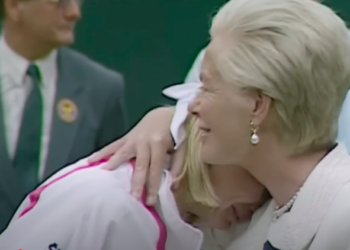
She became a familiar sight at the All England Championships at
Wimbledon and later at other major tournaments, including the Davis
Cup, where she presented trophies on several occasions. Golf was
another favourite pastime, shared with her brother Prince
Albert.
She also remained deeply devoted to her family. When her brother
Prince Christian Victor died during the Boer War, Thora accompanied
her mother to South Africa to visit his grave.
During the First World War she helped organise concerts to
entertain troops, but the conflict also changed her own identity.
In 1917, King George V ordered members of the Royal Family to
relinquish their German titles. The name Schleswig-Holstein, which
had caused so much resentment for Queen Alexandra, disappeared from
her style. The cousin once rejected as a potential bride became
simply Her Highness Princess Helena Victoria.
The Second World War brought further upheaval. Thora had been
living with her sister, Princess Marie Louise, at Schomberg House
in London, but as the conflict intensified the sisters moved to the
countryside for safety. They eventually returned to discover their
home had been damaged, forcing them to settle instead in Berkeley
Square.
Despite these disruptions, her charitable work never faltered. A
surprising amount of newsreel footage survives showing Princess
Helena Victoria opening hospitals, attending charitable events and
presenting prizes at the sporting occasions she loved.
She became godmother to Prince William of Gloucester, the eldest
son of the Duke and Duchess of Gloucester, at his christening in
1942. Five years later she watched him serve as a page boy at the
wedding of Princess Elizabeth and Prince Philip in Westminster
Abbey. It would prove to be her final major public appearance.
Princess Helena Victoria died on 13 March 1948 and was buried at
Frogmore, where her story had begun almost 78 years earlier.
“I know you of all others would be able to realise what the loss
of darling Grandmama is to me,” she wrote shortly after Queen
Victoria’s death in response to a letter of condolence.
In many ways, the loss of her beloved grandmother marked the
beginning of a new chapter. Helena Victoria moved from the intimate
world of Queen Victoria’s court into a monarchy that was becoming
increasingly modern. It is easy to dismiss her as a forgotten
Victorian princess, but she quietly bridged two very different
royal eras. Through her charity work, her love of sport and her
steadfast sense of duty, she built a meaningful public life of her
own. By the time she died, she was remembered not simply as Queen
Victoria’s granddaughter, but as a princess who embraced change
with quiet dignity and earned the lasting respect of her
family.
‘ The preceding article may include information circulated by third parties ’
‘ Some details of this article were extracted from the following source royalcentral.co.uk ’