Montreal is often called the city of festivals, and when it comes to film festivals, no month is busier than November. On these shorter days and longer nights, why not hunker down in a theatre with a few-hundred like-minded cinephiles?
Not one, not two but three film fests light up local screens over the next four weeks, offering eye-opening, globe-trotting entertainment for a wide range of movie buffs. Here’s a rundown of what to expect.
Cinemania, Nov. 4 to 16
The 31st edition of this ever-growing festival presents 175 French-language films from around the world, most of them shown with English subtitles. Far from a niche event, Cinemania regularly lands films from Cannes and other big festivals, attracting an impressive number of stars from Europe.
This year’s big coup is acclaimed French actress Juliette Binoche, who will be on-hand to present her directorial debut In-I In Motion, a documentary about her 2008 stage collaboration with British dancer and choreographer Akram Khan.
“The presence of artists is particularly important to us,” said festival director Guilhem Caillard. We’re proud to welcome 153 international guests this year, and 134 Quebec guests — nearly 300 total.”
Founded by Montrealer Maidy Teitelbaum in 1995, Cinemania has grown into one of the city’s premier film events, with red carpets, industry buzz and strong attendance.
“We’re showing films people want to see,” Caillard said. “And given that 40 per cent of these films won’t be shown here on other occasions, it’s a unique opportunity.”
Opening the festival on Tuesday was veteran Quebec director Léa Pool’s On sera heureux, a gay love story between Saad, a paperless Moroccan immigrant, and his Iranian lover Reza, who is threatened with deportation.
Other highlights include:
Jan Kounen’s L’Homme qui rétrécit, starring Jean Dujardin in the title role, with Quebec’s Marie-Josée Croze;
Arnaud Desplechin’s dramatic romance Deux pianos, starring François Civil and Charlotte Rampling; and
Guillaume Ribot’s Je n’avais que le néant, revisiting Claude Lanzmann’s classic 1985 Holocaust documentary Shoah.
As usual, Cinemania features several Cannes highlights including:
Thierry Klifa’s intrigue La Femme la plus riche au monde, starring French icon Isabelle Huppert in a part inspired by the late French heiress Liliane Bettencourt, L’Oréal’s main shareholder, whose photographer house guest is accused of fleecing her of big bucks;
Alain Berliner’s documentary Bardot, in which the legend opens up about her life;
Anna Cazenave Cambet’s lesbian romance Love Me Tender, in which a lawyer leaves her marriage to follow her heart, one of four films at Cinemania starring Quebec’s Monia Chokri;
Rebecca Zlotowski’s Vie Privée, a thriller starring Jodie Foster as a psychologist turned detective; and
The Dardenne brothers’ Jeunes mères, a story of five young mothers that won best screenplay at Cannes.
AT A GLANCE: Cinemania continues until Nov. 16. For tickets and information, visit festivalcinemania.com

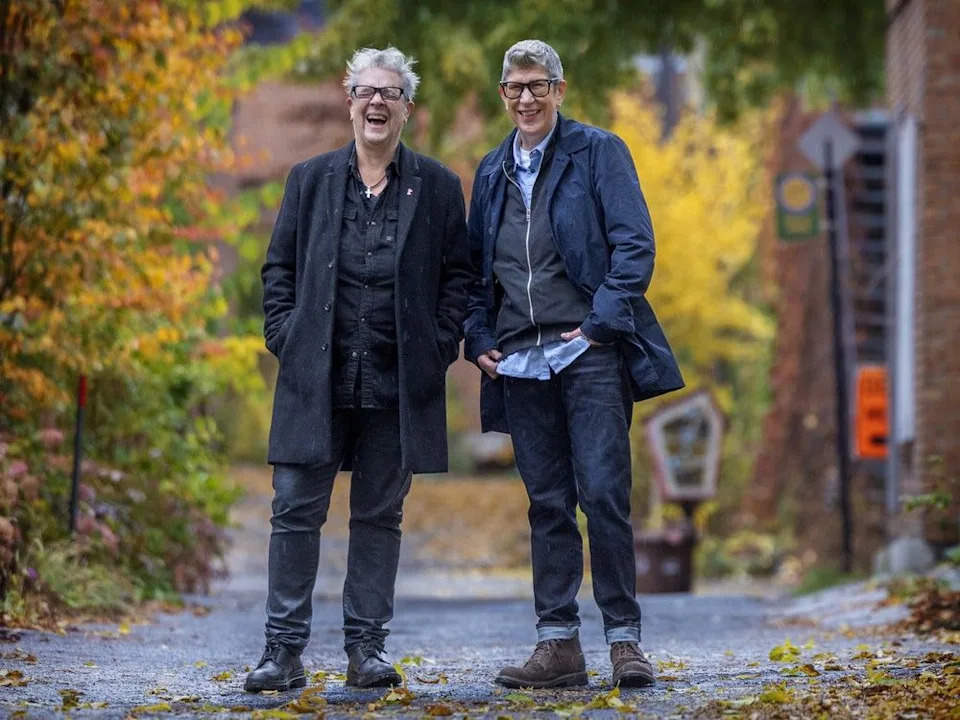
Charlie Boudreau, left, and Katharine Setzer, who are respectively director and programming director of the 38th Image+Nation Film Festival, celebrating LGBTQ2+ cinema.
Image+Nation, Nov. 20 to 30
Canada’s longest-running LGBTQ+ film festival turns 38, and Charlie Boudreau and Katharine Setzer couldn’t be happier.
“It’s more important than ever to have a queer film festival,” programming director Setzer told The Gazette.
“We go around the world and find the best stories of being queer in every place,” said festival director Boudreau. “It’s a chance to see the evolution of how we speak about ourselves and represent ourselves.”
Boasting 125 films from 38 countries, Image+Nation opens with Métis filmmaker Gail Maurice’s romance Blood Lines.
“It touches on intergenerational trauma, the ‘60s Scoop and the pain of adoption,” Setzer said, “with a nice lesbian love story in the mix and empowering female characters.”
The film screens as part of the festival’s Indigiqueer Voices spotlight, which includes Bretten Hannam’s ethereal thriller At the Place of Ghosts (Sk+te’kmujue’katik), Corey Payette’s drag musical Starwalker and Courtney Montour’s documentary Rising Through the Fray, about an Indigenous Roller derby team.
Image+Nation takes the baton from Cinemania, showing Pool’s On sera heureux and hosting a talk between the director and the film’s screenwriter, Quebec playwright Michel Marc Bouchard, Nov. 22. And it screens a film shown at the Festival du nouveau cinéma, Xiaodan He’s Montréal, ma belle, starring famed Chinese-American actress Joan Chen (The Last Emperor, Twin Peaks).
The festival scores a sneak preview of Montrealer Jacob Tierney’s upcoming Crave series Heated Rivalry, a Canada-Russia hockey romance based on the best-selling book series by Rachel Reid.
Boudreau and Setzer point to Image+Nation’s first Soirée étudiante, featuring films by Quebec CEGEP and university students at the NFB Space, Nov. 21; and the 25th anniversary of its Queerment Québec film series.
Closing the festival is Sophie Hyde’s Jimpa, an intergenerational queer family drama set in Amsterdam, starring Olivia Colman and John Lithgow.
“I’m really proud of our programming,” Setzer said. “Jesus, look what we did.”
AT A GLANCE: Image+Nation takes place Nov. 20 to 30. For tickets and information, visit image-nation.org.

“We’re an auteur documentary festival,” says Marc Gauthier, director of the Rencontres Internationales du documentaire de Montréal.
Rencontres internationales du documentaire de Montréal (RIDM), Nov. 20 to 30
Our city’s premier documentary film fest is anything but conventional. RIDM’s 28th edition features 137 films that push the limits of reality-based storytelling.
“We’re an auteur documentary festival,” said event director Marc Gauthier. “On an artistic level, we seek to challenge cinephiles.”
Opening the event is Letters From Wolf Street, Indian filmmaker Arjun Talwar’s whimsical tale of his experience as an immigrant in Warsaw, which premièred at the Berlin Film Festival.
Closing things out is Argentina-born Andrés Livov’s Les Blues du bleuet, a community portrait of Quebec’s blueberry mecca, Lac-Saint-Jean.
“The opening and closing films offer a unique vision of what it means to be a stranger,” said Marlene Edoyan, the festival’s co-artistic director alongside Hubert Sabino-Brunette and Ana Alice de Morais.
Of note this year is a focus on Taiwan, offering a dozen features and shorts, which Gauthier describes as “an eclectic bunch of films that show where Taiwanese documentary is at today — it’s a very interesting and modern place.”
Michelle Stephenson’s True North revisits the 1969 student anti-racism protests at Montreal’s Sir George Williams University (now Concordia).
Winner of L’Oeil d’Or at Cannes’s Critics’ Week, Déni Oumar Pitsaev’s Imago follows the Chechen-born filmmaker as he leaves Belgium and returns to his village to claim land he has inherited, stirring up old feuds and family dramas.
“It’s a very personal film,” Edoyan commented.
The longest screening at the festival is of Peter Mettler’s six-hour opus While the Green Grass Grows: A Diary in Seven parts, tracking the Swiss-Canadian filmmaker’s philosophical and cinematic exploration of life and the world around him.
“It’s extremely intimate,” Edoyan said. “He’s a masterful filmmaker.”
In The Westoxicateds, Montreal filmmaker Gilda Pourjabar and her brother revisit their youth in Iran imbibing American alternative culture.
“It looks at creativity in times of repression; it’s a fun film,” Edoyan said.
RIDM, she explained, is all about “introducing you to filmmakers, ideas and parts of the world you didn’t expect, and seeing things you wouldn’t see at any other festival.”
AT A GLANCE: RIDM takes place Nov. 20 to 30. For tickets and information, visit ridm.ca
Related
‘ The preceding article may include information circulated by third parties ’
‘ Some details of this article were extracted from the following source ca.news.yahoo.com ’

![Robbie Williams Explains What Fell Onto His Microphone During Live TV Broadcast [Video] - 2oceansvibe News](https://celebrity.land/en/wp-content/uploads/2026/07/Robbie-Williams-Explains-What-Fell-Onto-His-Microphone-During-Live-350x250.jpg)