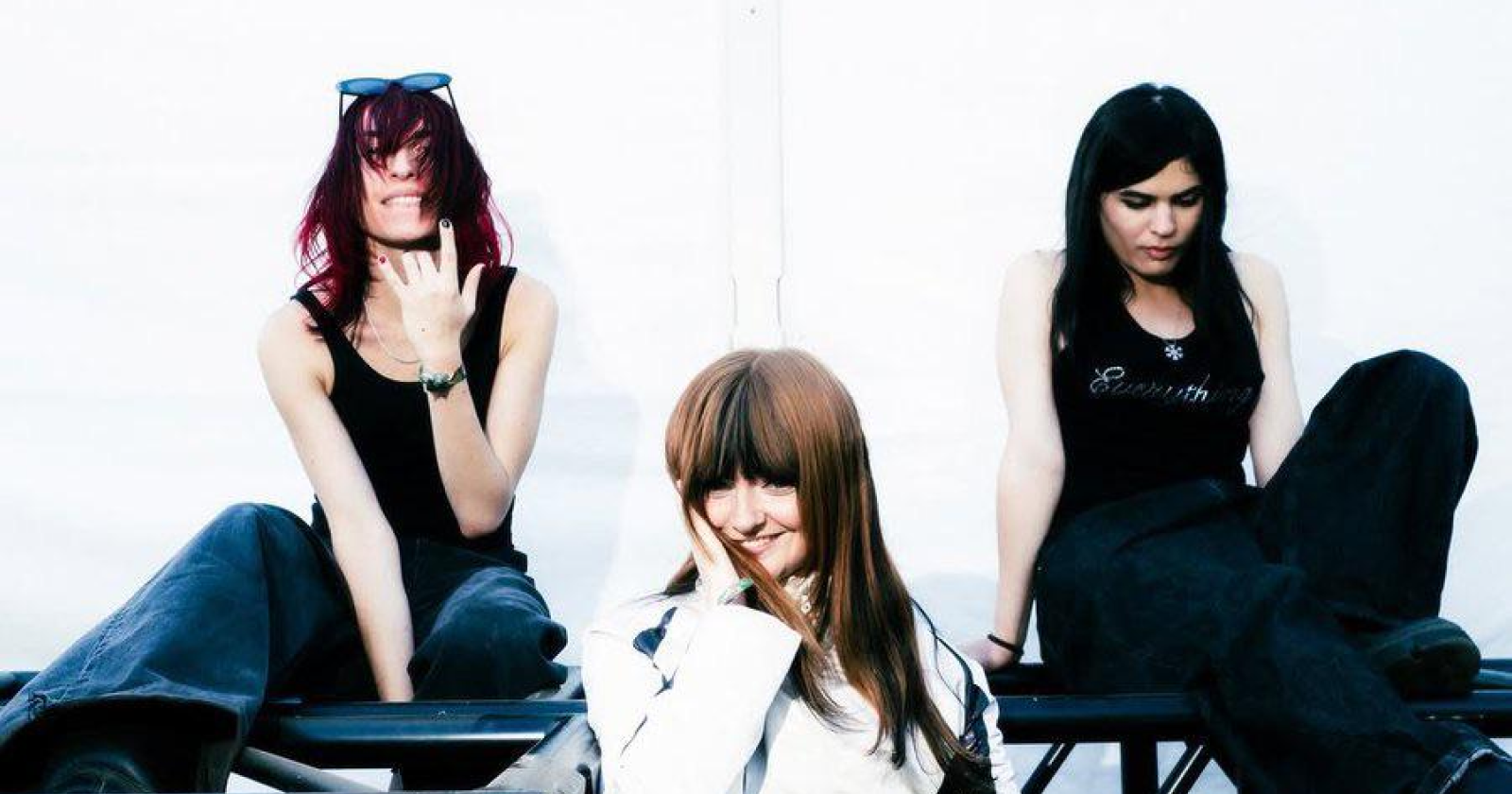
What do 2hollis, underscores, Ninajirachi, Jane Remover, fakemink, Tiffany Day, rommulas, Frost Children, and all the most niche Gen Z favourite artists have in common? They share the same listeners and, despite being among the most acclaimed names of the past year — drawing crowds at Coachella, Primavera Sound, Lollapalooza, and Gov Ball — they have never truly belonged to a precise musical genre. At least until now. Because the sound that has swept through the creative scenes of every major city in the world, from Dimes Square to Seongsu-dong to South Milan, still had no name. Too melodic to be simply hyperpop, too un-rock to be truly electroclash, not rap enough to fall under rage. Enough of everything, instead, to be sleazepop.
Where does sleazepop come from?
As with almost every Gen Z cultural phenomenon, sleazepop didn’t emerge overnight. Its roots stretch back to the mid-2010s, when producers like A.G. Cook and SOPHIE began redefining the boundaries of pop music through the PC Music project, an independent label based in London. What at the time seemed like a niche experiment — built on hyper-compressed synthesisers, manipulated vocals, and constant references to cyberculture — would soon find a name in hyperpop, a label later adopted and amplified by streaming platforms to describe the genre.
Over the years, however, that sound kept evolving. Digital pop was joined by the resurgence of the indie sleaze aesthetic of the early 2000s. The turning point probably came in 2024 with the Brat phenomenon of Charli xcx, which brought maximalist electronic music and club culture back to the centre of the mainstream, paving the way for a new generation of artists raised on SoundCloud as much as on TikTok. Add to all this another typically Gen Z phenomenon: the new desire to feel “niche” — to be known but not famous, to listen to music that doesn’t get radio play, to have artistic and creative references that don’t come from the mainstream (but which, in all likelihood, were discovered on TikTok). Poser culture 2.0, in other words.
It comes as no surprise, then, that this new musical ecosystem also felt the need to give itself a name. According to Dazed, the term “sleazepop” was coined in 2025 by the anonymous American creator Sleaze Pop Daily, first on an Instagram fan page and then on the subreddit r/Sleazepop, created to bring together all those artists who slipped through the cracks of traditional labels like hyperpop, electroclash, or rage. Rather than inventing a musical genre, the user’s insight seems to have given a shared identity to a scene that already existed, united as much by a community aesthetic as by a hyper-specific sound.
2026 is the year of sleazepop
All of these factors combined to make sleazepop the new favourite musical genre of Gen Z, following a trajectory that is reminiscent, in some ways, of trap around 2015. Back then, too, it was an apparently niche scene, confined to the internet and subcultures, that within a few years would become the new mainstream.
It’s no coincidence that Underscores will be opening some dates on Charli xcx’s new tour, and that Tell Me (U Want It) was named by Spotify’s editors as the best track of the first half of 2026. Fakemink, meanwhile, is no longer just one of the most promising names in British rap — he has already walked for Gucci and has established himself as one of the muses of Demna’s new era. 2hollis has gone from internet forums to the stages of the world’s biggest festivals, Ninajirachi was the rising star of this year’s Coachella, and Jane Remover and Frost Children continue to accumulate listeners well beyond the boundaries of their respective niches.
But the right question isn’t whether sleazepop will become the next big musical genre — the real question is whether it’s actually a genre at all. Because, just as happened with hyperpop, sleazepop seems to describe less a sound and more a generation of artists and listeners who share the same aesthetic, the same cultural references, and the same algorithm. Could this truly be the birth of a new subculture? Or is it perhaps the first taste of the pop of the 2030s?
‘ The preceding article may include information circulated by third parties ’
‘ Some details of this article were extracted from the following source www.nssmag.com ’