There is a very particular species of royal discourse that reliably surfaces whenever Prince Harry, Meghan, and Prince Andrew are mentioned in the same moment.
It goes something like this: they are all “defectors,” all estranged from the institution, all variations on a theme of individuals who stepped away from the royal fold. The framing is certainly tidy, rhetorically satisfying, but also – in light of the former Prince Andrew’s arrest on Thursday – comically imprecise.
But beyond accounts of his 11 hours in police custody and ongoing searches at his properties, another pattern is quickly snapping into focus for me, and it’s one that requires no crystal ball to anticipate. Royal media operates with rhythms as predictable as tides, and one of those rhythms is diversion…often by nostalgia. A fresh scandal, especially one carrying legal gravity, is often accompanied by a sudden resurgence of familiar dramas, old tensions, and tired grievances.
With even the most tenuous connection to the news of the day, these get polished to a high gloss and presented as newly urgent.
A new biography of William and Catherine is arriving next week, and it does what royal books reliably do: it revisits history. Some of those histories involve Harry and Meghan, because the modern royal narrative is now an ecosystem of interlocking storylines. My concern today does not lie with the book itself, its author (Russell Myers), or its editorial team.
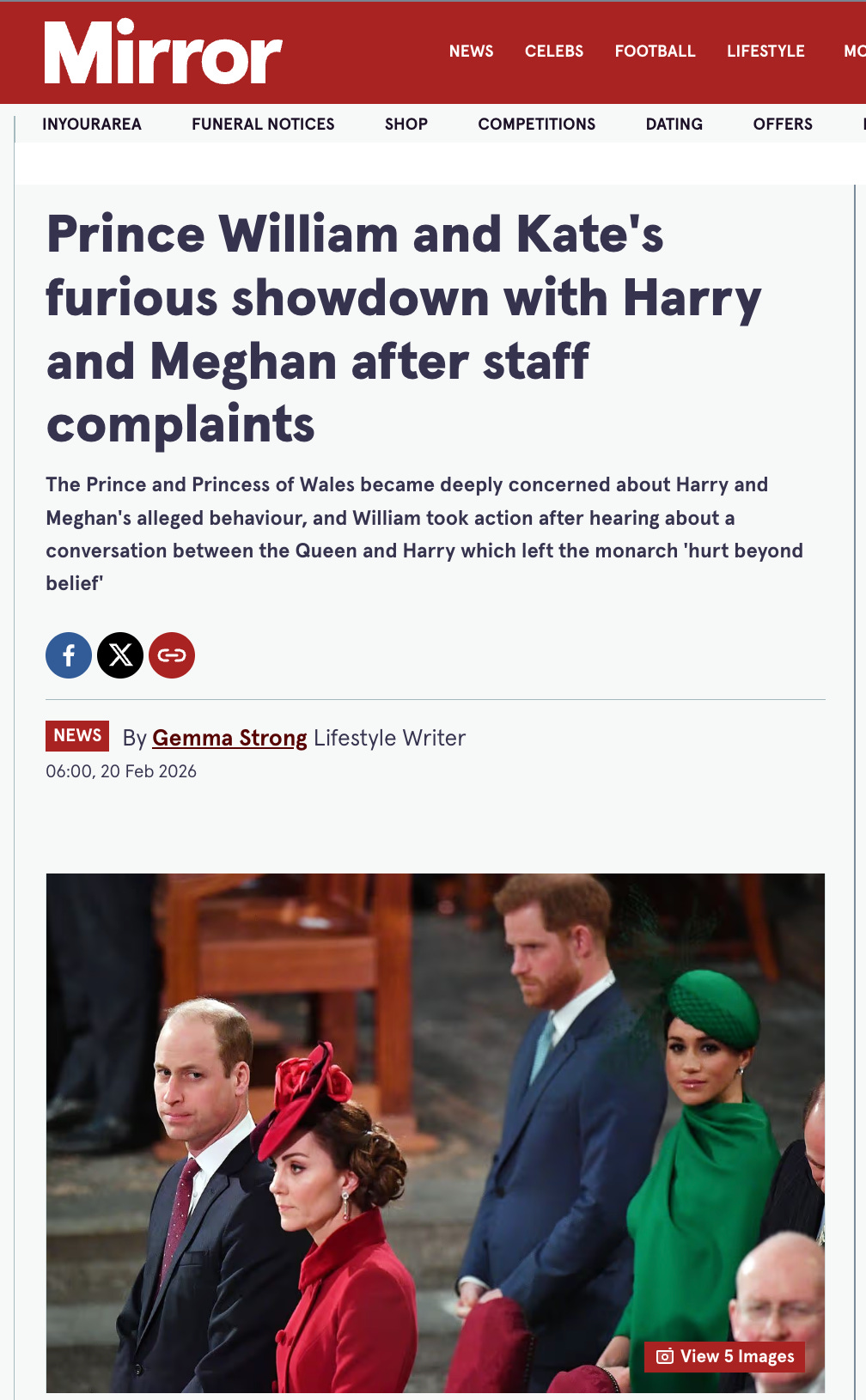
Publishing has long since learned that Sussex-adjacent material is an accelerant for attention, and serialization in the British press is transforming passage from the forthcoming book into a steady drip of headlines. Excerpts become headlines, headlines become discourse, and discourse becomes a powerful gravitational pull, as readers are inevitably drawn back into the soap opera…even as a far more consequential story unfolds elsewhere.
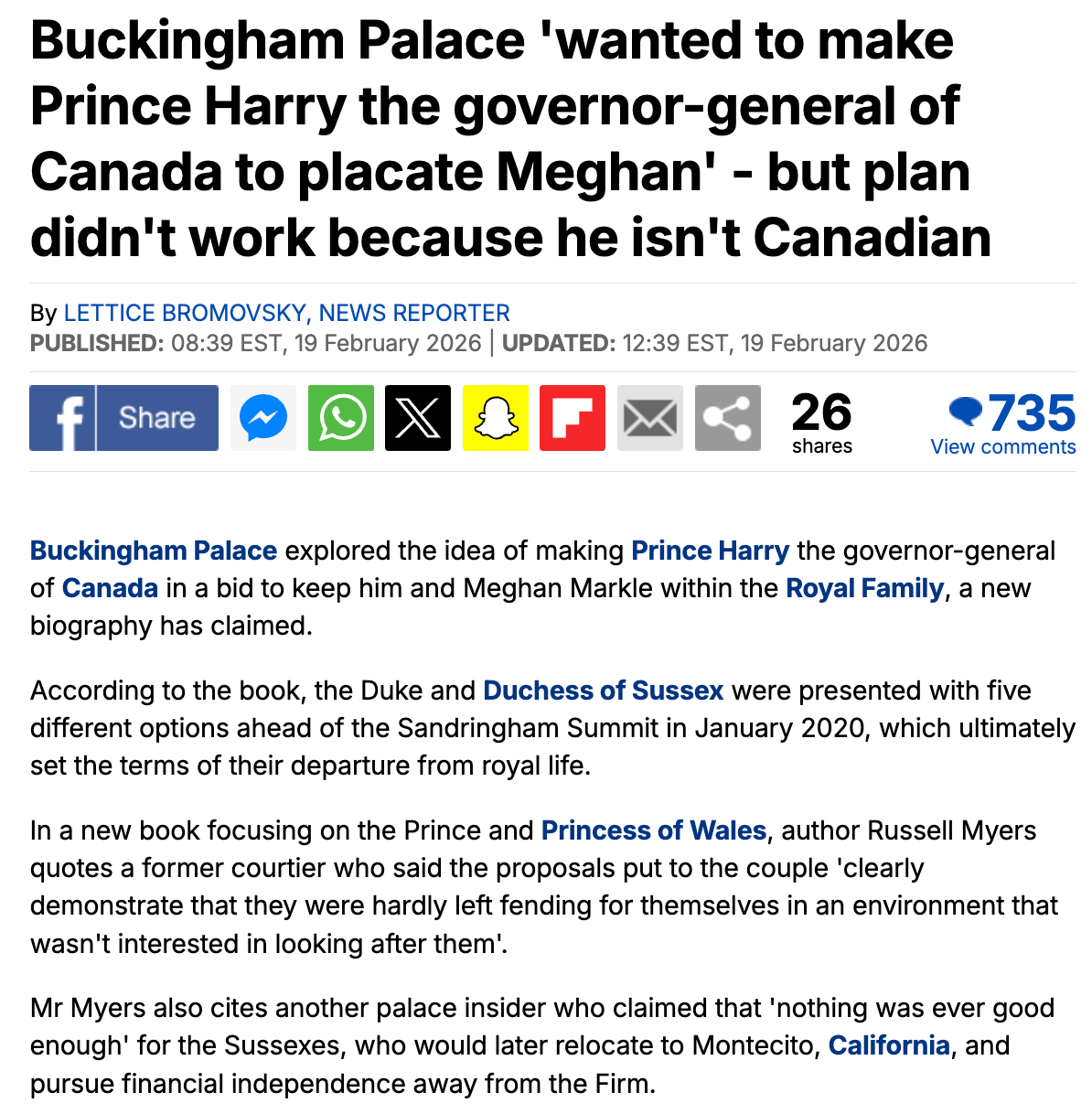
What readers are up against now is distortion. When fundamentally different kinds of royal crises occupy the same narrative space, their critical points of difference begin to feel less important.
That blurring is particularly revealing in the case of Andrew Mountbatten Windsor. Andrew’s situation, unlike Harry and Meghan’s, is not a story about “departing public life.” It is a story about alleged conduct. That distinction matters far more than it might first appear to some, particularly royalist observers whose concept of accountability is linked to preserving the institution they hold dear.
‘ The preceding article may include information circulated by third parties ’
‘ Some details of this article were extracted from the following source mattaoffact.substack.com ’