Sir William Wallace (c. 1270–1305) was a Scottish knight and landowner who became a legendary leader during the First War of Scottish Independence, serving as a staunch defender of Scottish freedom against English rule. Rising from relative obscurity—unlike many of the Scottish nobility of his time—Wallace emerged as a powerful, giant-statured military leader after killing an English sheriff in 1297. Alongside Andrew Moray, he achieved a monumental victory against the English at the Battle of Stirling Bridge on September 11, 1297, using superior tactics to defeat a larger, well-armed force, after which he was knighted and named Guardian of the Kingdom of Scotland.
Following this victory, Wallace mounted an invasion of northern England, pillaging countryside from Cockermouth to Northumberland. However, after being defeated by King Edward I of England at the Battle of Falkirk in 1298, he resigned his position as Guardian, continuing to lead resistance efforts through guerilla warfare. For years, he evaded capture, navigating political tensions, a trip to France, and betrayal by Scottish lords who had submitted to English authority.
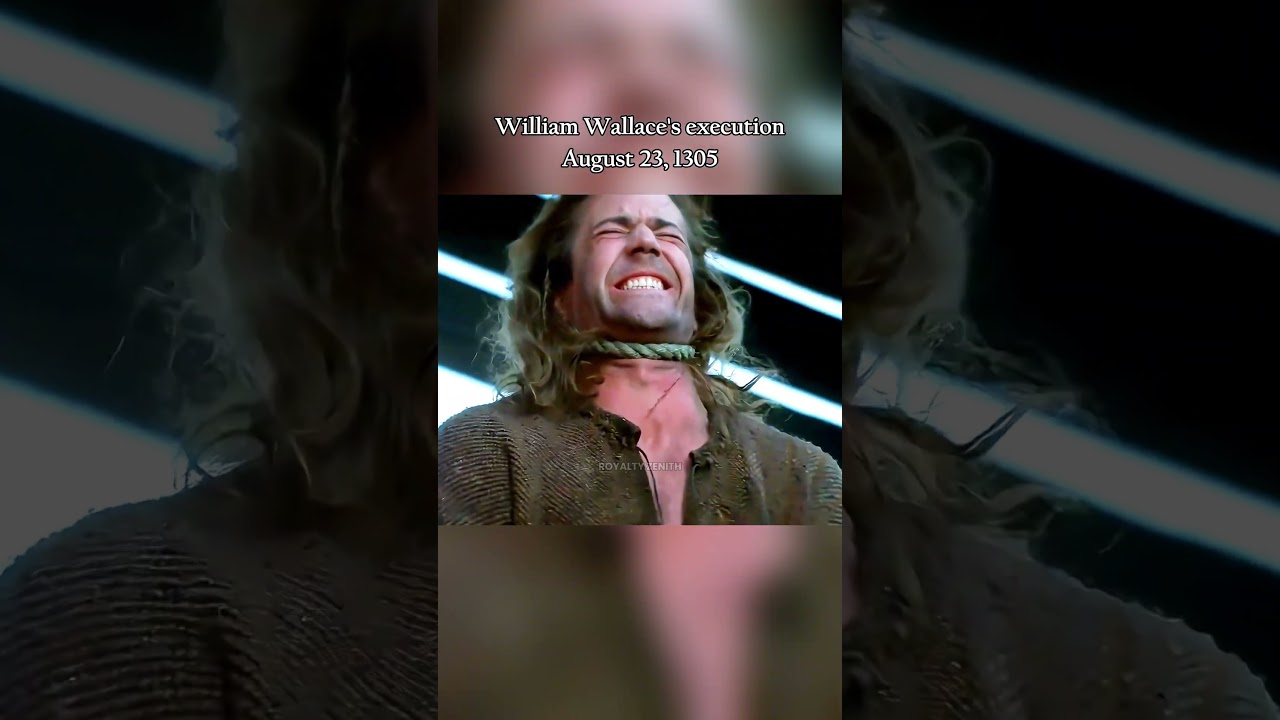
In August 1305, Wallace was captured in Robroyston near Glasgow by a Scottish knight loyal to Edward I and handed over to English soldiers. He was transported to London, tried for treason at Westminster Hall—where he famously denied the charge, stating he could not be a traitor to a king he never swore subject to—and was executed on August 23, 1305, through a brutal hanging, drawing, and quartering. His body was torn into pieces and displayed across Britain as a warning, yet his martyrdom only served to harden Scottish resistance to English occupation. Throughout history, and popular culture, he has become an iconic symbol of patriotism and the struggle for national independence.
Video Source