Image credits: Flickr
Turn on the radio for long enough and you’ll eventually hit a rhythm that didn’t originate on American soil at all. It traveled here in someone’s suitcase, sometimes literally, carried by a musician who arrived with little more than talent and a willingness to start over. The history of American music is, in large part, a history of arrivals, and three names in particular show just how much of what we consider quintessentially American sound actually began somewhere else entirely.
Celia Cruz: the Cuban voice that gave salsa its crown
Celia Cruz: the Cuban voice that gave salsa its crown (Image Credits: Unsplash)
When La Sonora Matancera left Cuba for a tour in Mexico in 1960, nobody expected the trip to become permanent. After the Cuban Revolution of 1959, Havana’s nightlife all but disappeared, and along with the other members of her band, Celia Cruz left Cuba for Mexico and then the United States, eventually settling in New Jersey. She arrived with a career already built in Cuba, but almost nothing else, and had to start again from scratch in a country that barely knew her name yet.
It took over a decade of steady work before she truly broke through. The potential for salsa fans grew alongside increasing Latin American migration to the United States, especially after changes to federal immigration law in 1965, and Cruz rode that wave straight into the center of a brand new genre. Her impact was unmistakable and she became known as the “Queen of Salsa” as the genre took off in the 1970s, inspired by Cuban and Afro-Latin music. By the time she passed away in 2003, she had reshaped how an entire country heard Latin rhythm, and in 2024 she became the first Afro-Latina ever featured on U.S. currency, a fitting coda to a life spent making Cuban music feel like American music too.
Carlos Santana: the Mexican guitarist who rewired rock and roll
Carlos Santana: the Mexican guitarist who rewired rock and roll (Image Credits: Unsplash)
Carlos Santana grew up learning violin from his musician father in Autlán, Mexico, before switching to guitar as a kid in Tijuana. He moved to San Francisco from Mexico in 1961 and formed the band Santana in 1966, working odd jobs while chasing gigs around the Bay Area’s blues clubs. Nobody outside a small circle of Fillmore regulars had any real reason to expect what came next.
Then came Woodstock. The surprise hit of the Woodstock festival had to be Santana, the Latin-rock group that was well-known in San Francisco from their performances at the Fillmore but was virtually unknown to the world at large, and their percussion-driven, Latin-infused music immediately won over the Woodstock audience. That afternoon effectively invented a new subgenre almost overnight, and it was after the release of Santana that the term “Latin rock” was born, an attempt to define this unexplored musical landscape. Decades later, congas and timbales sitting comfortably inside a rock song no longer sound unusual to American ears, which is exactly the point. It became normal because one immigrant guitarist insisted it belonged there in the first place.
Rihanna: the Barbadian import who redefined modern pop and R&B
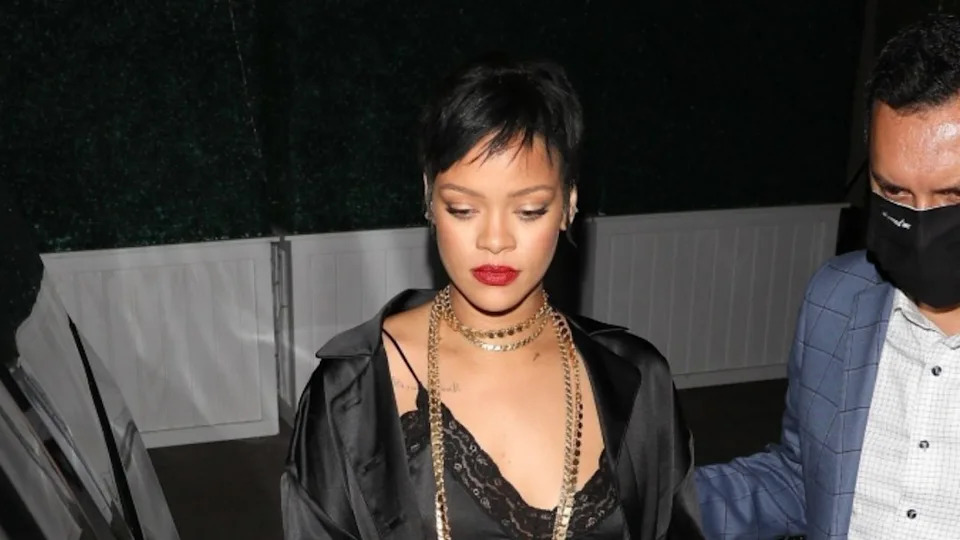
Rihanna: the Barbadian import who redefined modern pop and R&B (Image Credits: Flickr)
Rihanna’s story is a little different, and that’s worth sitting with. She never became a U.S. citizen, and by her own account has no interest in doing so; despite being such a big name in the US, Rihanna never took it upon herself to become a naturalized citizen of the United States, and she’s remained an immigrant with permanent resident status for years. Still, she’s spent the majority of her adult life and nearly her entire career building her sound within the American music industry, having signed a deal for six albums and moved to the US from Barbados as a teenager.
What she did with that platform reshaped mainstream pop. Caribbean cadences, dancehall rhythms, and reggae-inflected phrasing that once lived on the margins of American radio became inescapable once Rihanna folded them into chart-topping pop and R&B records. She’s been candid, even blunt, about her identity throughout that rise, once responding to a question about her citizenship status by simply writing, “nah, I’m an immigrant tryna get yo country together.” It’s a line that doubles as a pretty accurate summary of her actual musical legacy.
Three very different journeys, three very different sounds, and one shared thread running underneath all of it. None of these artists set out to change American music as some grand mission. They were mostly just trying to work, to be heard, to make a living doing the thing they were good at. The transformation happened anyway, almost as a side effect of talent meeting a new home, and that’s arguably the most American part of the whole story.
‘ The preceding article may include information circulated by third parties ’
‘ Some details of this article were extracted from the following source www.yahoo.com ’