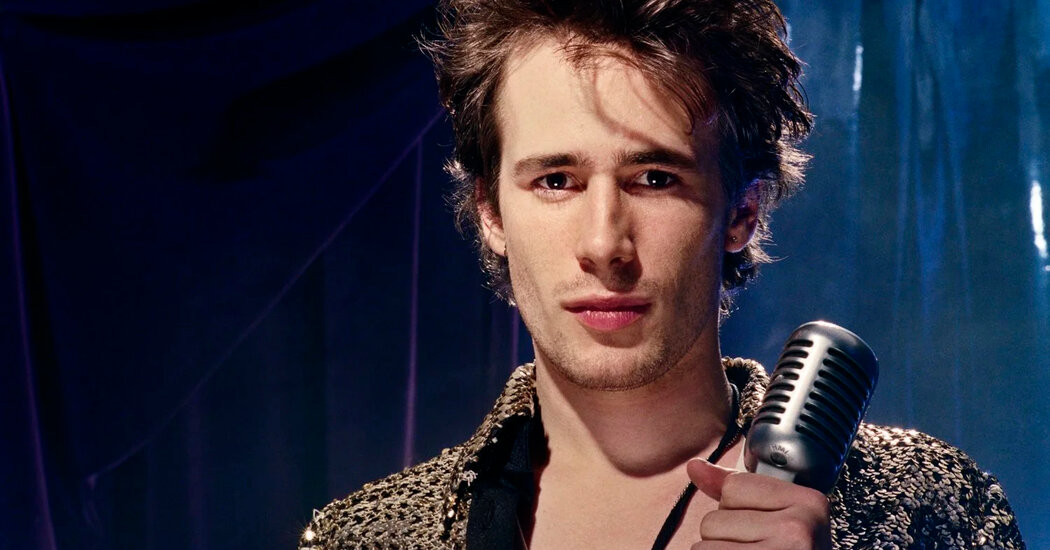
Certain songs feel so familiar, it’s as if they have been coded into our collective DNA. Jeff Buckley’s “Hallelujah” is one of those songs.
This “secular hymn,” as one writer described it, wasn’t a hit when it was first sung by Leonard Cohen, nor when Buckley covered it on his 1994 debut album, “Grace,” but over time it’s become a modern classic. In TV shows like “The West Wing” and “Gossip Girl,” the song has been used to lend emotion and gravitas to dramatic moments. And Buckley’s version, which requires extraordinary range and breath control to perform, has become a popular-to-the-point-of-cliché choice among contestants on TV singing competitions.
This summer, “Grace” made an unexpected appearance on the Billboard 200 album chart. The record came out in 1994, three years before Buckley, only 30, drowned in Memphis, where he was working on his sophomore LP. For music heads, Buckley’s legacy has long been established.
So what caused this resurgence on the charts more than 30 years later?
Resurgence, it turns out, may be the wrong word. It’s not established fans driving this phenomenon; it’s new ones: fans who are of a generation for which the boundaries between old and new music have been erased. Fans who live their lives — and soundtrack their feelings — on TikTok, where a snippet of a different Buckley song, the ecstatic ballad “Lover, You Should’ve Come Over,” has also recently taken off. Used as backing audio in over 300,000 video posts on the app, the song seems to be driving chart success for the album on which it originally appeared.
Jesse Rifkin, the founder of Walk on the Wild Side, a company that offers rock ’n’ roll walking tours of Manhattan, has noticed a very distinctive customer base for one tour that stops at several of Buckley’s old Lower East Side haunts.
‘ The preceding article may include information circulated by third parties ’
‘ Some details of this article were extracted from the following source www.nytimes.com ’