Some television viewers may respond to the return of The Bear, which recently released its final season, with a dismissive groan. Not me. Despite my past misgivings about the FX restaurant drama/comedy, I excitedly binged its last eight episodes within a few days.
By no means is it perfect storytelling. The series still sometimes flails, as my colleague Belen Edwards astutely pointed out, and I’ll return to those challenges later.
What I watched, however, was a rare feat of television: a years-long exploration of human redemption that ends, improbably, with optimism for the future. In an entertainment landscape dominated by apocalyptic fare, serial killer mysteries, whodunit tick-tocks, and paint-by-number procedurals, The Bear offered viewers something radically different.
Take characters with undeniable flaws, rough edges, and mental health struggles, give them a dream to believe in, and watch as they messily chart a path to their own greatness, through passion, work, and belonging.
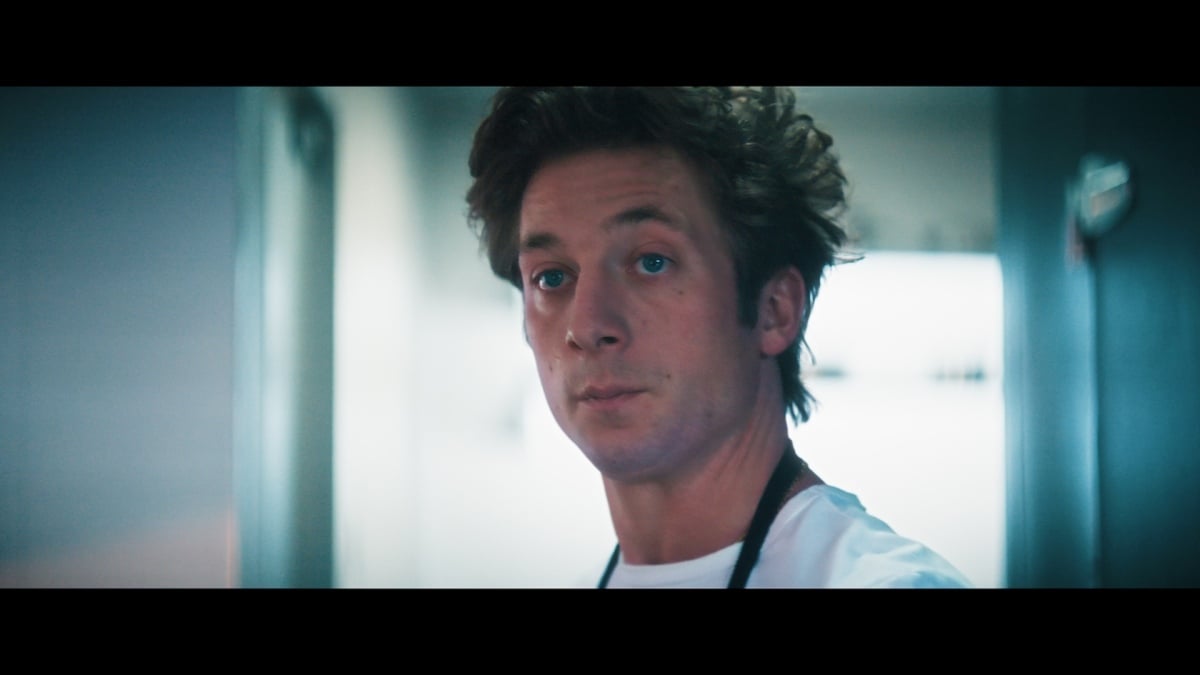
This is the stuff that redemption is made of, and Season 5 finally delivered on its promise of fulfillment, particularly for Carmen ‘Carmy’ Berzatto (Jeremy Allen White) and Richard ‘Richie’ Jerimovich (Ebon Moss-Bachrach). These two grown men were so haunted by heartbreak and stunted self-actualization that they cruelly tortured everyone around them.
What happens to Carmy and Richie in Season 5 of The Bear?
As a brilliant but borderline abusive chef, Carmy berated the staff of his deceased brother’s restaurant as he tried to transform it from a sandwich shop into a restaurant worthy of a Michelin star or two.
By Season 4’s end, Carmy understands his time as a chef is over if he wants a different life for himself. In Season 5, he observes, “To break patterns you need to break patterns.”
He spends much of the final season clumsily trying to be of service to others, offering to do whatever his former deputy Sydney (Ayo Edebiri) needs, like chopping onions and taking out the trash.
When his own mistake leads to a broken dish and ruined meal, thus threatening the evening’s do-or-die success, Carmy freezes in fear rather than lashing out. To me, this was remarkable progress, and I loved every second of it, including Carmy’s eyes as they welled with tears.
If every second counts, as the kitchen’s mantra declares, the same applies to the passing moments of human weakness, when hard-fought gains against bad habits might be lost in a panic. The scene only deepens when Syd recognizes what’s at stake for Carmy and offers reassurance that everyone in the kitchen has his back.
Together, the staff salvage the night, against all odds — a scenario that The Bear has been building up to since its first season. Together, they redeem themselves as a group of people with competing priorities and conflicting personalities who still, somehow, feel like family to each other.
Sure, there’s something satisfying about what my colleague describes as The Bear‘s competence porn. But at a time of deep division and loneliness, I also relished Season 5’s insistence on being part of something greater than yourself. Even if that something is a dysfunctional restaurant that manages to both feed people and give them joy.
Richie finally grows up
Carmy’s cousin Richie appeared to understand the reward of this bargain from the beginning, but ego, immaturity, and violent tendencies got in the way.
In the first season, Richie settles a conflict outside the sandwich shop, then known as The Original Beef of Chicagoland, by firing a gun. Despite his innate desire to make customers of that shop feel welcome, Richie also found ways to sabotage a jovial atmosphere with screams, curses, and tantrums. He hated ceding power to Carmy, whose absence and reappearance Richie resented, and to Syd, whose elevated role in a kitchen he once dominated makes him feel small.
Mashable Top Stories
Richie was initially a repellent character. By the final season, though, the small and large lessons in self-control Richie learns along the way have transformed him (see, especially, the episode “Forks”). He’s composed yet vulnerable, mature yet playful.
Richie’s temper and self-doubt still flare, but he’s found strategies for slowing down, like naming the objects in his immediate presence. As someone who’s spent more than 15 years reporting on mental health, I found the inclusion of this and similar grounding tactics such a gift to the audience. When do viewers get to see a man, once easily possessed by rage, use such a simple emotion-regulation technique, without the involvement of a therapist? Only on The Bear.
One of the best scenes in Season 5 happens when Carmy enters the walk-in fridge to find Richie managing a panic attack. Carmy, despite a fumbling first attempt at being supportive, finds a way to talk plainly about dealing with his own anxiety in a way that calms Richie.
A callback joke to Carmy’s walk-in fridge meltdown from Season 2 makes both men laugh, and they cheerfully push each other around. In seasons past, they would’ve lobbed insults and escalated conflict. Sometimes atonement for previous transgressions is about changing behavior and acknowledging, in some way, the harm.
Redemption through family
The Bear delivers this message over and over again with its emphasis on family ties, whether they’re forged through blood or choice.
I appreciate that The Bear vividly depicts family trauma and dysfunction without championing estrangement. People get enough of that on social media when influencers promote severing foundational relationships, sometimes for clicks and views.
What happens to Donna?
The show is unequivocal about the damage the Berzatto family matriarch, played by Jamie Lee Curtis, has wrought. Donna’s longtime alcohol abuse, in combination with a probable mood disorder, has made her unpredictable, manipulative, and grievously harmful.
At The Bear‘s beginning, Donna’s surviving children, now scarred by the suicide death of their brother Mikey, are grappling with whether to tolerate her in their lives. The phenomenal episode “Fishes” makes clear why this is no easy calculus. Carmy and his sister Natalie, known as Sugar (Abby Elliott), wouldn’t be who they are without their familial closeness, on display in their expansive yet explosive gatherings.
As they grow increasingly weary of Donna’s volatility, she finds the courage to try to be the mother they need. Ultimately, Carmy and Sugar let her, at considerable risk to themselves.
It’s no small moment when Donna finally enters The Bear for the first time toward the end of Season 5. The scene is relatively subtle, but suggests the healing that might be possible given Donna’s effort to be a reliable grandmother to Sugar’s newborn and a present mother to both Sugar and Carmy.
In real life, some relationships are so toxic that they must be ended. But The Bear asks its audience to imagine the value of holding tight to bonds when the person on the other side keeps showing up as a better version of themselves, even if that change is incremental.
Belonging for The Bear staff
It’s true that several of The Bear‘s characters don’t need the redemption that’s in store for Carmy, Richie, and Donna. What they need instead is belief in themselves and to be believed in by others. The Bear sends Syd and the other chefs and staff, including Marcus (Lionel Boyce) and Tina (Liza Colón-Zayas), on that trajectory in varying ways.
The point, which is reiterated by probably a few too many characters in Season 5, is that belonging to a group of people that feels like family can make that growth possible. As one minor character says upon his departure, that’s essentially The Bear’s advantage over countless other restaurants.
Forgiving The Bear‘s flaws
It’s possible that I’m giving The Bear‘s final season a lot of grace because I think what it’s tried to accomplish over the past few years is remarkable. Maybe I’m falling for the message and too readily dismissing the flaws in the medium.
Like my colleague, I found the storm that plagues Season 5 on-the-nose. Staging the season over the course of a single day during which torrential rain is a constant visual and audible reminder of the characters’ emotional tumult does feel cliché at times. Cityscape views of Chicago were so intensely lit that they evoked the Upside Down vibe of Stranger Things, a melodramatic flourish the show doesn’t need.
The first handful of episodes can feel tedious, too. The characters lament the uncertainty of their fate. Will they surrender or see another day in their beloved kitchen? As they contemplate this question, sometimes repetitively, in-show ads for watches, soda, and McDonald’s pop up. The marketing hollowed out those scenes for me, but the product placements taper off toward the end, with one notable exception for Coke.
I’m not sure I could blame viewers if they give up before service begins. Still, the payoff was ultimately worth it for me.
At a time when character-building friction is replaced by click-of-a-button contentment, The Bear depicted the gratification of mastering a craft. While algorithms push facile therapy-speak encouraging people to turn inward, The Bear (eventually) pulled its characters out of their heads so they could pursue meaning and purpose. It also gave them basic mindfulness tools to combat their worst impulses. When many storytellers use suicide only as a dramatic plot twist, The Bear sought meaningful healing for its characters, and remembered the lost brother, son, and friend for much more than the manner of his death.
Maybe I’m too forgiving of The Bear for these and other reasons. But I guess I’d rather spend my time with the show’s characters and their aspirations, however imperfectly executed on screen, than on a show that doesn’t dream as big.
‘ The preceding article may include information circulated by third parties ’
‘ Some details of this article were extracted from the following source mashable.com ’