The Windup Newsletter ⚾ | This is The Athletic’s MLB newsletter. Sign up here to receive The Windup directly in your inbox.
The Brewers and Royals hooked up on a confusing trade, and Kansas City might have a bigger move coming. Plus: It was a good day to be a Jansen, and we examine the “leveling of the tech playing field” in the minor leagues. I’m Levi Weaver, here with Ken Rosenthal — welcome to The Winter Meetings Windup!
Head Scratch: The Brewers are doing it again
Over the last few years, a pattern has emerged: I see a Brewers offseason trade and wonder, “What exactly is Milwaukee doing?”
This pattern also involves a later mea culpa when it results in the Brewers winning yet another NL Central title. So not this time, baby!! I love this trade for the Brewers! (Because I’ve learned my lesson and I’m tired of looking dumb.)
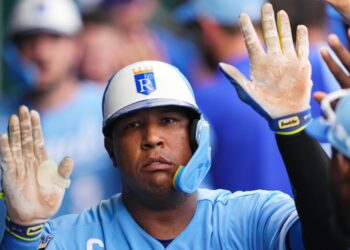
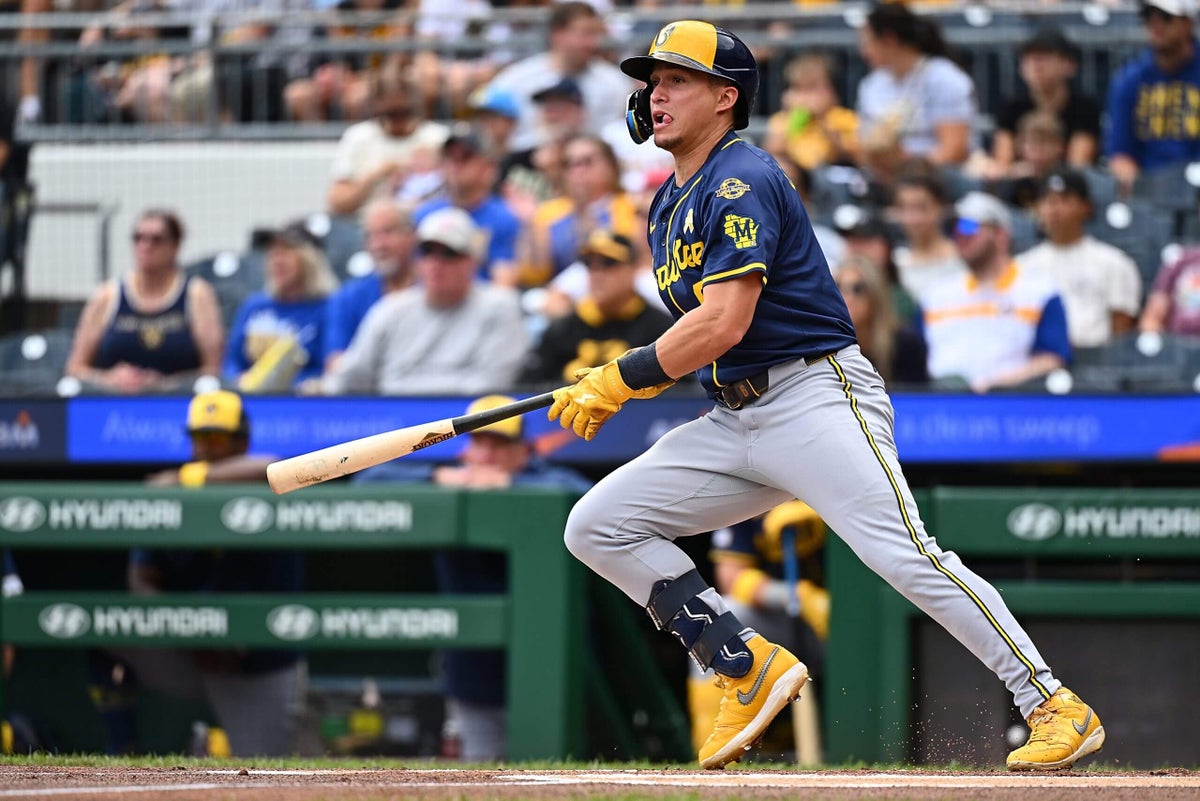
The Brewers and Royals made a trade Saturday night, with Kansas City sending LHP Angel Zerpa to Milwaukee for OF Isaac Collins and RHP Nick Mears.
I was a little higher on the 28-year-old Collins last year than most, insisting he deserved some NL Rookie of the Year votes. Alas, he faded a bit down the stretch, finishing in fourth place (just behind teammate Caleb Durbin). Mears is coming off a career year (3.49 ERA and sub-1.00 WHIP).
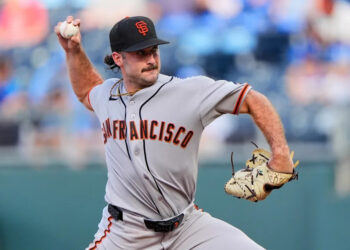
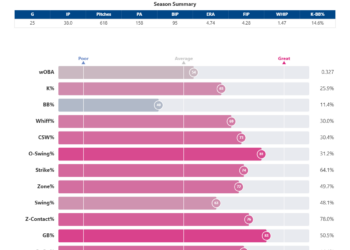
Zerpa is a lefty specialist who has struggled against right-handed hitters. But his ground-ball rate was in the 99th percentile last year, so he should benefit from that Brewers infield defense, right?
Looking at it from a 2025 bWAR standpoint, the Brewers gave up 2.6 and got back 0.3 in return.
It doesn’t make much sense to Keith Law. Me either, but that’s not stopping me: I sure do love this perplexing and indefensible trade! Great work, Brewers!
Ken’s Notebook: The Royals might not be done
From my latest notes column:
Even after signing free-agent Lane Thomas and trading for Collins, the Royals are open to adding another outfielder — most notably Jarren Duran, if the Red Sox lower their asking price.
The Royals are under the impression Duran would cost them left-hander Cole Ragans, though the Red Sox view the initial talks as more informal and exploratory, according to people briefed on the conversations. The Royals, though, see Ragans as a player with greater value, a potential Game 1 starter in a postseason series.
The Cardinals’ Brendan Donovan is another Royals target, but The Athletic’s Katie Woo reported Saturday that the Mariners and Giants are the front-runners for the super-utility player. The path for those teams to Donovan is cleaner than it is for the Royals. To make a deal happen, the Royals probably would need to orchestrate a three-way swap, trading left-hander Kris Bubic for prospects they could redirect to the Cardinals.
The defensive versatility of Collins, who played mostly left field for the Brewers but also is experienced at both second and third base, is the reason the Royals can keep thinking big.
Collins, 28, satisfied the Royals’ long-standing desire to acquire a switch-hitter. His .779 OPS last season would have ranked fifth on their club. And while he will need to prove his breakout was not an outlier, he reminds some Royals officials of Whit Merrifield, a productive member of the team from 2016 to ‘22.
If the Royals acquired Duran, he would play left with Jac Caglianone getting most of the at-bats in right. Thomas could play center against left-handers, Kyle Isbel against righties. Collins could spell Caglianone against tough lefties, and second baseman Jonathan India against tough righties.
For now, it’s all hypothetical, and maybe it stays that way. But so far this offseason, the Royals have added Thomas, signed Maikel Garcia to an extension and traded Zerpa for Collins and Mears. They plan to stay aggressive.
Free-Agent Signings: Good day to be a Jansen
While Kyle Tucker, Bo Bichette and Alex Bregman — Nos. 1-3 on our Big Board — are still weighing their options, teams are filling in those middle-of-the-roster spots. Take a look at some signings:
Jorge Polanco: Mets, two years, $40 million. After a heroic postseason with the Mariners, the 32-year-old Polanco is headed eastward to play mostly first base in Queens. If you’re thinking to yourself, “Um, has he played first base in the big leagues?”, well, cue the Ron Washington clip.
Tyler Rogers: Blue Jays, three years, $37 million. After adding starting pitchers Dylan Cease and Cody Ponce, Toronto adds the submariner to pair with Jeff Hoffman at the back of the bullpen. Rogers has played seven years and has a career ERA of 2.76 with a 1.099 WHIP.
Merrill Kelly: Diamondbacks, two years, $40 million. After trading Kelly to the Rangers at last year’s deadline, the Diamondbacks reunited with the 37-year-old, who has been one of the league’s most reliable starters since returning from Korea, where he pitched from 2015-18. Since his MLB debut in 2019, he ranks 15th in innings pitched (1,008 1/3).
Kenley Jansen: Tigers, one year, $11 million. With three more saves, Jansen will pass Lee Smith (478) for third all-time behind Mariano Rivera (652) and Trevor Hoffman (601). He joins Will Vest and Kyle Finnegan in the back end of Detroit’s bullpen. This is Jansen’s fifth MLB stop after spending his first 12 years with the Dodgers.
Danny Jansen: Rangers, two years, $14.5 million. After non-tendering Jonah Heim, the Rangers needed a catcher to pair with Kyle Higashioka. This Jansen is also joining his fifth team, but Kenley never played for two teams in the same game, so …
📊 Stats: Minor leagues to consolidate data
Eno Sarris has exclusive news this morning: “According to multiple league and team sources, data and technology vendors in minor-league parks will be centralized through the MLB league office beginning this upcoming season.” Let me explain:
What are data and technology vendors? If you already know the names Hawk-Eye and Kinetrax, it’s … that. For everyone else, these are the machines that provide the sort of micro-level data that populates the Statcast leaderboards: spin rate, swing speed, pitcher extension, etc.
Why is this important? Some teams already invested heavily in this tech for their minor-league affiliates. Others have not. This move could benefit the latter (assuming they have the personnel to translate that data into something usable).
Has MLB explained the decision? MLB hasn’t sent teams an official memo. But a spokesperson did reply to an email by Sarris, saying:
“We are taking this step to ensure that all 30 Clubs are working with the same set of information as they make Baseball Operations decisions … Each Club can use the information however they see fit, but it is important that we provide a level playing field on access to information.”
Is there a downside? The big concern, with spring training starting in two months, is: Will some teams have tech taken away from them? The spokesperson’s email did little to calm those concerns.
“The effect will be different by ballpark, as some facilities will see additional tech installations while others will be unchanged or reduced. MLB will pay for and manage the technology.”
Reduced, eh? The fact is, we don’t know yet exactly how this will be implemented. We’ll keep you posted, though.
Handshakes and High Fives
Denny Alfonso gets to the bottom of Bryce Harper’s weird blood treatment.
The Skaggs/Angels trial continues to be messy. The latest: a fire alarm delayed proceedings. Other head-shaking details in Sam Blum’s story.
We’ve all nearly recovered from this year’s Winter Meetings. They probably won’t happen next year.
Baseball is coming back to NBC for at least three years. They say they hope it’s longer than that.
It was no surprise the Dodgers ranked as MLB’s top front office earlier this year. Now, you can vote on where they stand among the four biggest North American leagues.
Most-clicked in Monday’s newsletter: Once again, Secret Base’s breakdown of Barry Bonds’ beef with Jeff Kent.
📫 Love The Windup? Check out The Athletic’s other newsletters.
‘ The preceding article may include information circulated by third parties ’
‘ Some details of this article were extracted from the following source www.nytimes.com ’