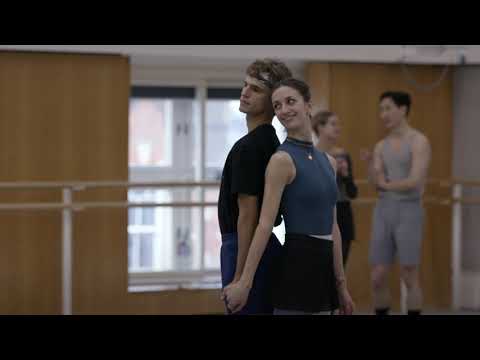
Devised by Rudolf and Joan Benesh, and first published in 1956, Benesh Movement Notation (BMN) is a written system for recording human movement. It is most widely used in the recording and restaging of dance works.
Benesh Movement Notation uses a five-line stave (representing the body from head to feet) with symbols placed to indicate the position and movement of each body part. It is read left to right, synchronized with the musical score, making it ideal for notating ballet and other dance forms set to music.
In The Royal Ballet, Senior Benesh Choreologist and Assistant Répétiteur Gregory Mislin, and Benesh Choreologist Daniel Kraus share how they use Benesh Movement Notation to record and restage Danses concertantes, one of Kenneth MacMillan’s one-act ballets.
#RoyalBalletAndOpera
Enjoy this video?
Subscribe to our channel for more: https://www.youtube.com/@RoyalBalletAndOpera
For more:
Royal Ballet and Opera Stream sign up now: https://bit.ly/3V0JMaO
Tickets: https://www.rbo.org.uk/tickets-and-events
Instagram: https://www.instagram.com/royalballetandopera
Facebook: https://www.facebook.com/royalballetandopera
TikTok: https://www.tiktok.com/@royalballetandopera
X: https://x.com/rbo_org
Threads: https://www.threads.net/@royalballetandopera
LinkedIn: https://www.linkedin.com/company/royalballetandopera
Video Source