The Chamber Music Society of Lincoln Center (CMS) has brought musicians of different generations together on stage since it first started presenting concerts in 1969. This has led to a tradition of mentorship across generations of artists, with knowledge passed down from one player to the next.
When clarinetist David Shifrin started his tenure as Artistic Director of CMS in 1992, he decided to formalize the organization’s commitment to the ongoing development of new talent. One of his first initiatives materialized shortly thereafter, when CMS announced a young-artist residency called “CMS Two.” In the early days, members of CMS Two were programmed only in their own concerts each season, usually alongside a veteran CMS artist. Indeed, a New York Times review of a 1998 concert even referred to the initiative as “a farm team of sorts…for young musicians at the start of their professional careers.” Current Artistic Directors David Finckel and Wu Han developed the program after they arrived in 2004, extending the residency from two to three years, and strategically integrating the artists into all of the institution’s musical activities.
The program remains in place today, though it was renamed the Bowers Program in 2018 after the Silicon Valley executive and philanthropist Ann S. Bowers endowed it in perpetuity, and it is an important way in which CMS has built up its impressive, multigenerational season rosters. Tom Novak, CMS’ Director of Artistic Planning, Production, and Administration, told me how David and Wu Han have expressed tremendous devotion to the Bowers Program. “When they started at CMS, they affirmed their commitment to this program,” he explained. “They felt it was an essential element of advancing the mission of the organization; it aims to develop the next generation of musicians and leaders for the art form.”
The latest cohort of Bowers Program participants was announced in late May and will begin to appear on CMS programs in the summer of 2027. “We could not be more excited to welcome this extraordinary group of Bowers Program artists into the CMS family,” David and Wu Han said when the group was announced. “In keeping with our criteria for selection, each brings something unique and magical in their musicianship and personality. They come from far and wide, and also from right here at home, contributing to the musical melting pot that is so essential to CMS.”
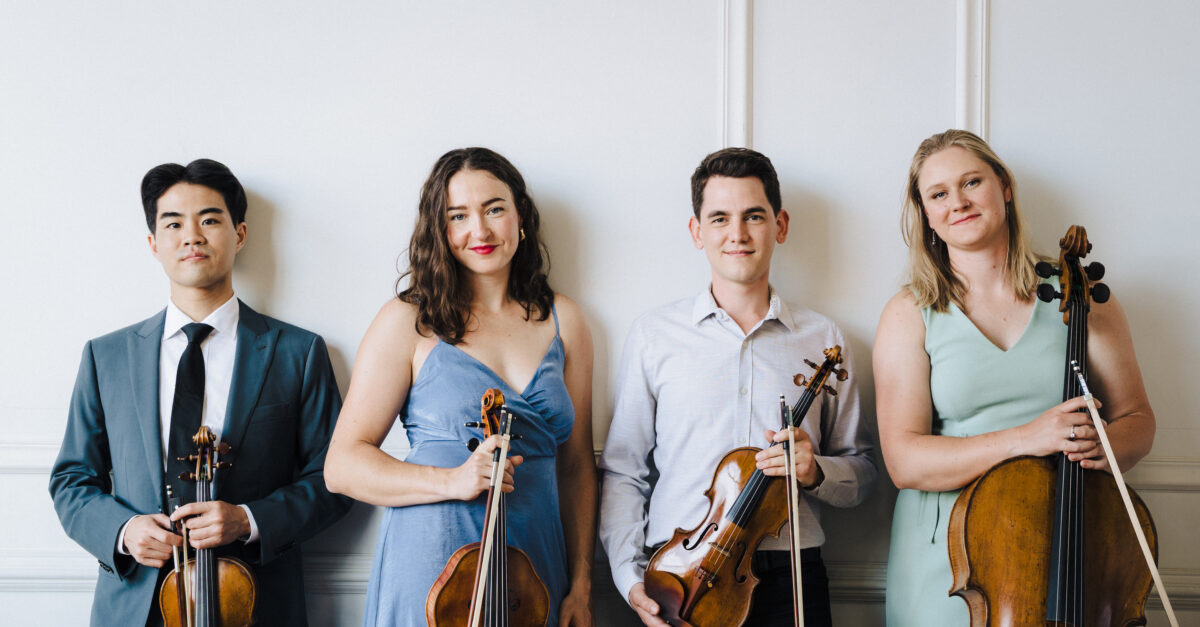
This group of musicians comprises four violinists, one violist, two cellists, one double bassist, two pianists, one clarinetist, and one percussionist, in addition to a string quartet. The artists range in age from 24 to 32, and hail from the US, the UK, Canada, China, South Korea, and Taiwan. The cohort includes winners of some of the world’s most prestigious competitions and awards for young classical musicians, including the Avery Fisher Career Grant, the Young Concert Artist International Auditions, the Queen Elisabeth Competition, and the Banff International String Quartet Competition, among many others.
I asked Tom what distinguishes being a participant in the Bowers Program from being a regular member of CMS’s season roster. “There’s a specific intention to give them a certain number of opportunities,” he explained. “We make sure that they have a critical mass of engagements. We also think very carefully about with whom they’re playing, to make sure there is an intergenerational arrangement in which mentoring can take place. We’ll place them in Alice Tully Hall programs, Rose Studio concerts, new music performances, and education events, and we send them on tour nationally and internationally—all of the various components of what we offer at CMS. I would say it’s a very similar experience to that of others on the roster, but we go one layer deeper to make sure they’re going to have a breadth of experience in that three-year period.”
Musicians at the start of their careers audition for an astonishing number of things—international competitions, music festivals, advanced degree programs, orchestra jobs, teaching positions, and countless other avenues for performance and exposure. The Bowers Program auditions are distinctive in that they happen only every three years, and successful applicants receive a series of high-profile engagements as well as connections within CMS’s expansive network of performers and presenters. As such, the audition process is rigorously competitive. The most recent cycle of applications included 192 individual performers and 17 ensembles. Applicants submitted up to four video performances of complete musical works along with background information and statements of motivation. These were evaluated instrument-by-instrument by David, Wu Han, and other jurors drawn from the current CMS roster. From the pool of applicants, 30 individuals and two ensembles were invited to play a live audition in CMS’s Rose Studio, in which they played prepared chamber works together with current CMS musicians. The players they perform alongside in the audition are also on the jury, allowing them to evaluate how the applicants rehearse as well as their collegiality during the process. “How are they reacting? Are they passive or are they contributing to the conversation? Are they sharing ideas they have about how they would like to play a certain passage? That is part of the whole assessment process,” Tom explained.
An artist in the 2024–2027 class of the program, violinist Julian Rhee, has spoken of the opportunities and relationships it has provided him. “The beauty of CMS is that you build an understanding and trust with the other players over time. Some of my most treasured friendships are people I’ve met here. In the Bowers Program, you are learning from incredible musicians while also clarifying your own artistry. You invite each other to collaborate, you are inspired to start your own projects, and you get to perform with artists whom you both admire and respect. The network and experiences have proven invaluable.”
Another violinist who is a recent alum of the program, Richard Lin, noted its positive effects on his career and musicianship. “Joining CMS, meeting all these great musicians, and receiving mentorship from David and Wu Han and the senior musicians has been life-changing for me. After performing with so many excellent artists in New York and other cities, encountering diverse styles and new composers along the way, my mind and musical interpretations have opened so much.”
I also asked Tom about the long-term impact of the program. “It has been highly influential, both for CMS and the wider field,” he said. “About half of our roster—of more than 140 musicians—is made up of the program’s alumni and current members. Since it began, 105 individual artists and 13 ensembles have completed it. The alumni springboard into major performing careers, both with CMS and with other prominent organizations around the world, and many of them have gone onto run their own festivals and concert series. So the Bowers Program is doing just what it was intended to do: to secure the future of this great art form.”
‘ The preceding article may include information circulated by third parties ’
‘ Some details of this article were extracted from the following source playbill.com ’