Star Trek: Discovery kicked off a new era for Gene Roddenberry’s famous franchise, one that continued with shows like Picard and Strange New Worlds. However, this NuTrek era has been criticized by fans for many reasons, including the fact that it’s overly violent and often relies on spectacle rather than substance.
At Star Trek Las Vegas this year, legendary franchise producer Brannon Braga diagnosed the primary problem with NuTrek: that the new shows feature such short seasons and long shooting schedules that it’s impossible for fans to develop a close relationship with these stories and characters.
Swiping Right On Captain Pike?
Braga told a packed room full of fans that most of them were there “because you had a long-term relationship with Voyager,” a show which ran “26 episodes a year.” He believed this gave fans time to get to know the show in a way that NuTrek, with its “eight episodes every two years” never would. Amusingly, he compared modern Trek shows to Tinder relationships, implying that new seasons feel like quick hook-ups rather than anything more like a real relationship.
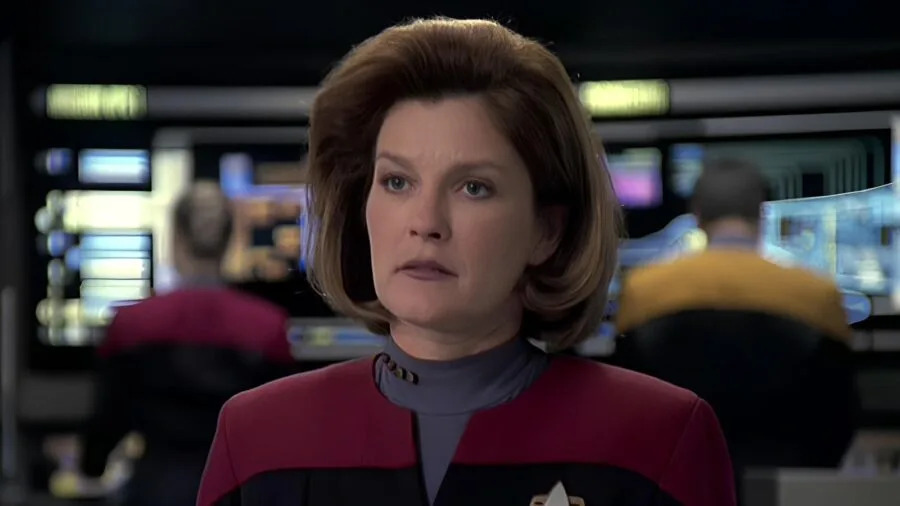
Captain Janeway on the Voyager bridge
As a fan of the Golden Age Trek shows Braga worked on (including The Next Generation, Voyager, and Enterprise), I’ve always held Braga’s opinions about the franchise in very high regard. But I was still surprised at how much I agreed with his sentiments about the essential problem with NuTrek. While it would require more funding and more budget-friendly episodes, much longer seasons would fix almost everything that’s wrong with modern Trek shows.
For example, many fans (including me) hate the fact that NuTrek has relied so heavily on season-long mystery arcs, a storytelling device that makes it harder for the writers to do standalone stories. Standalone adventures are part of what makes both Lower Decks and Strange New Worlds great, but the creators of shows like Discovery and Picard hurt those series by basing entire seasons on huge mysteries that audiences would either love or hate. With 26-episode seasons, however, NuTrek could scratch its writers’ mystery itch with occasional two-parters while still delivering a lot of standalone episodes.
Star Trek By the Numbers
By the time Strange New Worlds ends, it will have aired only 45 episodes. If that show got 26 episodes a year, then this fan-favorite Trek show would end with a whopping 130 episodes. That’s plenty of time to deliver enough diverse stories to cater to everyone in the fandom.

Captain Christopher Pike on Star Trek: Strange New Worlds
Other fans took exception to Discovery because it made Michael Burnham the main character. Beyond arguments about Burnham being woke or being a Mary Sue, the real problem with her character is that a Star Trek show focusing on any one character makes it harder to focus on anyone else, which is bad news for anyone who likes an ensemble show. Nearly half the bridge crew of Discovery had nothing to do in Season 1, but if that show had 26 episodes a year, the writers would have been able to flesh out everyone’s stories and give each character a chance to shine.
That brings me to an uncomfortable truth: historically, it takes Star Trek shows at least a season or two to get truly great. The Next Generation had an extremely rocky start and plenty of awful episodes (like “Code of Honor”), and Season 2 was barely an improvement; by Season 3, though, TNG was considered must-see TV. It took TNG 48 mostly mediocre episodes to become great, but NuTrek shows like Strange New Worlds and Starfleet Academy will end before either show makes it to 48 episodes.
Boldly Going Where Paramount Has Gone Before
Realistically, I know it would take several miracles to return Trek to the era of 26 episodes a year. It would require Paramount to heavily invest in a single series and also require that episodes be more modestly budgeted (Strange New Worlds costs a minimum of $8 million per episode). Most of all, it would require an audience willing to tune in each week for new adventures when there are so many different things to watch elsewhere.

deep space nine
But hope springs eternal, and as an older fan, I long for the return of Star Trek’s golden age. Longer seasons lead to more stories, more character development, and more chances for the show to win over new fans over time. After the Skydance merger, Paramount seems genuinely eager to prove its devotion to Star Trek.
What better way to do than to invest in a brand-new show in a way they never invested in NuTrek? Signed, a guy who can’t stop watching cozy reruns of his favorite Star Trek shows on Pluto TV.
‘ The preceding article may include information circulated by third parties ’
‘ Some details of this article were extracted from the following source www.yahoo.com ’