
The Wilds, Ohio’s home for safaris, aids in wildlife conservation
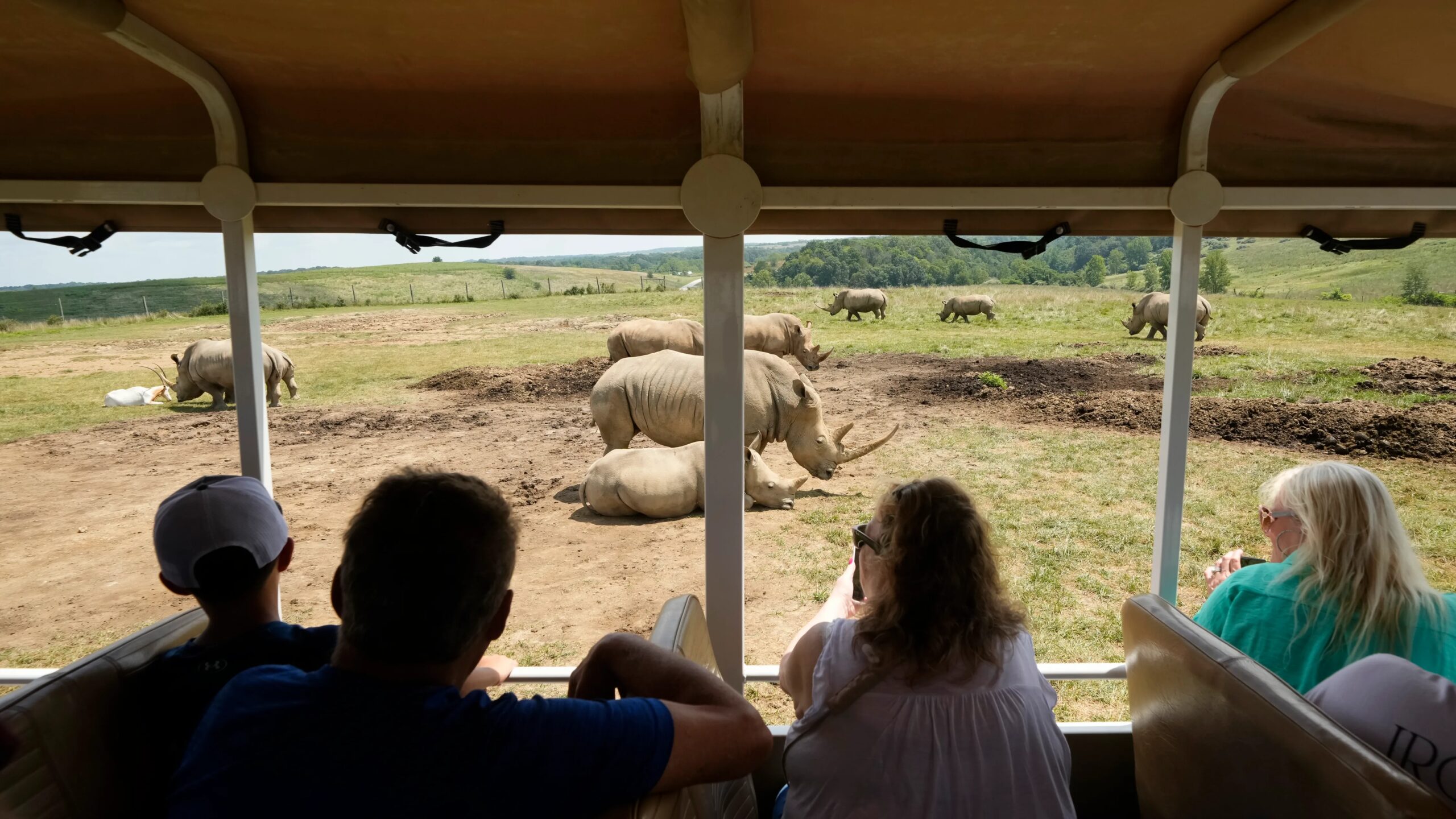
As seen on a Wildside safari tour, southern white rhinos are one of the main attractions bringing visitors to The Wilds in rural Cumberland, Ohio.
Break out the cigars … it’s a 100-pound boy!
The strapping lad arrived at about 1 p.m. March 5 and is already walking. Fortunately, that’s normal for a newborn southern white rhino, the second-largest land animal in the world.
The Wilds, near Cumberland, recently welcomed its first rhino calf of the year. The as-yet-unnamed neonate is said to be getting tons of TLC from mom Agnes. His sire, Bernard, also resides at The Wilds.
The birth is the first of two southern white calves expected this year at The Wilds, a nonprofit safari park and one of the largest conservation centers in North America with nearly 10,000 acres of reclaimed coal mine land in Guernsey and Muskingum counties
Officials at The Wilds say the birth underscores the success of the center’s rhino breeding program, which has seen multiple generations of southern white rhinos arrive since it began in 2004.
More than 30 southern white rhinos have been born at The Wilds, which lists the animals’ current conservation status as “near-threatened,” as defined by the International Union for Conservation of Nature (IUCN).
Southern white rhinos nearly went extinct in the early 1900s, when fewer than 100 remained. Now they are the most populous of all rhino species, with approximately 16,800-21,000, according to the IUCN.
A near-threatened species is one that may be vulnerable to endangerment in the near future but does not currently qualify for threatened status.
While conservation efforts have boosted southern white rhino populations in recent years, threats remain, including habitat loss, poaching, and human-wildlife conflict.
Contact features and entertainment reporter Belinda M. Paschal at [email protected].
‘ The preceding article may include information circulated by third parties ’
‘ Some details of this article were extracted from the following source www.dispatch.com ’