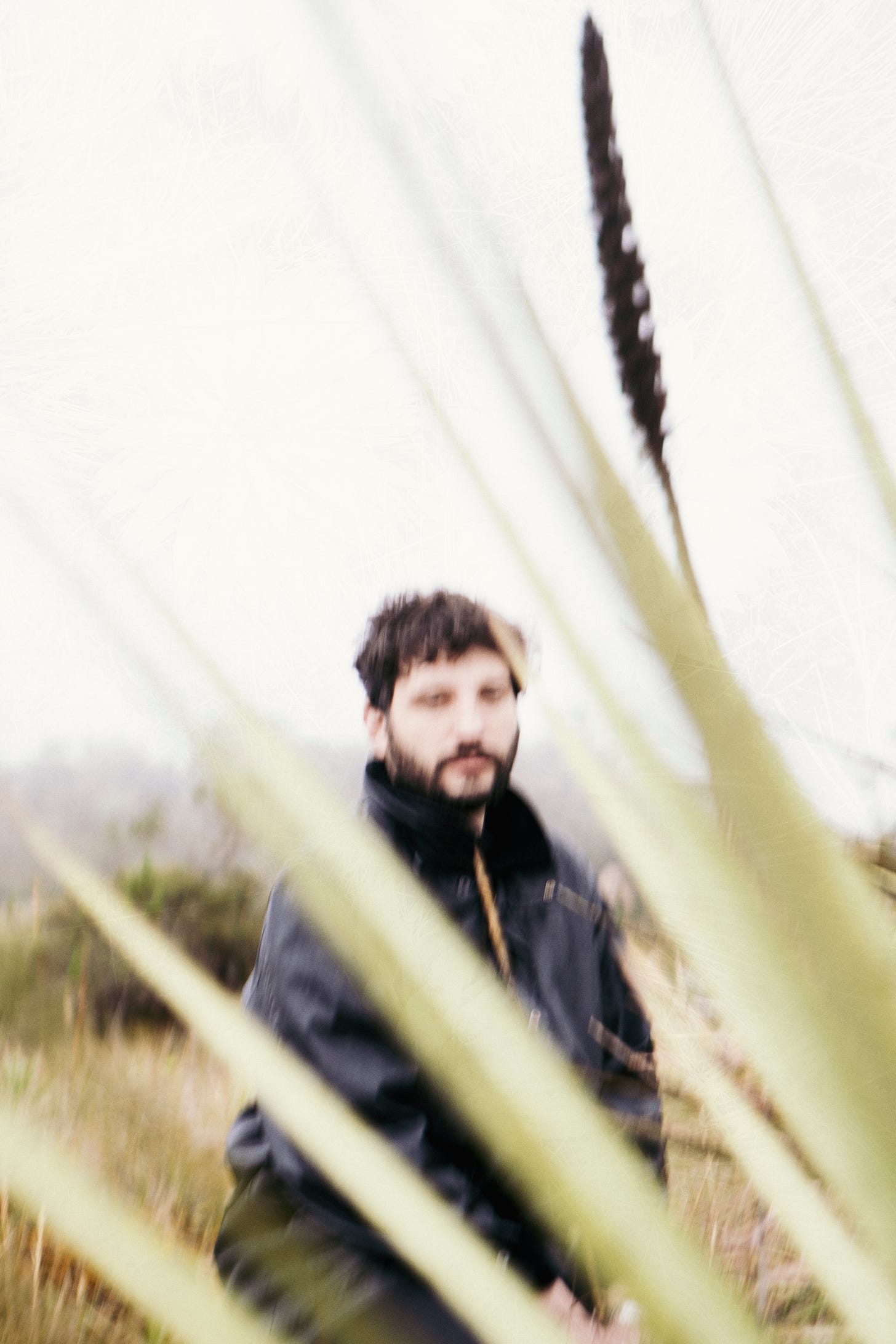
Space Talk is a hi-fi listening bar tucked behind a forest green facade in Clerkenwell, London; over the past year, it has doubled as a virtual garden of experimental sounds tended by Bogotá’s Nicolás Sánchez, better known as TraTraTrax cofounder Nyksan. In April 2025, shortly before the release of his Colombian Drone Mafia project’s debut album, Memoria, Sánchez kicked off a year-long residency in the space, inviting a range of friends to take advantage of Space Talk’s cozy environs and crystalline sound system: Ehua, Nick León, AYLU, Tristan Arp, Soreab, Hesaitix, even Raime.
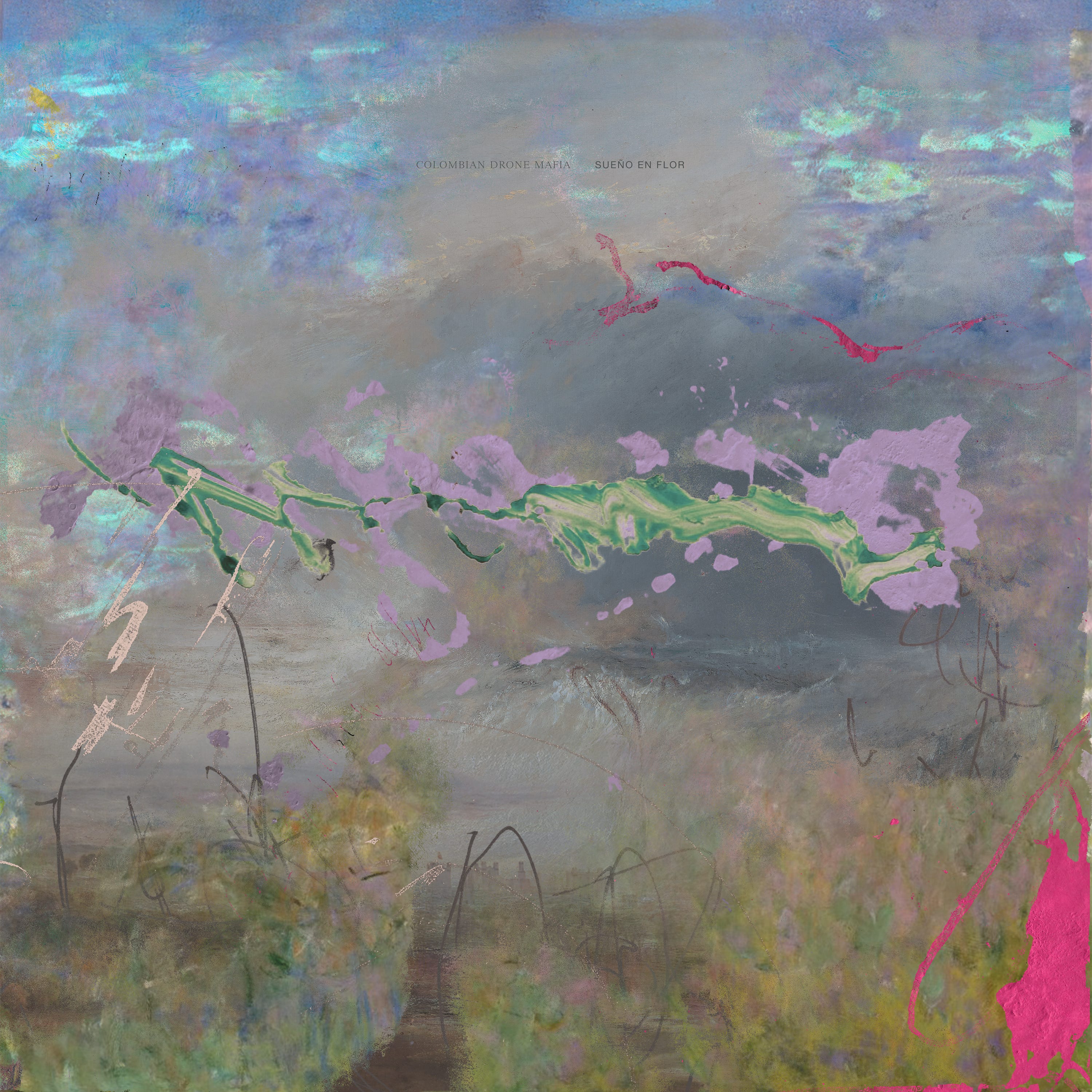
As the series neared its close, he found himself wanting to document what had come to feel like a year-long experiment in community-building. Thus was born Sueño en Flor, a collaborative album featuring input from AYLU, Tristan Arp, DJ Python, poet María Vélez Gallo, and Sánchez’s longtime collaborator Gibrana Cervantes. In a nod to the residency’s emphasis on shared space and lived experience, Sueño en Flor—out this Friday—reaches past the dimensions of a 12-inch vinyl record, encompassing a 24-page zine edited by Sánchez’s friend Henry Bruce Jones that includes conversations with Raime, Felicia Atkinson and Chantal Michelle, AYLU, AGF, and more, along with texts from Vibeke Mascini, Nicole L’Huillier, and myself.
In preparation for my text, I spoke with Sánchez a few months ago. It was a free-flowing conversation—appropriately so, given what he revealed as his fondness for rivers—that touched upon his upbringing in Bogotá, the early days of that city’s experimental electronic-music scene, and the legacy and future of Latin American ambient.
As aliases go, Colombian Drone Mafia is a funny one; it might feel at odds with the dark ambient depths of Memoria, a collaboration with Mexican composer and violinist Gibrana Cervantes, or with the intricately textured soundscapes and dissected rhythms of the new album. But Sánchez had something interesting to say about the alias:
“The idea of Colombian Drone Mafia—even starting with a cheeky name, almost a joke, we can talk about these things, right? About a location, a texture, a sound, but also about resistance. Ideally, it creates a bit of a memory and sounds funny, but the name itself already contains a multiplicity of tensions. Like, it’s going to make noise, and well, I like making noise.”
Read on for the full interview.
Also, for the first time on Futurism Restated, I’m sharing a full version of the interview in Spanish, since that’s the language we used in our conversation. Click below for the full text.
Reposts
FR 166: Colombian Drone Mafia Está Cuidando las Flores

Hace un par de meses, hablé con Colombian Drone Mafia (Nicolás Sánchez, aka Nyksan), sobre su nuevo album Sueño en Flor. Fruto de una residencia en Space Talk, un hi-fi listening bar en Londres, el disco incluye las contribuciones de AYLU, Tristan Arp
Paid subscriptions are $5 a month or $50 a year and are what keep the lights on around here! Perks include exclusive playlists for chilling and clubbing (now available on Tidal as well as Apple Music, Deezer, and Spotify); Eavesdropping, a new series of mixes by me; the ongoing Mixes Digest series; and full access to the archives, including interviews with Bill Orcutt, Kara-Lis Coverdale, Call Super, Avalon Emerson, Nick León, and more.
Hola Nico! How are you? Where are you?
I’m in Berlin right now. I won one of those DAAD residencies. It’s a German cultural agency that brings in artists. Honestly, I’m really happy—I’m currently collaborating with an artist named Nicole L’Huillier, who’s from Chile. I’ll send you the audio from the installation we’re working on later—it’s really beautiful. Nicole works a lot with the dream world, materials, and resonances, so she uses contact microphones and piezoelectric elements, but also materials from the earth.
How long have you been there now?
Almost a month. The plan was to stay for a month to work on an installation with Nicole that’s coming out in April.
I’m taking a look at Nicole’s website—what she does looks really interesting.
Yeah, really cool. And we’re on the same wavelength because we both have a love for detail. Like, it just has to be that way, you know? With that attention, care, and listening to every millimeter and sound of her work, because it all means something. I really resonate with people like that.
To start, tell me a little about your story and how you got into music.
Ever since I was a kid, I think music has always drawn me in. I mean, it’s the typical story—not one where, like, “Oh, I heard this artist or song and suddenly I liked music.”
I grew up in a family that really loved music and took me to a lot of concerts as a kid. I have memories of going to festivals in Bogotá like Rock al Parque, a free festival with thousands of people. And my uncle—who I call my rocker uncle—used to take me to Rock al Parque when I was a kid. “Let me take the kid to the festival”—a free festival, you know? One day is metal, one day punk, one day rock, with mosh pits of hundreds of people. I’m very grateful to them for instilling a love of music in me, but it wasn’t like I suddenly picked up an instrument or listened to this artist or that—I think it evolved and grew, and then, with the internet, I delved deeper into electronic music and grew with those dual influences.
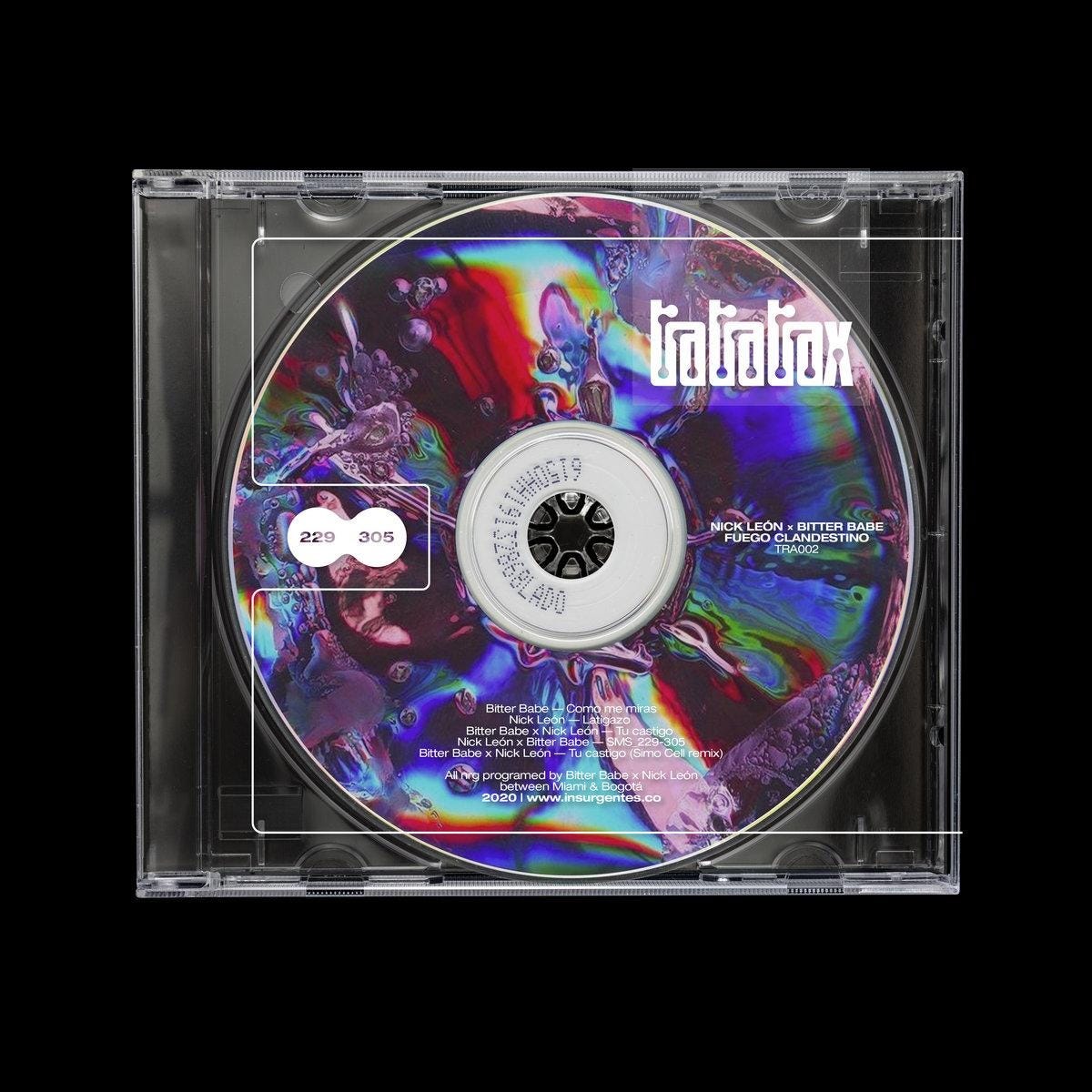
Then there’s a nice story with the label that we’ve told you before. We know—the internet, the blog era, the 2000s, listening to reggaeton… I think it’s also part of that Colombian entrepreneurial spirit and how we used to sell CDs. It’s a story that happened to us with Daniel, Lomalinda, and JP, Verraco—each of us was kind of acting as a music curator, and then we’d bring the CD-Rs to school and sell or trade them. And that, if you think about it, is kind of what we do with TraTraTrax today. That idea was kind of the reason why the first releases also had that CD artwork—they were pirated, but it’s also about selling, curating, and sharing in the end, right? I think that’s what it’s about.
What was the electronic music scene like in Colombia? You’re from Bogotá, right?
Yeah, I’m from Bogotá; my other partners are from Medellín.
What was the scene like in both cities when you started going out and DJing?
Music in Colombia has always been very rich and diverse; there’s a bit of everything. So there were always reggaeton parties—I think reggaeton was really key for a lot of us, like those minitecas where they’d have us perreando when we were 12, 13 years old, with our hormones all over the place. So I think that association is really nice… I even look back on it with nostalgia, you know? If you play me a classic perreo, it kind of reminds me of that era of being a teenager and having first loves…
Electronic music started coming into my life and into Bogotá… I think it’s gone through several phases, because I understand that in the ’90s it was very techno, then it shifted to deep house, tech-house, progressive. Like when it started getting a bit more popular and these kinds of bars started popping up—ones that were a little more accessible, not so underground. And then you start to see the backlash. Like, “Ah, no, that electronic music is too mainstream, so let’s make it tougher, more industrial.” And I feel like Bogotá is a very raw and tough city, full of contrasts—it’s not a city that’s easy at first; it’s going to give you a hard time, but in the end, it has beautiful things. It’s more about finding those pockets and your communities. It’s so big and so rough, and the transportation is terrible—it’s kind of industrial. It’s the same with many cities in the Global South, which start to sprawl out in a haphazard way; suddenly, over a 50-year period, the city grows exponentially. And I think genres like techno tend to thrive in environments like that, because there’s the roughness but also the vision of the future, the sense of machinery, of progress, of rhythm, but also the discomfort, right? In search of comfort, relief, the idea of wanting change. I think techno represents a lot of these things—visions of the future and nonconformity.
So I became obsessed with techno when I was about 18. I had a best friend back then; they didn’t play the kind of techno we liked, and we started making music, we started DJing, but nobody would book us because we were doing weird stuff—like… a bit more hypnotic and experimental, more in the IDM vein, like Raster-Noton, Rrose, Donato Dozzy, and Mike Parker, stuff from Northern Electronics and Semántica—a bit more on that trippy side. This was before Business Techno; this music wasn’t very commercial, and I understand why they didn’t want to book us. But then we started throwing parties; we created a series called Unterbog, which I think was one of the first raves back then to feature this kind of sound—I won’t say electronic music because there were many others, but definitely these sounds that had that psychedelic vibe and took place in unconventional venues. And with that collective, we grew, and well, looking back, we met Dani and JP once they moved to Bogotá thanks to this. That was, I don’t know, 12 years ago. So, to sum it up, my entry into electronic music as an obsession leaned a bit more toward techno, but in Colombia. So I’d obsess over techno at home, but outside of that, I’d go to the bar to drink aguardiente and listen to and dance to reggaeton with my friends.
Sure, like a pretty broad view of music in different contexts.
All in all, I think that’s it—that abundance of contexts. I think it’s very Latin, in general, because of the richness you see everywhere. Colombia, to me, is a very green country—if you look around, I mean, take a millimeter, any square meter of the Amazon, and it’s like seeing the world’s biodiversity. There are more species there than the total number of species in the UK, in that square meter. And then suddenly, zoom out, a forest’s worth of this, wow. So yeah, I think that’s where that plurality comes from, and how you’re unconsciously absorbing the importance of the place.
And when you launched Insurgentes, which I think was in 2017, it seems like from the start you had very clear ideas about the label’s identity, right? I mean, between the name, the art, the covers, the titles… What did you want to do with the label back then?
The funny thing is, I wasn’t part of Insurgentes.
Oh, OK.
Well, I feel like I was there, you know? I was in the room with Dani and Juan Pablo when they were talking about the label, when we were discussing these visual and sonic references—I was there, but it was their project, and I respected that because I was focused on other things anyway. I was more in a period of exploring ambient music. It was a time of sonic exploration for me, learning about microphones, traveling to different places. I had another label that we ran more as a platform among friends, so we wouldn’t just keep that music locked away; it was called HOY Records.
We put out three releases on Hoy Records, basically because we couldn’t find an outlet—we were trying to reach out to a lot of these ambient music outlets. But I saw a gap between what we were doing and the opportunities we had to release music and get heard. As a Latino, what I see is that historically, the slightly more ethereal music has been harder to get out there, you know?
Why is that?
Because culturally it’s not popular and there’s no infrastructure, so there aren’t many public resources to explore sound, or like these kinds of grants—like the one I’m on right now—where they let you collaborate with artists, release a record, have the media promote what you do, work with labels or platforms, or play gigs—none of that exists.
So when you really start exploring in depth, the further you go into the jungle, the more you’re on your own. So yes, I feel that ambient music has perhaps been very white historically, in my view, but for me it’s a matter of infrastructure, more than anything else. Because the raw material is there, the stories are there, the narratives are there, the sounds—my goodness, the sheer number of sounds there are! For us, ambient isn’t a perfume, as Brian Eno might have put it. For us, ambient, I’d say, is more of a vital sonic impulse, because we don’t have that solemnity of how the cold sounds; for us, it sounds warmer, like the cicada, the multitude of birds singing at different frequencies, the water, the people, their cries. All of that is part of our environment. So maybe it’s not so clean; it always has all these layers.
What you’re saying is very interesting, because just yesterday I was writing about KMRU’s new album and reading his interviews, about how he started recording sounds there in Nairobi and things like that. He also talks about the abundance of sounds and the sonic activity of his surroundings. And it’s like you say, it’s like the opposite of Brian Eno, who has that tranquility in the background that you can ignore. I mean, for KMRU it was a very active thing, listening to all the movement of the environment. And it’s a bit like what you’re saying too.
Joseph’s music is so beautiful, I love it, I’m a fan. Funny you should mention him, I wrote to him today, like, “Joseph, when are we going to the studio?”
That’s right, because he’s there in Berlin.
He’s here and we ran into each other—I mean, the synchronicities of life, imagine, I was at the CTM closing event and I sit down, half an hour goes by and I happen to look to see who’s next to me and there’s Joseph right there, literally right next to me—and I’m like, “What are you doing here? Hi!” Plus, we have the same agent, Carin. I love how beautiful serendipitous encounters are.
It’s also interesting what you were saying about how ambient, or its reputation, its fame, is very European, North American, and also Japanese, but for example the Buh label, from Peru, is putting out so much stuff that I had no idea about, tracing the tradition and history of electroacoustic music, experimental music—some of it academic, but also non-academic. There’s a very rich tradition in South America that isn’t really known on a global level yet.
Totally, that’s it—the lack of infrastructure keeps all these sound experiments somewhat underground. And it’s tough, because we have great, great masters of electroacoustic music. Even regarding the lack of female representation in electronic music in general, in these electroacoustic genres I see that it’s the opposite—the pioneers have often been women. They’re the ones who dive into research, play gigs, build synths, create sonic universes—the ones with the patience to nurture and grow. And I love that you brought up Buh Records, because Nicole just released an album with them featuring an incredible installation she created about the principle of reciprocity and listening as an act of mutual transformation.
Oh, that’s so cool.
Such a beautiful concept. In fact, we were talking about this the other day, and there was a phrase she included in an installation: “It hurts me to the center of the earth.” That phrase resonated so deeply with me right now, given what we’re going through as humanity—how immense that pain can feel. Heavier than gravity itself… very poetic.
But yes, I agree with what you’re saying. The truth is, I insist that we have a historical debt to the sonic histories of the Global South and, above all, to that tenacious group of women who began experimenting electroacoustically in these territories.
In general, I think it’s about how we reinterpret the sounds of our places in a postcolonial era (which I don’t know if we’ve reached yet). Linking that to the releases and the idea of Colombian Drone Mafia—even starting with a cheeky name, almost a joke, we can talk about these things, right? About a location, a texture, a sound, but also about resistance. Ideally, it creates a bit of a memory and sounds funny, but the name itself already contains a multiplicity of tensions. Like, it’s going to make noise, and well, I like making noise [laughs]. Just like TraTraTrax, it feels good—we found a good name.
And this album also creates a kind of tension, a sonic universe between memory and dreams. Because, curiously, many synchronicities in life exist in—or rather, inhabit—that place.
I talk a lot about memory and dreams because my flatmate in London is working on her PhD on that topic—the processes involved in creating memories. So she’s developing a game about how you can create a new memory, but then where it ends up being stored. So we started exploring that idea of how you generate a sound memory, right? I mean, how it affects you. A simple idea from psychoacoustics, spatial localization, and HRTF—like when something sudden happens—when an accident occurs, what’s the first thing that happens? You hear it and then turn your head to see what happened, right? That impact is very telling in how a narrative arc of the event will be generated. And it has a lot of cues within it, or key points within how people dream as well. How do dreams sound? Does the sound come from over there or from here?
You’re there, and if you hear something from outside, it comes and affects you or becomes part of your reality in the dream, right? How do you start to adapt to it? So for me, that’s very important within my imagination as an artist—how to design, create, and inhabit a sonic universe that invites you to dream, but also invites you to create memory. And that’s very important in light of all this forgotten memory we have of a not-too-distant past, of our sound archive, and to some extent, even that injustice that has been done to Latin sounds. And now we’re back, right? It’s flipped. Now everyone wants to be Latin. And so now they want to listen—it’s that responsibility of, well, OK, what do we dream of?
I don’t intend to speak from a universal perspective but rather a more personal one, like the concept of this album, which for me is one of the things that obsesses me the most—the beauty of the world—and one of its greatest manifestations is flowers. So it’s like, ah, I want to understand and explore that beauty—what is Latin beauty?—for me, I don’t know, you talk to me about Colombian beauty and I think of orchids. So, I start rethinking a lot of things, too, about the moment we’re living in—a moment that’s so violent and so absurd in so many ways—and I start seeing the importance of dreaming and the importance of reminding ourselves that other things exist, of reminding ourselves that resistance comes from there. Like, from that idea of creating new visions for ourselves, new possibilities, and believing that things can be different, and remembering the beautiful things without forgetting the heavy stuff, right? A contrast. It’s a way of resisting, but we resist—I don’t know, maybe as Octavia Butler would say, from a position of empathy. Maybe we don’t need to contrast but rather superimpose; who knows.
And also in the Latin American context, I think memory is also very political because there’s the issue of neoliberalism and how the history of so many communities, so many places, has been erased.
Of course, memory is political; it is power. Because when you control it, you can do whatever you want. Who tells the story? What does it mean to erase someone else’s history? It’s very relational. That’s why Israel wants to erase the memory of Palestine: if there is no memory of the Palestinian people, then the people never existed, and therefore neither does their present. And so, it becomes a cycle. History is written by the victors…
Of course, that’s why people disappeared in Chile and Argentina—because if they disappear, they never existed.
They never existed! You mention Argentina, la Noche de los Lápices—it was the students that disappeared. Who were the ones thinking, speaking out, and demanding, “You can’t do this to us!”? Who are the ones who think and sound a little different? Usually young people, students. The dictatorship comes and boom, who’s the first to disappear? So that’s it, we can’t forget, and the more we talk about this, the more sense it makes to me—the responsibility for all of this.
And it’s not about falling into some purist archival mindset either, like, the guardians of the truth—no. In the world of sound, there’s that double-edged sword with field recordists: Some do it purely for the archive, to record things “just as they are”—purists of sound and truth… I don’t feel much dialogue there, and on a personal level, I don’t remember things that way, you know? It’s like, for me, it’s not about understanding the specific moment as it is, but rather, OK, this is my story and I tell it this way.
Tell me a little more about Sueño en Flor. It’s a super collaborative album—there’s AYLU, María Vélez Gallo, Tristan Arp, DJ Python, and Gibrana Cervantes again. How did you put it together, and what’s different this time compared to the album Memoria you made last year?
Sure. This album came out of my residency at Space Talk, which is this relatively new hi-fi listening bar in London. We held a listening session there for Desde los Oídos de un Sapo by Lechuga Zafiro, and we were like, “Wow! What a special place!” It feels like the perfect space for listening.
So we started talking, and the idea for this residency came up. And we’ve been at it for a year now—a year of inviting different people. I always like to think—if any extensive work is worthwhile, it can be likened to a river, because… Check, you know?
So I imagined this residency as a tributary of a river flowing down, which is sometimes dry, sometimes overflows. So, it was like inviting people close to us and making that movement, that journey down the river. And I felt that after a year, some really beautiful things happened within the residency itself—I mean, we were able to hold a listening session for Colombian Drone Mafia’s first album, then Ehua’s Panta Rei, and she played live—also for the first time. And opening the first space where Celine [Ehua] was going to sing—for me, that was super magical. Nick [León] with the listening session for A Tropical Entropy, Tristan Arp… AYLU, who I also feel is one of those underrated Latin talents. She just released this beautiful album on Nicolás Jaar’s label, Other People—she’s an impressive talent. Bringing in lifelong influences for me, like Raime… It was really about that—bringing together the friendships I’ve made over the years through this musical endeavor and this listening space.
And in the end, it’s about building a sense of community. I feel like London is such a big, sprawling city that it’s just like Bogotá. You start finding these little pockets that begin to foster this kind of atmosphere of, I don’t know, creativity or openness to listening. So we were creating that with our friends. The spirit of the residency was very collaborative, you know? I feel that beyond what I alone can say, like “Hey, come listen to me play all night once a month,” for me it’s more like “Come listen to my friends who are incredible and who have also inspired me to do X or Y,” or “Come listen to this incredible work that you might not have known about.” And maybe I can give them a little more visibility—a win-win. Or just a bit of self-indulgence: I want to listen to this incredible person’s work on this sound system with a cocktail in my hand, closing my eyes and having no one bother me—and opening that space up for others, too.
I feel like the idea of the club is changing for me too, and Space Talk is a very versatile place—on Fridays and Saturdays they move several of the sofas aside and it turns into a bit of a club. So it’s a hi-fi listening bar that can also be a cozy club, and with that sound system! And sometimes it gets a little, I don’t know, pretentious—you can imagine the kind of people it attracts. But overall, everything’s fine.
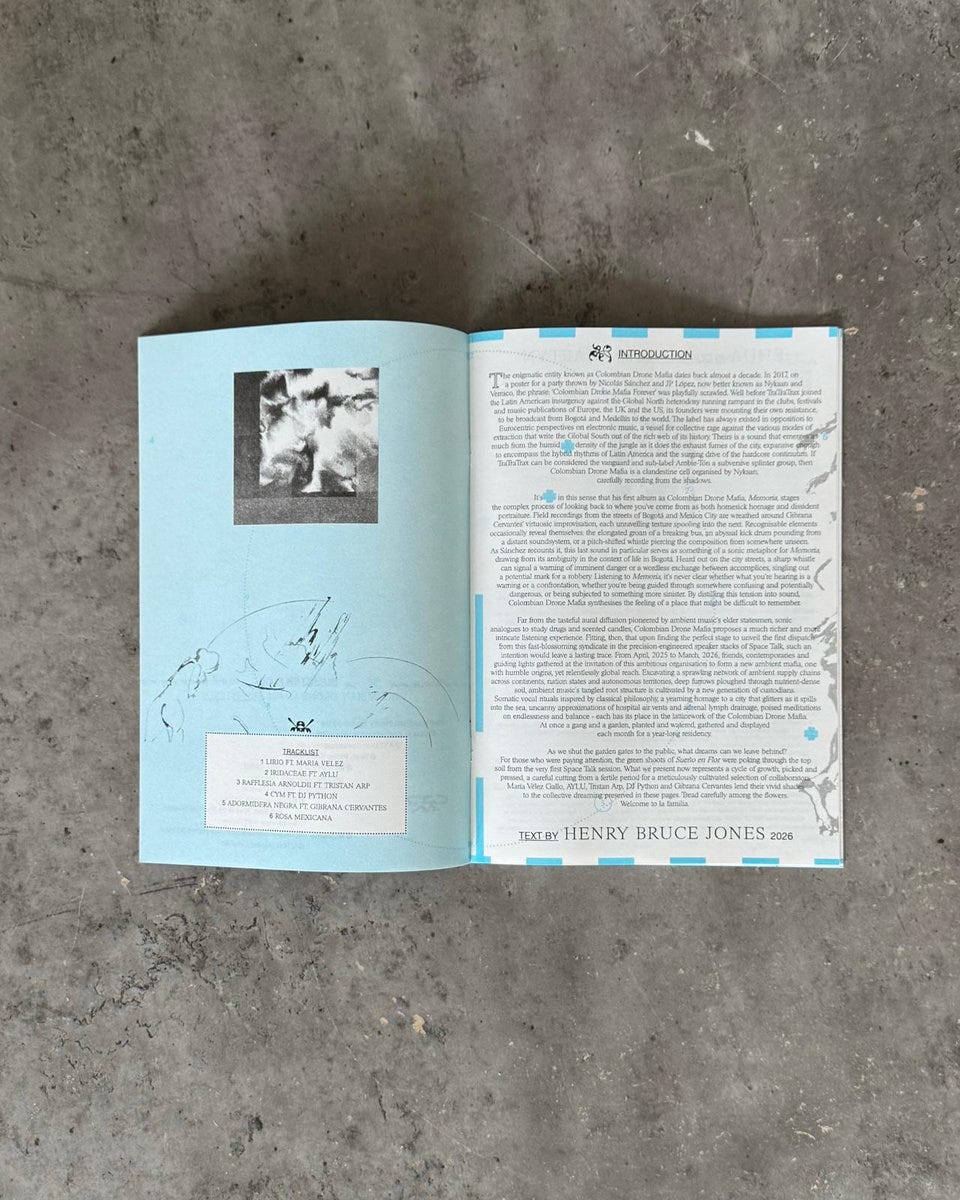
Anyway, after a year I told them it’s a shame that all these things happen and get lost a little in the ether. Maybe it would be nice to do, I don’t know, a series of reviews or some texts, including inviting illustrators or poets who came—who I know were there that night—to offer their take on what they felt happened. This idea resonated with them, and it was a bit of a snowball effect: “Okay, well, let’s do some reviews, inviting different artists who were there on different nights to talk about it—why not go deeper?” And I talked about this with my friend and writer Henry Bruce Jones, who had come to several of these nights, and he liked the idea and said, “I want to be the editor,” so that’s how it became more of a publication, and if it’s already a book, then we should make a record, so…
Snowball.
Yeah, it kind of got out of hand, and I thought: well, since the nature of the residence was collaborative, it has to be a collaborative record, and it has to be a collaborative record with people close to me—like Brian [DJ Python], who’s just a few feet away because he’s my flatmate [laughs].
Oh, you live with him?
Yeah, yeah, I live with Brian, so for me it was easy: “Brian, I made you coffee, let’s sit down and make this song.” And that’s why, when I listen to that song, it has so many layers and moments, but that’s because I could sit down with Brian in the studio at home. And yeah, just like those synchronicities, Tristan Arp moved to London recently and we went to his studio once, and that was enough. AYLU is an amazing musician, and I knew she’d love the concept of making a “flower” song. Then there’s Gibrana, one of my great collaborators.
María Vélez used to live in Berlin and is an incredible poet, and we recorded this poem that just came out in her latest book. A poem that, interestingly, she later called “Indulgence,” very much in line with Sueño en Flor [laughs]. I also chose this poem because, well, it talks about wandering and the ghosts that come with it, and the soundscape has a lot of that spectral language. It’s like you’re always talking about something that doesn’t exist, but there’s a presence. You talk about energies, auras, resonances, sounds from the beyond or the here and now—like infrasound or ultrasound—all of them presences. It sounds very metaphysical, but at the same time you’re talking about psychoacoustic terms.
It’s interesting because it’s quite different from Memoria—Memoria was pretty noisy, very forceful, very dark, and this is another side of you.
Sure, the first one is a bit more of a statement, like, “OK, this is how I imagine Colombia Drone Mafia could be.” And now it’s so diverse, I think it’s giving a nod to the whole “mafia” thing. In that sense, a lot of beautiful things are coming: another album with Gibrana, two other albums we’ve made with Vibeke Massini and Nicole L’Huillier that we’re trying to find a home for, and well, I dream of getting to do movie soundtracks.
Anyway, every song has its own vibe, but they all exist in this kind of… liminal universe. Where are you going to listen to these tracks? I was wondering—it’s not a club album, and it’s not a noise album; it’s more like something to really listen to. It could be in a bar or a living room—anywhere the conditions are right, a fertile space. A flower grows under certain conditions, but if you want it to look pretty in your home, you water it, right? There you go.
Thank you for reading!
‘ The preceding article may include information circulated by third parties ’
‘ Some details of this article were extracted from the following source futurismrestated.substack.com ’

![[CREDIT: WP Composite] Warwick Weekend events this week include music in Conimicut, Christmas in July and a new art exhibit, among other attractions.](https://celebrity.land/en/wp-content/uploads/2026/07/Warwick-Weekend-Events-July-23-Music-Art-Skate-350x250.jpg)