As attractions and leisure projects become increasingly ambitious across the global industry, ensuring that an original vision translates into a viable, operational destination can be difficult.
Global Leisure & Entertainment (GLE), established in 2021, is an international consultancy focused on addressing this issue. The company supports the entire development lifecycle by closing the gap between concept design and operational delivery.
In doing so, it reflects the trend of incorporating operational expertise earlier during the planning and development phases.
Headquartered in Dubai, with offices and representatives in Colombia and Oman, GLE has expanded its operations across the leisure, entertainment, and hospitality sectors since its founding.
Today, the company works in 15 countries across four continents, with more than 30 projects currently under development.
GLE’s approach focuses on supporting projects throughout the development lifecycle, from feasibility through to operations, a methodology intended to keep the original project vision throughout development.
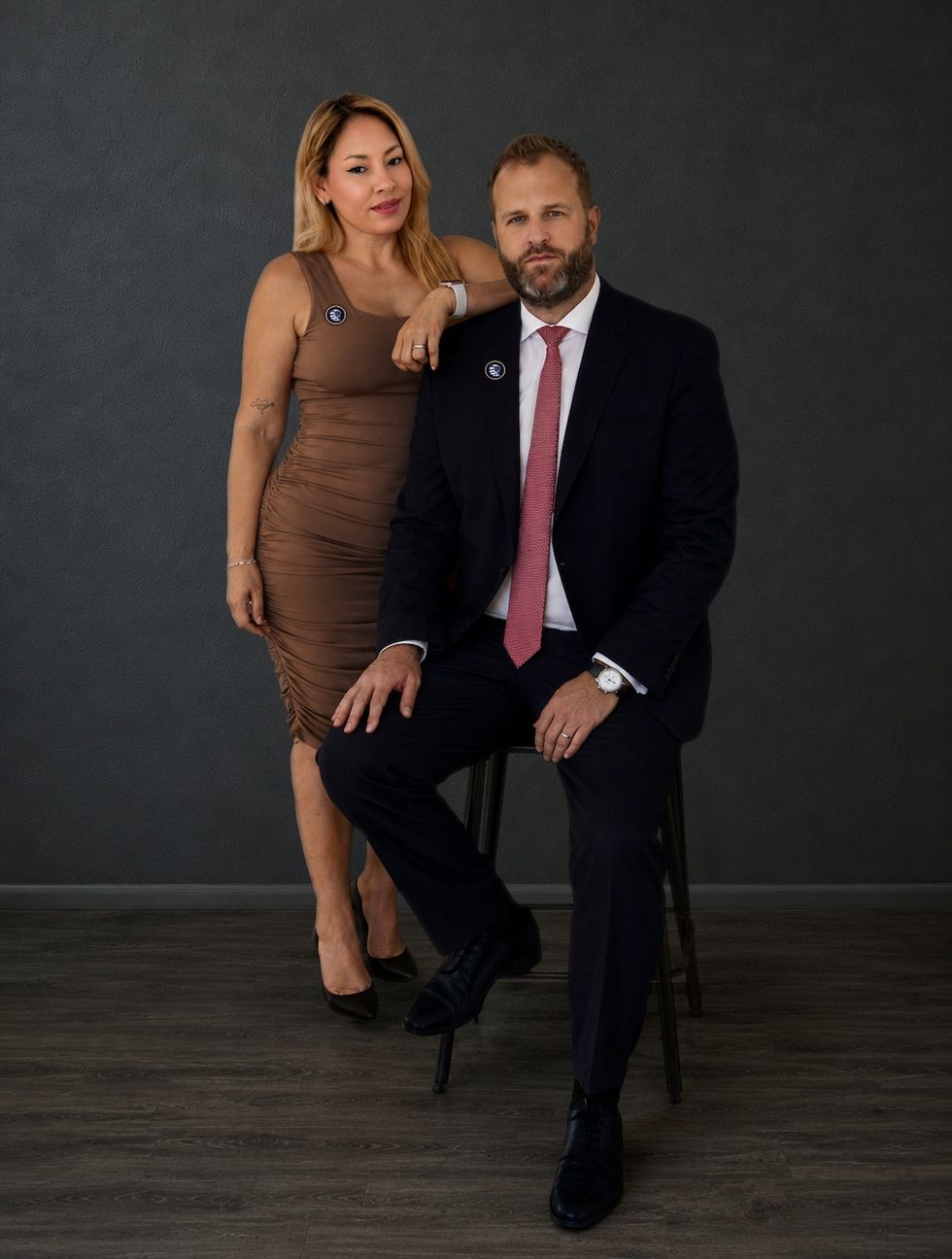
Lennard Otto, CEO of GLE, and Elizabeth Oquendo, COO, speak to blooloop about the company’s genesis, their unique dynamic as a leadership duo, the realities of global expansion, and what the future holds for the business of fun.
Reacting to an industry need
The foundation of GLE was built on a clear problem that Otto had witnessed over his two decades in the industry. The traditional model for attraction development was fragmented, leading to breakdowns in communication and execution.
Lennard Otto, CEO of Global Leisure & Entertainment, and Elizabeth Oquendo, COO
“All through my professional career, with so many projects undertaken during that journey, I have observed mostly from the client standpoint that there was always some sort of disconnection throughout the development process,” he explains.
“Often, the feasibility study is prepared by one person, while another takes over the design development, and yet another manages project execution and delivery. In the end, the operator becomes the client who expects to achieve the outcomes promised in the original feasibility study.
“However, this expectation rarely matches reality.”
This disjointed relay race often meant that value engineering and design changes didn’t account for their impact on operations, which in turn hurt sales forecasts and required additional spending to fix problems.
Driven by the free time afforded during the pandemic, Otto and Oquendo decided to create a solution.
“The idea of GLE was effectively born to try and alleviate some of the pitfalls from all the different development phases by creating a company that would be a turnkey development company, looking at the development from an end-to-end standpoint,” Otto says.
Their vision was to create a specialised advisory and delivery company focused solely on making sure that each phase of development is seamlessly coordinated, guaranteeing that “the client gets what they expect.”
An integrated development model
Today, GLE’s core service offerings operate under one umbrella, covering feasibility studies, design, supply chain management, project management, and operational advisory services.
This integrated structure allows clients to work with a single consultancy throughout multiple stages of a project’s development.
According to Otto, many clients are seeking support because leisure and entertainment are not their primary areas of expertise. He adds that these clients often look for specialist partners that can provide continuity across development and operations.
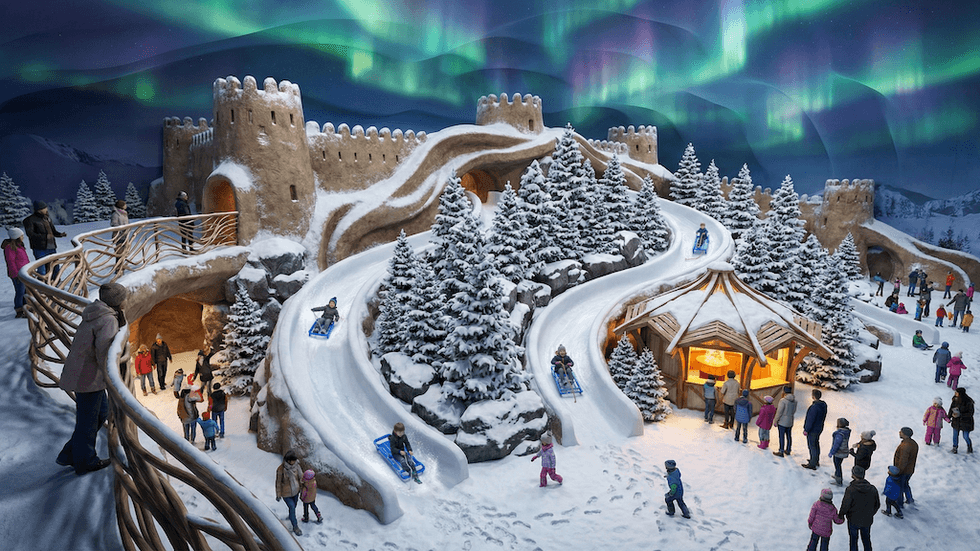
Design concepts for a snow park in Bahrain, highlighting innovative indoor entertainment architecture and immersive winter experiences
“Our goal is to establish a strong foundation early on, safeguarding the entire development journey to ensure projects are delivered on time, within budget, cost-effectively, and with robust operational planning and commercial viability.”
To fully realise this promise, GLE doesn’t just walk away when the doors open. Otto and Oquendo also operate a sister company, Leisure & Entertainment Operation Services (LEOS), which manages and operates these attractions on behalf of clients.
Otto uses an analogy to describe the company’s comprehensive service:
“I always tell our clients, we’re not giving you the wheels or the engine of the car. We are conceptualising the car, we’re building the car, and we’re going to give you a driving licence on how to drive the car, and that’s the success of GLE.”
Building GLE together
GLE’s growth is also partly due to the strong partnership between its founders.
As a husband-and-wife executive team, Otto and Oquendo bring complementary abilities and viewpoints, creating a leadership structure that combines development and operational expertise.
Oquendo describes her approach as straightforward, translating complex industry jargon into clear, workable strategies for clients. While Otto is often “looking at the big picture vision and progression strategy,” she focuses heavily on “ensuring that ideas are translated into successful outcomes,” she explains.
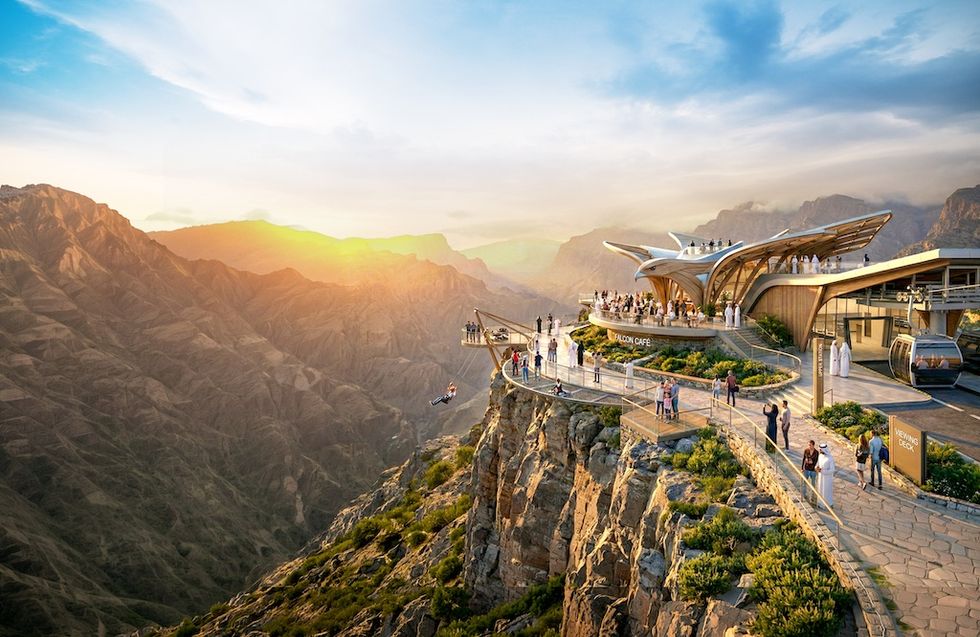
Conceptual designs for a cliffside cable car and observation experience at Anantara Al Jabal Al Akhdar Resort, Oman
The pair say their complementary style—Otto being development-focused and Oquendo being operation-focused—has helped to create a climate of trust and success, both with clients and within their team.
Many of GLE’s clients are family-owned businesses, which fit closely with the family-focused culture Otto and Oquendo have established. The company says employee turnover has remained below 5% since its launch.
Their shared enthusiasm for the industry means they are constantly on the move, visiting 30 to 40 countries a year. “We are always looking at how to make it better for our new clients, for our existing clients, how to improve the different activities,” Oquendo says.
A global view with local expertise
GLE’s portfolio is diverse, spanning 18 entertainment sectors, from theme parks, water parks, and zoos to ski resorts, museums, and even motorsports and cave developments. Its footprint is equally expansive, with a stated goal of expanding into 20 countries this year alone.
Many of GLE’s projects are located in markets working to expand their entertainment and tourism offerings. Otto highlights Ethiopia as a prime example:
“It’s one of the most price-sensitive markets in the world. Spending power is very little, investment capacity is low, but they have a desire for entertainment,” he explains.
“They have a desire to develop entertainment attractions and experiences that are going to support both local and domestic stimulation, but also to bring global tourists to the market.”
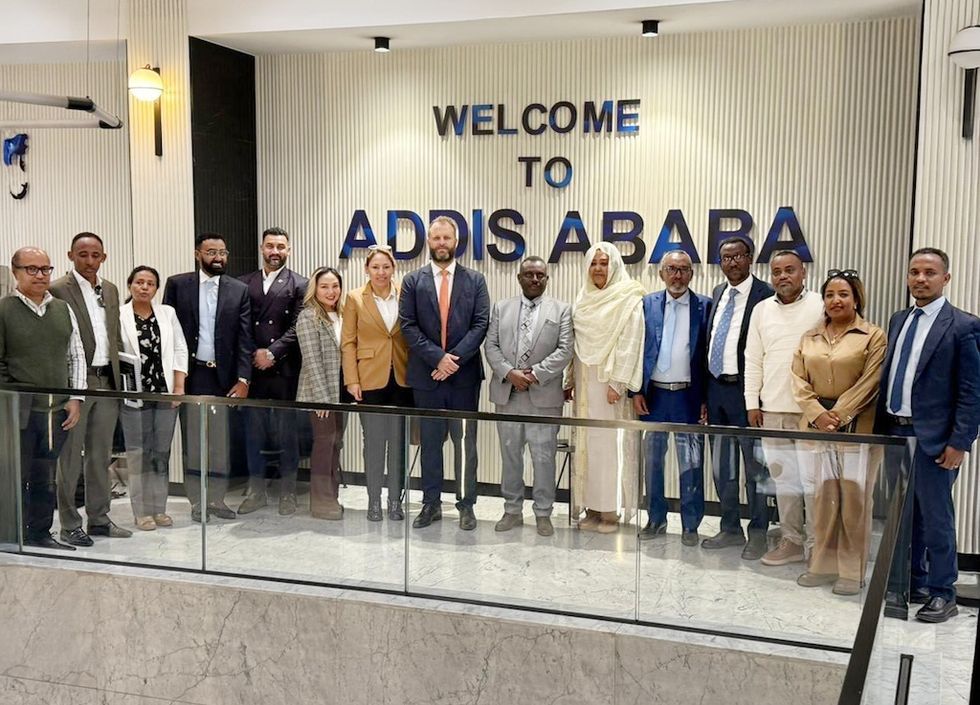
The GLE team meets with stakeholders in Addis Ababa to explore the immense growth potential of Ethiopia’s emerging themed entertainment and attractions sector
Succeeding in these environments requires deep localisation and an understanding of the nuances of the local landscape. It’s not simply about copy-pasting a Western model. It’s not always that spending more money gives you a better destination,” Otto adds.
“Sometimes spending the right amount at the right capacity with the right quality will still be miles ahead of the rest of the markets.”
To achieve this, GLE leverages its network of over 80 global partners to identify the right vendor mix that fits with the region’s investment capacity.
Furthermore, the company mandates that it never develop a project without physically visiting the market to understand its infrastructure, limitations, and the local consumer mindset.
GLE also prioritises local talent and ground-level execution, with team members based directly in key growth markets such as Vietnam, Saudi Arabia, Kenya, Egypt, and Oman.
“We try to train the local workforce as part of their organisation programme into these types of attractions and experiences,” Otto says.
“So it starts with understanding the market, understanding how to develop in that market, the capacity and the constraints of that market, and then we always think about localisation.”
Delivering results for Aquarabia and more
GLE’s ability to adapt its development-to-operations approach to differing scales and levels of complexity is demonstrated by its recent landmark projects.
In Southeast Asia, GLE has expanded rapidly, moving from a single project in Vietnam to six currently under development. One example is its partnership with BIM Group to develop and operate the Phu Quoc Marina Water Park.
The facility is being developed as a premium offering. It is intended to serve as a key attraction within the wider hospitality development, which includes high-volume luxury hotel properties such as Park Hyatt, InterContinental, and Regent.
“We went from north to south, visited all the water parks available,” Oquendo says. “The one that we are building at the moment is going to be the number one water park in Vietnam by far.”
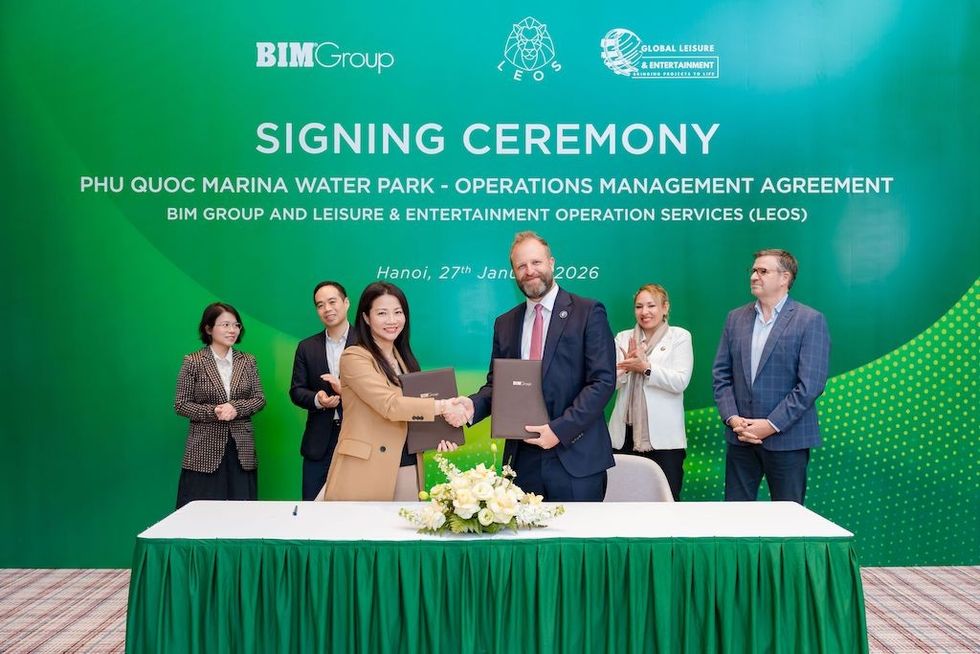
Doan Thanh Mai, vice chairwoman of BIM Group, with Otto, alongside Le Nguyen Linh Giang, head of investment; Doan Quoc Huy, chairman & CEO of BIM Group; Oquendo; and Adam Owen Riley, head of hospitality at BIM Group
Otto adds that entertainment today is embedded in real estate, retail, and hospitality. “Entertainment has all these important secondary impacts, and this water park we’re developing in Vietnam is truly the essence of the turnkey impact solution to drive hotel occupancy for them.”
He compares the project’s role within the wider destination to the attraction-led model used by Atlantis developments.
GLE has been involved in every phase of this project, from the feasibility study through design and execution to eventual operations via LEOS, making it one of the company’s most comprehensive project involvements to date.
Meanwhile, in the Middle East, GLE is serving as an operational advisory consultant for Aquarabia, Saudi Arabia’s first premium water park.
Aquarabia is a massive, multifaceted destination featuring surf, whitewater, kayaking, and traditional water park elements.
For this mega-project, GLE serves as a specialised operational advisory consultancy, supporting the development of operational systems, documentation, and staff training programmes.
“We will also continue our support in the post-opening phase for the next three years to ensure that compliance remains in place,” Otto says.
Oquendo adds that the project “shows the commitment from Saudi Arabia to give the public international standards in their offerings.”
Making ideas a reality
Developers often approach GLE with highly aspirational, massive-scale visions.
While GLE loves this ambition, the team’s job is to ground it in commercial viability. “Just because the client wants to build a 300,000 square metre water park doesn’t mean the market can absorb a 300,000 square metre water park,” Otto says.
“Sometimes it’s 100,000, and we’re very open to telling the client that.”
Many projects fail because they jump straight into design and execution without a proper foundation, causing severe value engineering down the line when actual costs clash with the perceived budget.
“You have this failed asset, and they never want to invest in entertainment again, and it becomes a negative perception within these markets that all entertainment is a failure,” adds Otto.
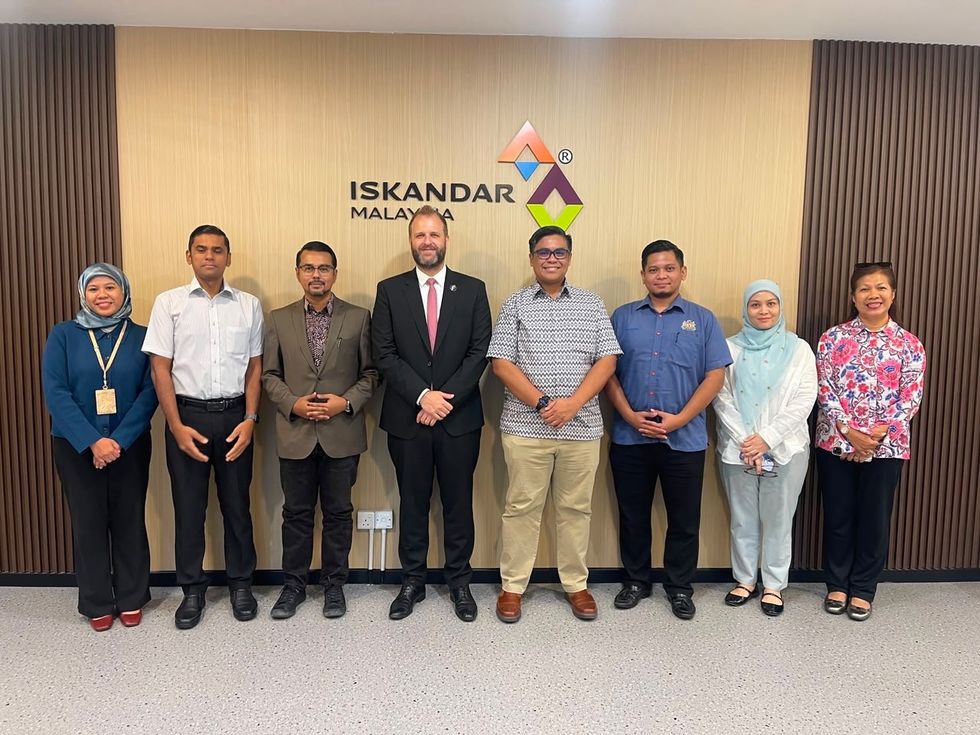
Otto meets representatives from the Iskandar Regional Development Authority (IRDA), a statutory body responsible for regulating and driving development in the Iskandar Malaysia region
To combat this, GLE places paramount importance on the initial feasibility study, conducting more than 50 each year. This early-stage planning, says the firm, is why approximately 90% of the feasibility studies it undertakes progress into development.
Oquendo highlights the challenge of educating people in emerging markets about this necessity. “To convince some markets that they do need a feasibility study is very difficult because they don’t understand its value.”
“They think of a feasibility study as a general overview of the country or of the city. We do a feasibility study for entertainment, which is completely different. The feasibility study is the base of everything: how big the project is going to be, how many people are needed to operate the project, and so on.”
“Building your house without a foundation will eventually collapse,” Otto adds. This commitment to reality forms GLE’s ethos: if the team does not believe a project is commercially viable or safe, they will not develop it.
Future trends
As GLE looks towards the next decade of leisure development, its strategy aligns with the rapidly changing expectations of global consumers.
Guests today are looking for immersive escapes from reality, but as Otto points out, innovation shouldn’t be confused solely with technology like VR and AR. “It’s about how creatively you innovate the destination you create,” he says.
Crucially, successful destinations must engage across different generations. “In every project we undertake, we design with every guest in mind, from infants and young children to teenagers, parents, and grandparents,” Oquendo explains.
“Our goal is to create spaces where every generation feels engaged, welcomed, and valued. That is the direction the future of leisure and entertainment is taking.”
 Kapitol at Rixos Premium Dubai JBR: A 30,000 sq ft social gaming and entertainment destination featuring high-end indoor mini-golf and lounge concepts
Otto cites the trend of competitive socialising as an example of this multi-generational appeal, in which a social setting allows different age groups to enjoy different aspects of a venue at the same time.
Furthermore, the industry is moving away from standalone, singular attractions toward fully integrated destinations. “Dining is part of the experience. Retail is part of the experience. The hotel and hospitality are part of the experience,” Otto says.
“When we start looking at the success of entertainment, as we look towards the next 10 years, it’s about the destination, and it’s about all the components starting to work together… to create purpose-built attractions and experiences in the destination that appeal to the widest audience, and to be fun.”
At the end of the day, as Otto reminds developers: “We’re an industry of fun. If the park is not fun, your customers will never come back.”
What’s next for GLE?
According to GLE, the company has experienced significant growth in recent years, including reported increases of 911% and 300% in successive periods.
Its five-year plan aims at expanding its global presence into over 50 countries, with a heavy focus on Latin America (including Costa Rica, the Dominican Republic, Colombia, and Brazil), Africa, and Asia (expanding into Singapore, China, and Malaysia), as well as entering Europe and North America.
To support this, GLE is set to open its first Asian office in Bangkok and its first North American office in the US this year.
Despite this scale, GLE remains dedicated to its specialised, personalised approach, ensuring that every expert they bring on board has deep, niche industry experience.
“We want to be the global leader of leisure entertainment and development as a turnkey solution provider,” Otto says.
As attraction developments become increasingly integrated with hospitality, retail, and real estate, GLE is positioning itself around a model that combines development planning with operational expertise.
For Otto and Oquendo, the goal remains the same as when they founded the company in 2021: helping turn ambitious ideas into destinations that can succeed operationally long after opening day.
‘ The preceding article may include information circulated by third parties ’
‘ Some details of this article were extracted from the following source blooloop.com ’