
With the holiday season in full force, decorations are embellishing almost everything in sight, including our beloved streetcars! Thank you to whoever decided to add garlands and wreaths to our rolling, National Register-listed landmarks.
Whether simple or elaborate, holiday decorations are ingrained as an important part of the season.
Many families honor traditions passed down from earlier generations. For instance, at one time, it was common for the figure of the Christ child not to be inserted into the Nativity scene until Christmas Day.
As a small child, when I learned the story of the Maji visiting Jesus, I insisted that the kings not join the other figurines in the display until the Epiphany, or Twelfth Night. I moved them around the living room, each day getting a little closer to the stable.
But as even small children know, what goes up must come down.
Tree ornaments can be easily stored in clear bins, with ornaments separated by color.
Whether or not you follow tradition and leave your tree up until after the Epiphany on Jan. 6, at some point soon, you will have to take down, organize and store your holiday decor.
The consensus among organized and experienced people I’ve consulted is that organization and careful storage of decorations are well worth the effort. So, while everything is still on display, this is the perfect time to inventory and organize as you prepare to pack it up until next year.
Once organized, you will be able to locate that illusive piece that tends to hide each year and necessitates unpacking every single box in order to complete that favorite tabletop arrangement. Yes, I am referring to that small reindeer with mini lights tangled in his antlers.
You will also be able to more easily scale down your decorations to display only the most important or most meaningful pieces.
Start with the lights
Starting with strings of lights, which are the most dreaded of all decorations, consider storing them in plastic grocery bags. One string per bag, with each labeled as to its location (i.e. front porch lights). This may seem excessive unless you have ever been given the horror-story chore of untangling a blob of lights.
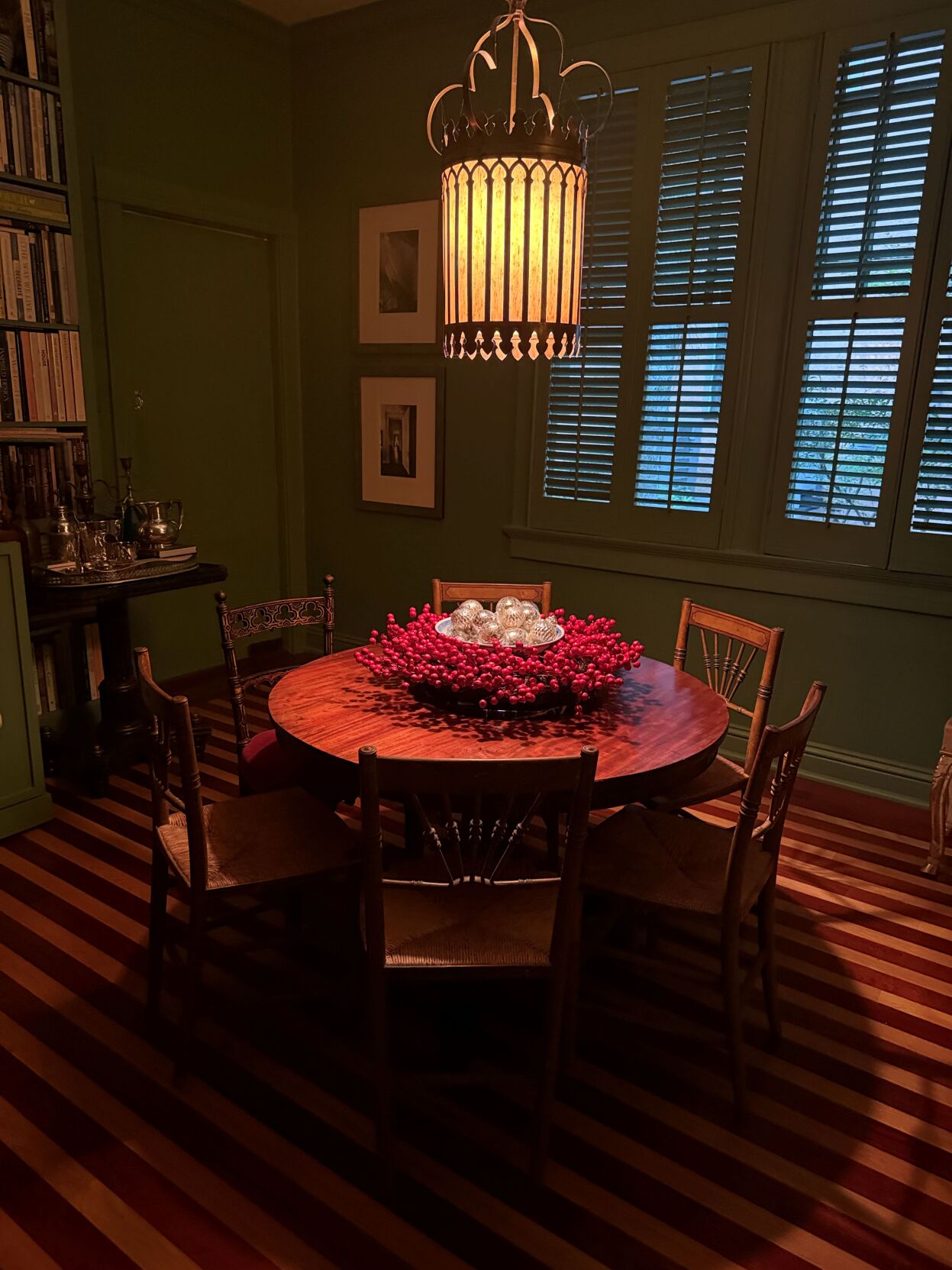
A berry wreath, which here has become part of a table centerpiece, can be stored in a specially shaped container.
Then the tree
The popularity of faux trees has resulted in creation of the “tree bag.” The tree goes into a bag to be stored upright so its shape isn’t damaged. A waterproof bag with reinforced zippers will keep out both moisture and pests.
Some bags feature handles, which make moving the tree much easier.
Brace yourselves, traditionalists: There are people who wire unbreakable ornaments to an artificial tree, and are happy to just bag it as is until next year.
Consider the wreath
Like trees, there are special containers in which to store a wreath. My favorite is the zippered canvas-like bag that secures the wreath in place and has a handle to make it easy to carry and a card slot so that you can identify what is stored inside.
Easy with the ornaments
Delicate Old-World-type glass ornaments are best carefully placed in storage bins with cardboard dividers or kept in their original packaging and corralled into storage bins. This is also the best way to store vintage glass ornaments and the priceless pieces made by children.
A great quantity of plastic ornaments can simply be stored in bins organized by color. This makes color-themed decorating much easier. Flat paper or wooden ornaments can be stored in cookie tins. Cushion the tins with tissue paper, label each tin as to contents and then store multiple tins in a bin.
For centerpieces and garlands
Bins again are the answer. Packed carefully with tissue paper, an arrangement will be fine year after year. Garlands, plain or decorated, will also survive uncrushed.
The designated space
Ideally everything is stored in one place. It may have seemed like to good idea to stash some little thing in a nearby drawer, but will you remember this a year later?
A dry storage area without extreme temperature change is desirable. An unfinished attic may not be the best location for vintage pieces as summer heat may be a problem.
Closets and storage under a staircase are ideal, and there are the added advantages that you do not have to climb into the attic and that the decorations are stored near where they will be used.
Organizing and adding labels
Last but absolutely not least is the importance of inventorying and labeling each storage bin as to content. For example: mantel decorations, red ornaments, gold ornaments, etc.
A master list of the contents of all bins is a good idea. I have also found it wise to include a contents list inside each bin that contains disparate items such as German glass, vintage glass and souvenir pieces.
Looking ahead to next year
Consider adding ornaments or other decorative pieces when retailers rush the season. The selection is better and you get to decide when the holiday decorating season begins.
A nice tradition is to let children select a new ornament to add to the tree each year. The selection will reflect the child’s interest, and it will become a happy memory.
QUICK STORAGE TIPS
- Purchase multiple storage bins, as bins from the same manufacturer stack easily.
- Organize ornaments by color or theme.
- Store strings of lights carefully to avoid the annual horror of untangling multiple strings.
- Purchase specially designed storage pieces for wreaths and trees.
While the real estate mantra is “location, location, location,” the holiday decor storage mantra is “label, label, label.”
Louis J. Aubert is a professional member of the American Society of Interior Designers and an avid preservationist. Some of his most visible New Orleans projects include making interior color selections for Gallier Hall, Trinity Episcopal Church and the Louisiana Supreme Court Royal Street Courthouse, and both interior and exterior selections for St. Stephen’s Basilica. Contact him at [email protected].
‘ The preceding article may include information circulated by third parties ’
‘ Some details of this article were extracted from the following source www.nola.com ’