IF YOU HAVEN’T SEEN Seattle’s Gum Wall, you’ve probably at least heard of it. Located in a subterranean alley of Pike Place Market, the bizarre attraction is a rainbow-speckled monument to cheeky adolescent rebellion and a quintessential part of the city, popular with tourists and both beloved and reviled by locals.
At one end, perhaps you’ve noticed, sits a mysteriously unmanned ticket booth. What kind of wondrous show might be seen here? What lies behind the Gum Wall?
The answer, as it turns out, changes every night. Because behind that wall is the home of Unexpected Productions, Seattle’s oldest improv theater company.
UP debuted 43 years ago (though it has operated under a few different names), and has been in its present permanent home, the Market Theater, since 1991. Some of Seattle’s famous homegrown performers tread the boards here early in their careers, including comedian and TV show host Joel McHale (“Community,” “The Soup,” “The Bear,” “The 1% Club”) and actor Brendan Fraser (“Encino Man,” “The Mummy,” “Pressure”).
According to Kent Whipple, the theater’s longtime marketing and development director, the part of the building where the theater is now was once horse stables for Pike Place Market’s horse-drawn vendors. Later, he says, it became the headquarters for a fraternal order called the Knights of Pythias. In 1979, the space was turned into a movie theater, complete with carpet and seats reinstalled from the original lobby of New York’s Radio City Music Hall.
The theater itself has an adorably vintage vibe, with some of the building’s original brick showing through the walls. The theater’s soundproofing, which is made from old bluejeans, muffles any outside evening noise from the market upstairs. And as it turns out, the theater is the reason there’s a Gum Wall at all.
These days, UP is made up of roughly 64 individuals that includes performers, technical improvisers (the lighting and sound effects are invented on the spot) and musical improvisers (some shows involve improvised music as well). Together they put on seven shows a week.
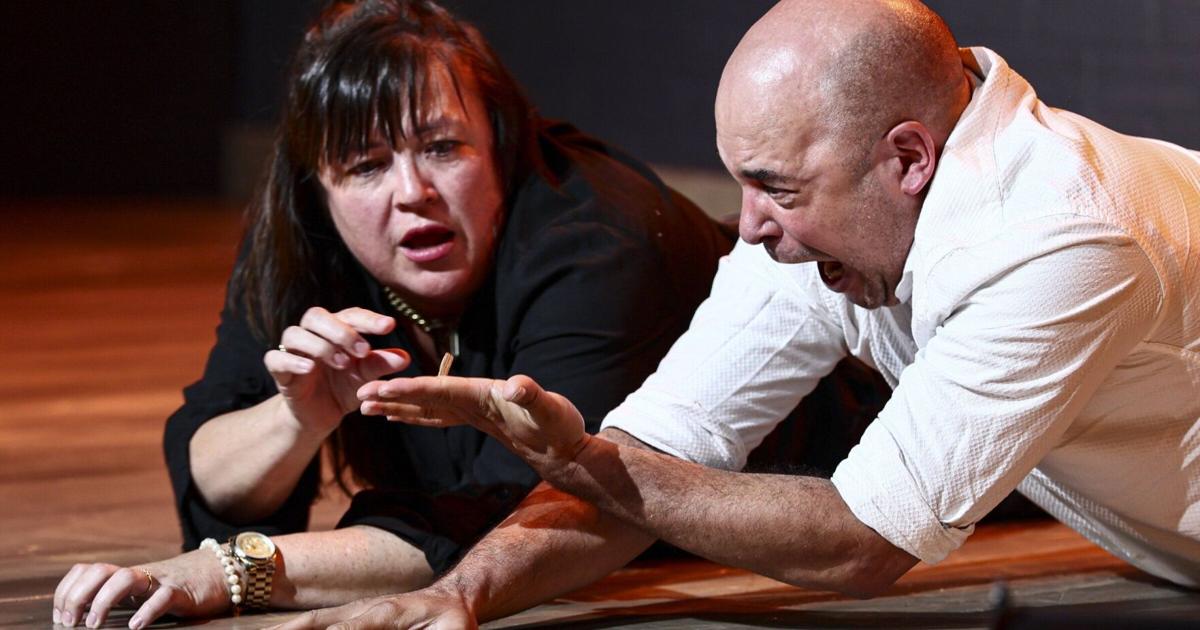
Among them are seasonal genre-themed offerings like the recent improv romantasy “Spellbound,” in which the show’s story was built entirely based on audience prompts. A popular Wednesday open mic night for improv gives ambitious, sweaty-palmed souls a chance to test their mettle under the stage lights. Thursdays is “Theater Sports,” the longest-running show in Seattle, in which two improv groups are pitted against each other and gleefully booed no matter the outcome.
The shows themselves are raucous, with scenes built on the spot and plenty of booing and hissing and cheering from the crowd. Props and sets, when they are employed, are charmingly rudimentary but barely necessary, as improv is about conjuring a whole world with words and body language. In the close-packed, 212-seat theater, tension quivers onstage as each audience prompt gets the wheels of spontaneous creativity churning and in the audience as they wait for a performer to succeed or fail. The laughter when a joke lands feels cathartic.
Every year they host a learning-focused improv festival, formerly called the Seattle International Festival of Improvisation, now called Festival Unexpected.) Running through July 3 is “Welcome To Seattle,” a show full of gloriously local hometown references to tickle both tourists and longtime Seattleites as part of the company’s FIFA World Cup celebration.
“We’re now getting people coming in who are bringing their kids, who used to see shows here [decades ago],” says Whipple, whose tenure with the theater began in the early 1990s, when Seattle was becoming a worldwide hub of alternative and punk culture, and the company’s improv shows were a local favorite — “especially ‘Theater Sports,'” he says. “There was no other improv like it, and we would get lines up the wall, up and around. That’s how the Gum Wall got started.”
Once upon a time you could buy a ticket to the improv show in that mysterious ticket booth, but no longer. Now, teenagers, hipsters, grunge-era Gen Xers, and tourists alike mill around in the kitschy lobby before shows and during intermission. In their seats, they giggle together at fresh jokes that will probably be told only once ever. Each show is a unique, ephemeral, exhilarating experience — and a joint effort between artists and audience.
The place has a ghost too (of course), supposedly the same spirit that haunts the adjacent pizza joint, The Alibi Room, and who occasionally parks himself in what the theater refers to as the “ghost corner” at the back of the house. The theater also has a full bar and can, according to Whipple, “make pretty much anything that doesn’t require a blender,” so you and the ghost can make a night of it.
For the poetic, there is even a metaphor to be found in the coevolution of the Gum Wall and the theatrical goings-on behind it.
“It’s a lot like improv,” says Whipple. “It changes all the time. It changes daily. You never see the same thing twice.”
‘ The preceding article may include information circulated by third parties ’
‘ Some details of this article were extracted from the following source www.yakimaherald.com ’