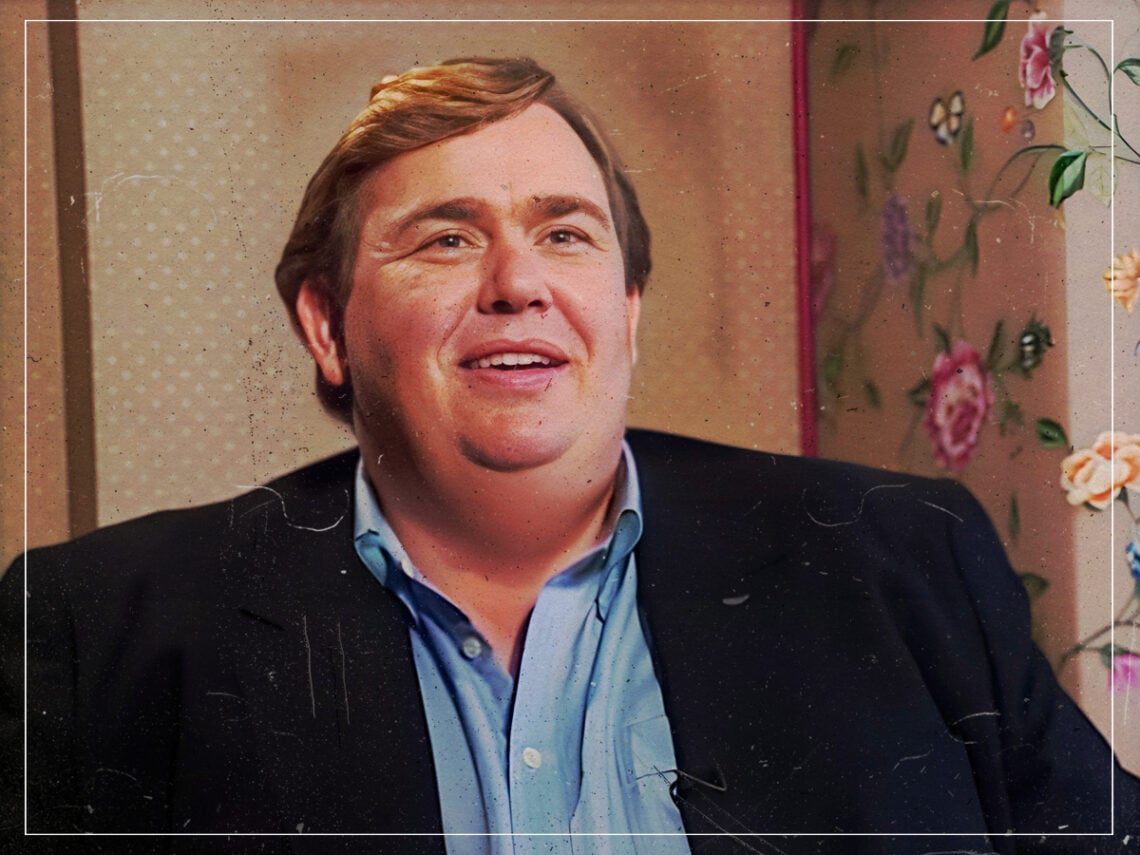

Credit: Far Out / YouTube Still
‘John Candy: I Like Me’ – Colin hanks
There has been an uptick in the popularity of documentaries about deceased celebrities that appear on streaming services, as they offer a warm boost of nostalgia without providing too many challenges, and Colin Hanks’ documentary on John Candy doesn’t contain any startling insights, but it does explore how the late comedy star perceived himself and left an outsized impact on popular culture.
It’s much easier to reflect fondly on someone who is no longer working than it is to wrestle with the complications of an active artist, especially when these films are often made in conjunction with the families of the subject. While John Candy: I Like Me falls into many of those categories, it’s also positioned as a legitimate film in its own right; produced by Ryan Reynolds, perhaps the heir-apparent to Candy’s status as the industry’s favourite Canadian, the film was given a substantial festival rollout before being placed in contention for the 2026 Emmy Awards.
Candy was an actor who seemed universally beloved, but did not exactly have a career that was as rosy as his endearing persona suggested. Despite getting the opportunity to work with many friendly collaborators, he struggled with addiction issues throughout his life, which were credited to the abusive household he grew up in. Even at the height of his fame, his decisions were often questioned, as the media preyed upon him for his weight issues and pounced on any perceived failures. While Candy’s death at 43 was seen as a shock by his many adoring fans, it wasn’t as surprising to his circle of friends, who were aware of his dark side.
It would be impossible to make a documentary about Candy without acknowledging the overwhelming nature of the tragedy, as he’s among the rare Hollywood stars to die at what was seen as the peak of his career. At the same time, he was known as not just being a funny actor, but someone who brought joy to every set that he worked on, which isn’t a given for all comedic actors. John Candy: I Like Me may take the form of a traditional hagiography, but it does more than just present a highlight reel of his greatest hits. It offers the perspective of those closest to him about the difference between the real man and the one that people saw on screen, and in many ways, they weren’t too different.
There is much to say about the actor’s impact on Canadian popular culture, and the film may even go too far in spots discussing how he practically became a national icon. However, the intimate family photos and archive footage salvaged from Candy’s childhood were restored with true innovative filmmaking, given that he barely mentioned his upbringing in any interviews once he was famous. Although it’s a PG-13 film that leans more positive than anything, the documentary confronts the sad reality that artistic genius is often born out of tragic situations and broken homes.
The issue with hagiographies is that there’s usually not much to learn from recounting a number of skits and scenes that people already know by heart, but John Candy: I Like Me is at least successful in providing expert opinions. Even if Planes, Trains and Automobiles is already remembered as a Thanksgiving classic, it’s worthwhile to hear a contemporary comedic genius like Bill Hader discuss the profound impact that Candy’s performance had on him. While the film makes note of how much he meant to people he never met, it also offers a number of wholesome insights from his primary collaborators, such as Steve Martin, who revealed a touching story about shooting the iconic film that displays a sense of vulnerability within an equally legendary comic legend.
That someone of Hanks’ celebrity is responsible for the documentary ensures it’s careful not to offend, particularly in discussing the creative frustrations Candy faced in the last decade of his life when he felt that great roles were passing him by. However, the director’s ability to get unorthodox interviews is also to the film’s advantage, particularly when it comes to members of Candy’s family. Bill Murray, who rarely appears in documentaries like this, seems to actually be engaged in preserving the sanctity of someone he clearly had a tremendous amount of respect for, while Macaulay Culkin also offers moving testimony about how Candy became a paternal figure in his life, which was particularly valuable given the issues that he had with his own father.
John Candy: I Like Me is also just a bit sharper, more creative, and better paced than a standard streaming release, and the subtle production qualities make its sentiments feel all the more sincere, so while it may seek to lionise the feelings of those who already were obsessed with Candy, it also might spark interest among younger fans to check out some of the actor’s more obscure work. Candy was a complicated man who was loved in a very uncomplicated way, and the film honours that duality.

‘ The preceding article may include information circulated by third parties ’
‘ Some details of this article were extracted from the following source faroutmagazine.co.uk ’