If you’re a movie fan, you’re probably going to watch Christopher Nolan’s The Odyssey at some point.
The epic adaptation of Homer’s classic poem starring Matt Damon, Anne Hathaway, Tom Holland, Zendaya and more is projected to top the box office this weekend and probably the rest of the summer.
If you have already watched the film and are craving more ancient history spectacle, or simply want to watch a good film, you’re in luck.
Watch With Us has curated a list of films you should watch if you like The Odyssey and can’t get enough of Hellenic heroism and sweaty men killing each other on the battlefield.
‘Troy’ (2004) – YouTube
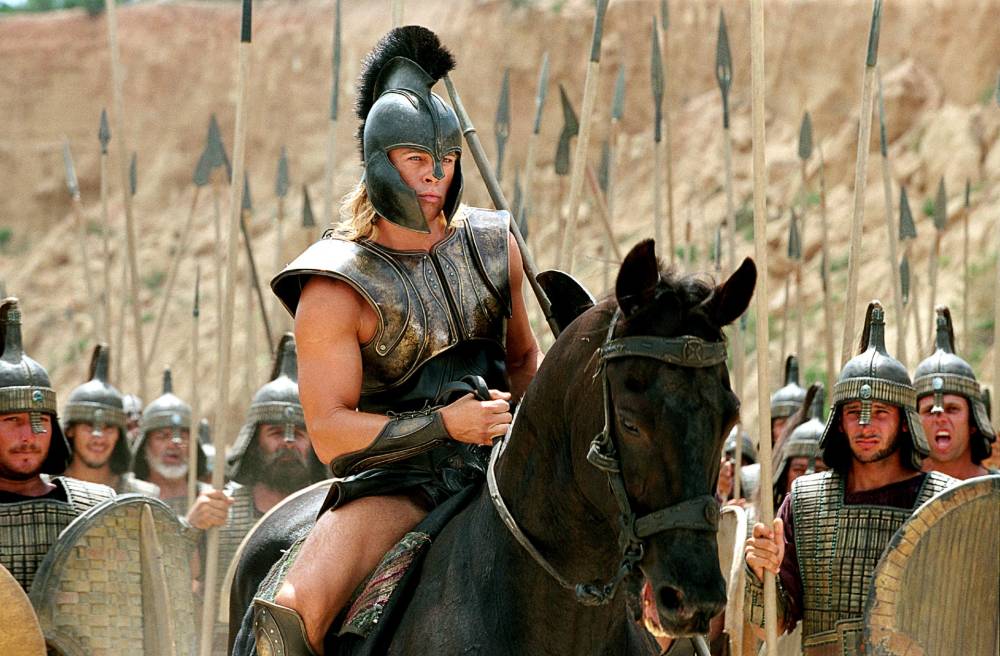
Brad Pitt in Troy. Warner Brothers/courtesy Everett Collection
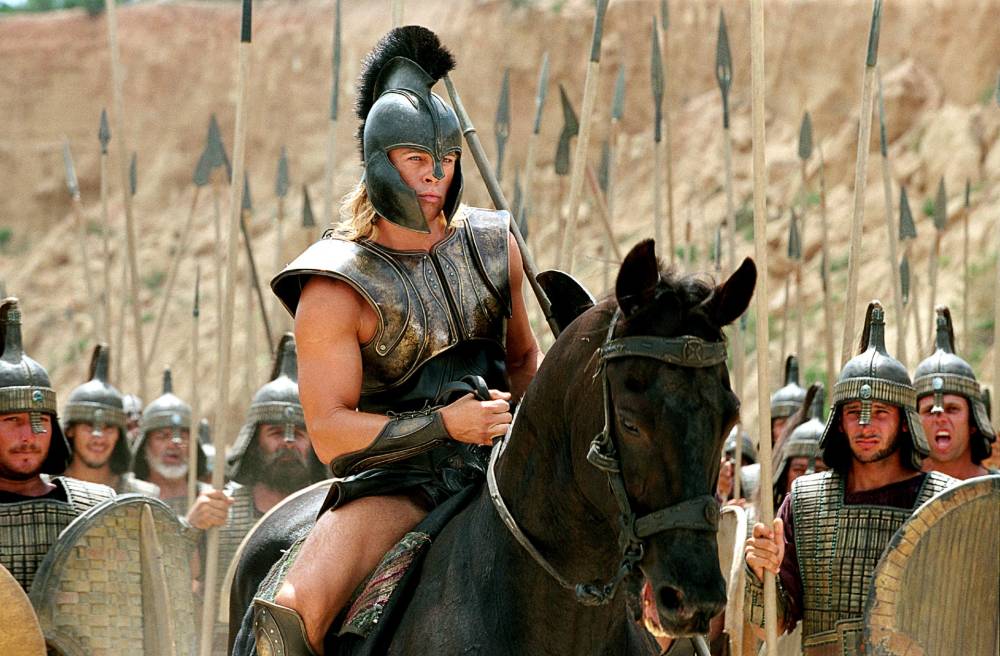
The most obvious pick on this list, Troy is also the most satisfying – especially for those looking for more traditional epic movie thrills. Brad Pitt stars as Achilles, Greece’s greatest warrior, who is called into battle when pretty-boy Paris (Orlando Bloom) romances the married Queen Helen (Diane Kruger) and takes her to his hometown, Troy. Troy is well defended by Hector (Eric Bana), Paris’ older brother and a warrior equal to Achilles, and the city’s walls, which are heavily fortified. The only way to penetrate Troy – and get Helen back – is for the Greeks to sneak in, and what better way to do that than by building a giant wooden horse to hide in?
Directed by Wolfgang Peterson, Troy is a loose adaptation of Homer’s The Iliad – think of it as a more action-packed prequel to The Odyssey. The film itself is less cerebral than Nolan’s film – it’s focused more on staging elaborate scenes of armies attacking each other on beaches and within Troy itself. Taking it as it is, Troy is great entertainment – a thrilling, old-school spectacle of brawn, testosterone and military glory. The all-star cast looks great, even when they’re covered in sweat, blood and tears, with Pitt’s Achilles outmogging everyone, even Helen. Odysseus (Sean Bean) appears as a supporting character, but he’s important – he’s the genius who comes up with the idea for the Trojan Horse, which turns the tide of the war.
‘The Return’ (2024) – Paramount+

Charlie Plummer (left, on steps), Ralph Fiennes (left), Juliette Binoche (center) in The Return. Bleecker Street Media / Courtesy Everett Collection
What happens after the Trojan War, when the remaining soldiers have to return home and grapple with everything they’ve done to survive? That’s what Nolan explores in his Odyssey, but he’s not the first to adapt the ancient text. Just two years ago, Uberto Pasolini released his version of the tale, The Return, which adapts the second part of the poem. As a result, Penelope (Juliette Binoche) is more of a lead character than Anne Hathaway is in The Odyssey, as she has to reconcile with her husband’s probable death and consider remarriage with a host of suitors. Odysseus (Ralph Fiennes) is still alive, though, and he’s not too happy to find out his beloved wife has finally moved on from him.
Less an epic film and more of a domestic drama, The Return probes the psychology of its married couple as well as their son, Telemachus (Charlie Plummer), who gradually becomes affected by all the violence he sees when his father returns. Don’t expect Greek gods in The Return; Pasolini is interested in only the human drama between an estranged husband and wife who still love each other and a child who is ready to leave them behind for good.
‘Spartacus’ (1960) – Prime Video


The Odyssey has been hailed as an intelligent epic by some critics, but Nolan isn’t the first to combine large-scale battle sequences with complex characterization and bravura filmmaking. Stanley Kubrick’s Spartacus revolutionized the epic movie genre in 1960 and became that year’s top-grossing film, beating out other classics like Psycho, The Apartment and The Magnificent Seven.
Born in slavery and raised in chains, Roman citizen Spartacus (Kirk Douglas) has never known true freedom. When he’s sold to a gladiator trainer and commanded to fight to the death to entertain the Roman elite, something inside Spartacus snaps. He refuses, causing a rebellion that sees the city’s slaves wage war against their oppressors. But law and order must be preserved at all costs, and General Marcus Licinius Crassus (Laurence Olivier) is determined to quash the rebellion as quickly as it started — and consolidate his power in Rome in the process.
Spartacus is a strange hybrid of a traditional sword-and-sandal epic like 1953’s The Robe and 1956’s The Ten Commandments and a psychological character study like Kubrick’s Paths of Glory. The result is a one-of-a-kind epic, a spectacle that dazzles the eyes and engages your mind. Spartacus was nominated for six Academy Awards in 1961 and won four, including Best Supporting Actor for Peter Ustinov.
‘ The preceding article may include information circulated by third parties ’
‘ Some details of this article were extracted from the following source www.usmagazine.com ’