It began with Short studying to be a social worker at McMaster University, when his best friend Eugene Levy persuaded his friend to come to Toronto and try his hand at theatre. Short gave himself a year, and he and Levy moved into a house together on Avenue Road, that became a hang-out for a group of young actors who would go on to SCTV and Saturday Night Live.
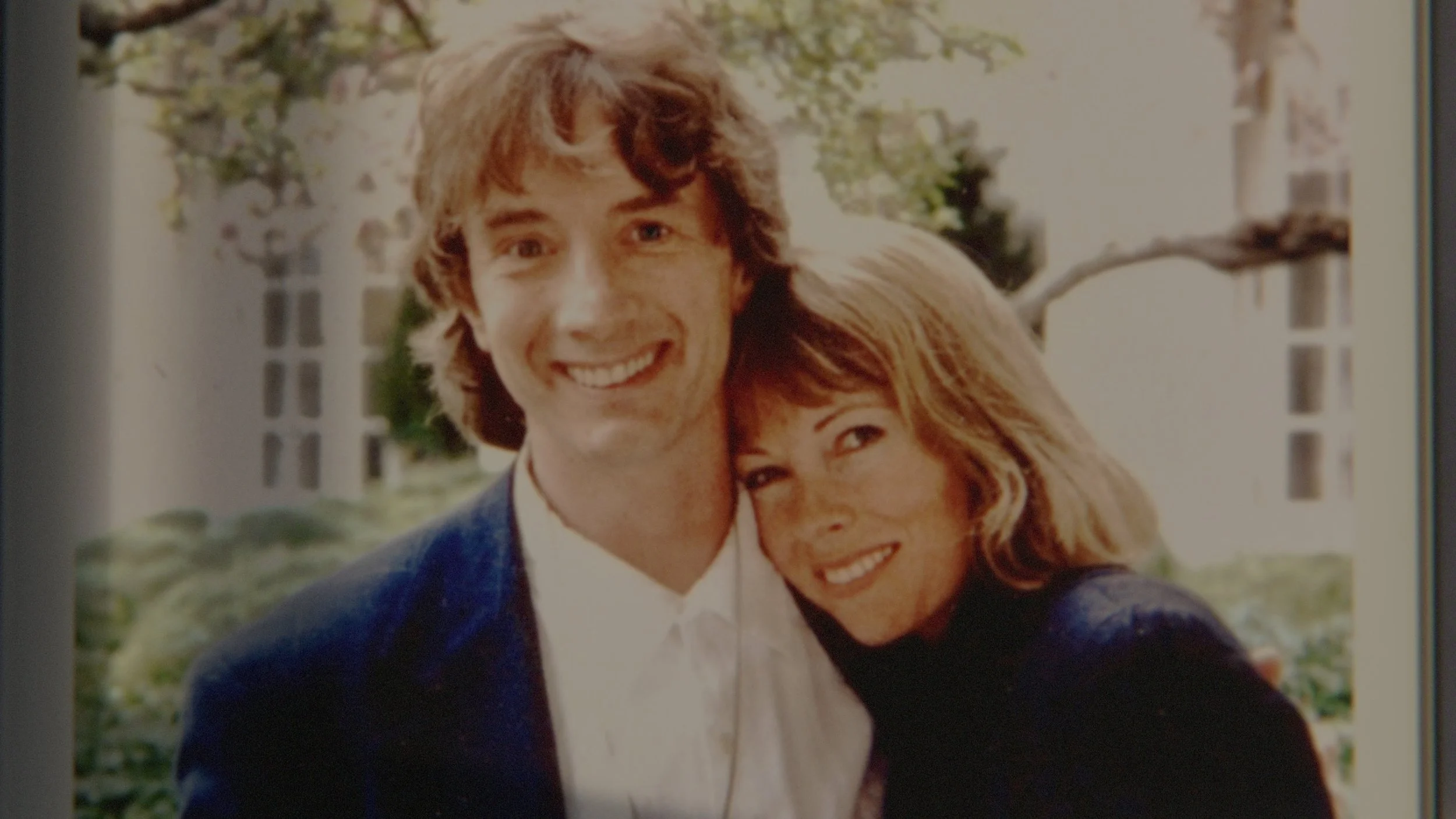
Levy and Short were cast in the Toronto production of Godspell, a fortunate turn of events, not least of which because he met the woman he’d ultimately marry, Nancy Dolman, who was understudying Gilda Radner in the production.
The two would ultimately marry and raise three children, in what, by all accounts was a tight and loving marriage that lasted until her death from cancer in 2010.
The documentary features a lot of home movies showing them as a couple very much in sync and at ease with each other, both prioritizing family and friendships.
Whether in Toronto, Los Angeles, or at their cottage, they’d host friends, most of them celebrities, for summer vacations, and Christmas parties. We see home movies of summer fun, with Tom Hanks, Rita Wilson, Catherine O’Hara, Andrea Martin, Steve Martin, Goldie Hawn, Kurt Russell, Steven Spielberg, and Kate Capshaw, and their kids.
Spielberg would shoot video skits, including a riff on Butch Cassidy and the Sundance Kid as played by Ed Grimley and Forrest Gump. He said of Short, “I think the real tell about Marty’s heart is how much my kids love Marty.”
From his break in Godspell, Short’s career moved fitfully forward. It’s interesting to hear him talk about the advantages of being a young actor in Toronto in the early ‘70s, which is interesting, given that, at the time, the city was far from the center of the universe in the entertainment industry.
Short talks about chances he took, mistakes he made, movies that failed. When Second City opened its Toronto operation in 1973, he decided not to audition, thinking it would limit him. He ultimately felt it was a mistake, and joined Second City friends on SCTV, where he created characters, including, I must say, Ed Grimley.
When SCTV was cancelled, he took Ed along to Saturday Night Live. But he left after a year because the show demanded too much time and kept him from his family.
Through the film, he talks about motivates him. There’s a strength of purpose to him, and a sincere confidence.
“My career has been 80 percent failure and I think those are pretty good odds,” he says. You can have talent, you can have tenancy and take the hits. But if you don’t have the confidence to get up there and fail, then you can’t do it.“
The documentary doesn’t over-analyze his work, but his peers, including Levy, O’Hara, John Mulaney (who cast Short in his short lived sitcom), and collaborator Steve Martin (Three Amigos, Only Murders In The Building) talk about the instincts and understanding of storytelling, timing, character.
No one declares him a comic genius, and yet, in clips of things he’s done – especially his outrageous celebrity interviewer character, Jiminy Glick – we see how funny, how fast, confident and in the moment he is.
The film also touches on tough things. For such a seemingly joyful man, Short has suffered his share of tragedy. When Short was 12, his eldest brother died in a car accident. His mom died when he was 18, his father when he was 20. HIs beloved wife Nancy died of ovarian cancer in 2010, after 30 years of marriage. The film tells her story, and the spirited way she handled her illness, but gives Short his privacy in that and in the aftermath of her death.
Earlier this year, Short lost two more people close to him, Catherine O’Hara died in January, and Short’s daughter Katherine died in February at the age of 42. The film ends simply with an image of the two women together.
‘ The preceding article may include information circulated by third parties ’
‘ Some details of this article were extracted from the following source www.original-cin.ca ’