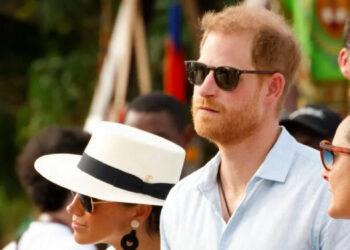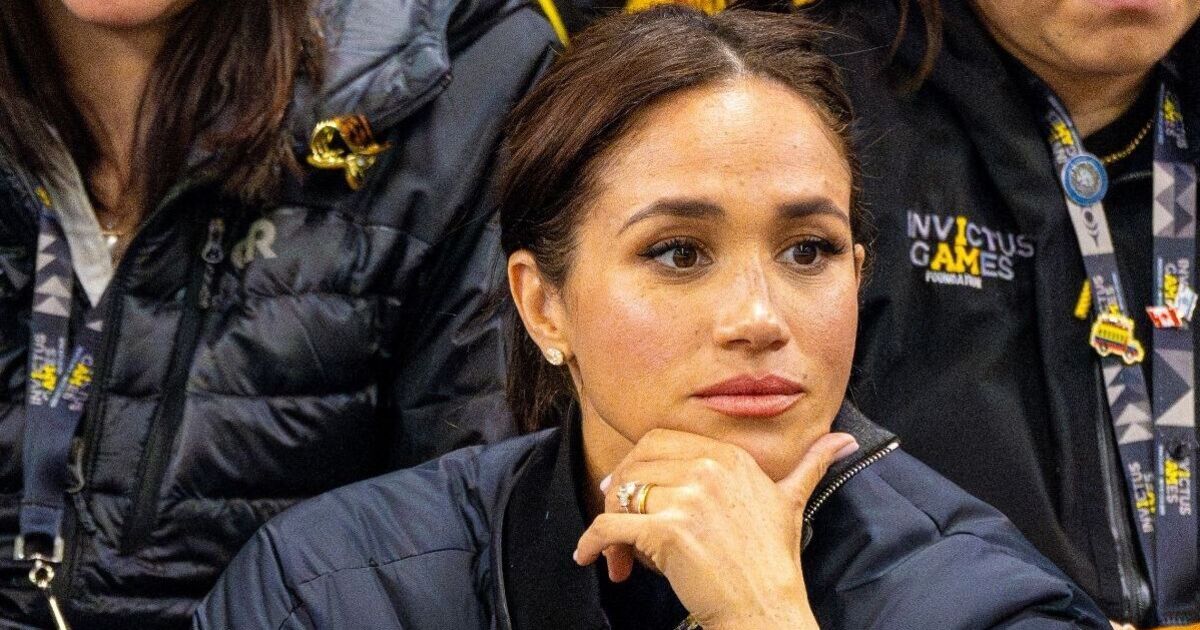
Meghan Markle’s struggles to adapt to the constraints of being a working member of the Royal Family have been well-documented and frequently reiterated by the Duchess in her numerous interviews since she stepped back. It is often said that her approach was to rush into her role and try to make a difference, rather than slowly learn what her position meant.
Before their wedding, Prince Harry and Meghan lived in Nottingham Cottage within the grounds of Kensington Palace. However, it seems that Meghan’s first glimpse of royal life proved disappointing as she reportedly viewed the property as a “prison”.
Despite the idea that any part of a palace could be viewed in this way, she is not the first to describe the iconic residence as a prison.
The Daily Mail reports that royal biographer Tom Quinn said Meghan was not happy with the “small” cottage and even described life at Kensington Palace as a “kind of prison”.
Writing in his book Kensington Palace, Mr Quinn said that once the “initial glamour” of royal life had worn off, Meghan was left “horrified” at the idea of being regularly driven to and from Kensington Palace to attend official engagements.
While the claims may be a surprise, Kensington Palace has been described as a prison before, particularly for children. Speaking to The Sun Editor in Chief of Majesty Magazine, Ingrid Seward, said: “Kensington Palace is a glorious prison for kids – they want to be able to play football without being watched from behind the gates.”
The palace has been home to the likes of Diana, Princess of Wales, Prince William and Prince Harry – but one of its most famous residents detested life at Kensington.
One of the most famous residents of the palace was Queen Victoria. Before she succeeded to the throne, Victoria was restricted by a series of rules which were implemented by her mother’s harsh Comptroller, Sir John Conroy.
The rules were known as the Kensington System, and they forbade the young princess from reading popular books, spending any time alone without her mother or governess or walking down the stairs without holding an adult’s hand.
The restrictive system aimed to make the Princess weak and dependent on her mother and Conroy – and therefore less likely to side with her relatives in Europe and in the House of Hanover. Their efforts were ultimately in vain as Victoria refused to sign a regency order and succeeded to the throne just under a month after she turned 18.
‘ The preceding article may include information circulated by third parties ’
‘ Some details of this article were extracted from the following source www.express.co.uk ’