As America gears up for the 250th anniversary of the issuance of the Declaration of Independence in a couple of weeks, it’s important to remember that independence for African Americans didn’t materialize on July 4, 1776. It took another 89 years, and another bloody war, to become fully theirs. It wasn’t until July 19, 1865 — two months after the Confederacy surrendered and the Civil War ended — that the last community of formerly enslaved people in our country, in Galveston, Texas, finally found out that they had been formally freed by the Emancipation Proclamation two-and-a-half years earlier.
So it was that Juneteenth became Black Independence Day, celebrated annually either on June 19 or the closest weekend day in many parts of Texas and the Deep South. And as increasing numbers of Black Southerners migrated to northern industrial cities in search of work during the era of sharecropping, Jim Crow laws, lynching and economic depression, they brought their specially cherished commemoration with them. Over the decades, more and more towns organized Juneteenth events, and five years ago this month, it received federal recognition as a national holiday.
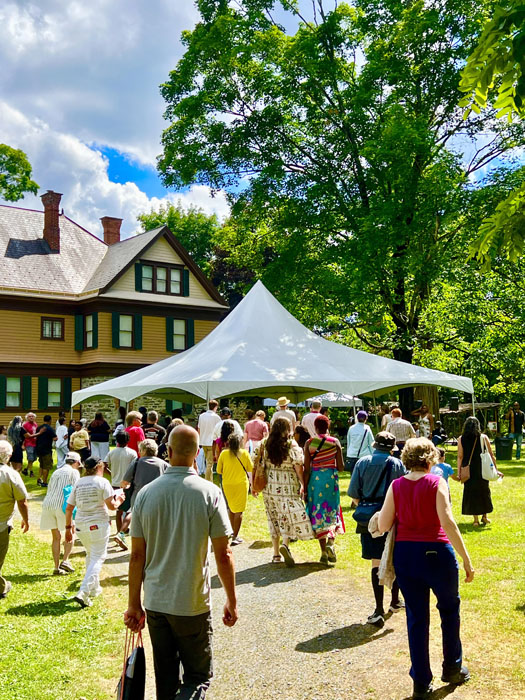
Ever a little ahead of the curve, New Paltz has been hosting festivities marking Juneteenth since the pandemic year of 2020. Thankfully, face masks and social distancing are no longer necessary. The weather smiled down on last Friday afternoon’s gathering, the Dr. Margaret Wade-Lewis Center for Black History Culture’s sixth annual Juneteenth Jubilee, with mostly sunny skies and temperatures peaking in the low 80s: a marked contrast with both the torrential rains of the previous year’s celebration and the extreme cold in which a ceremony was held at Historic Huguenot Street in February honoring Jack and Betty, New Paltz’s first African residents.
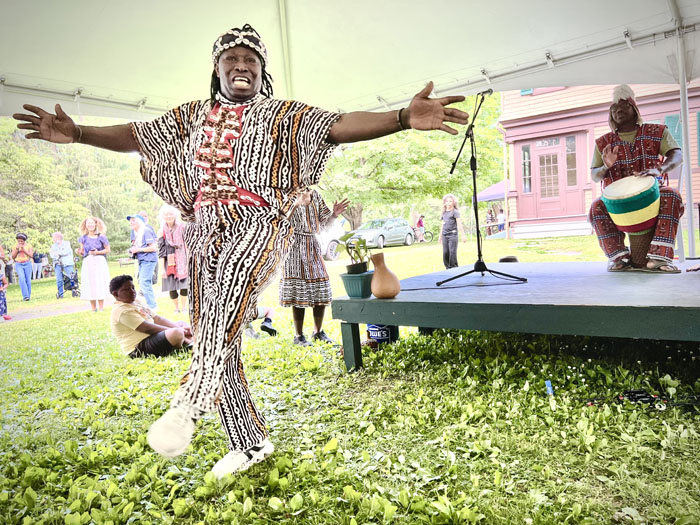
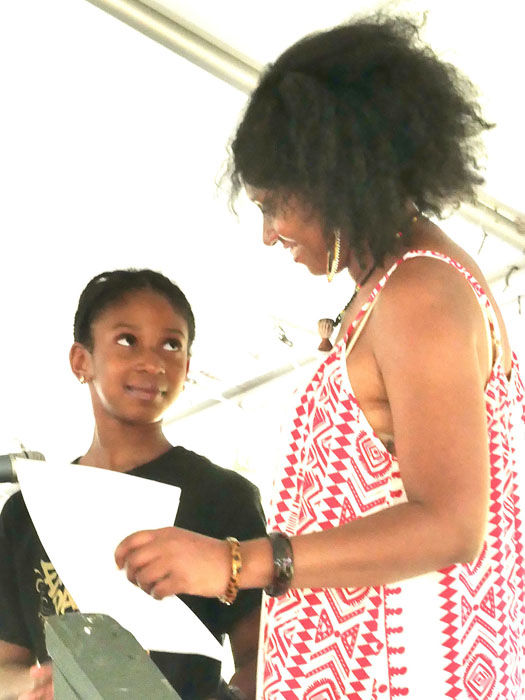
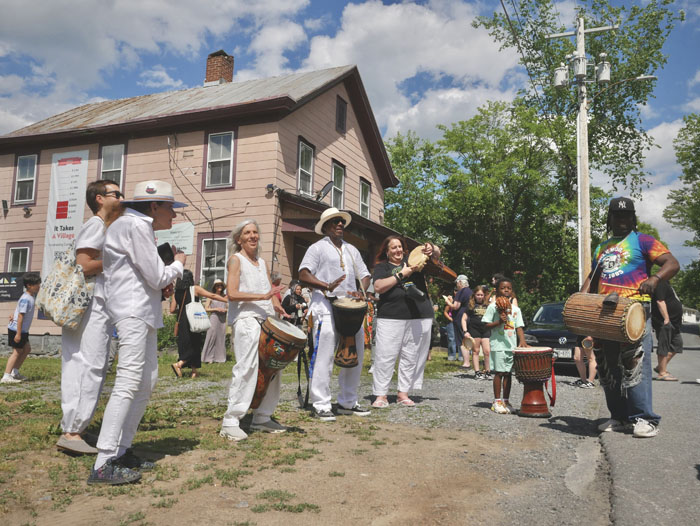
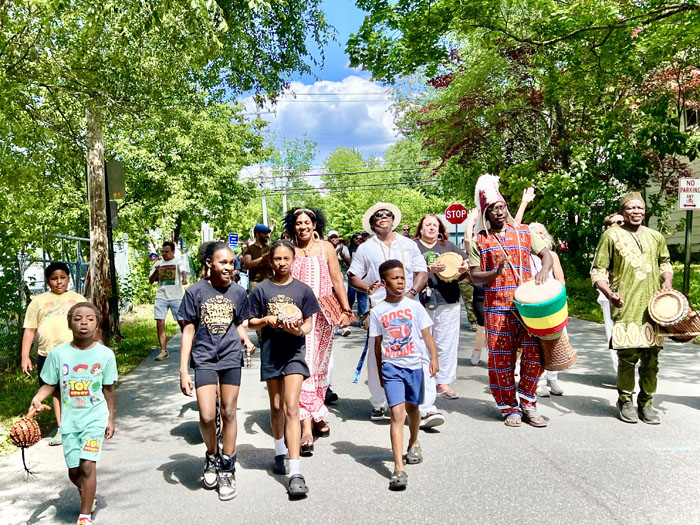
The pleasant late spring weather wasn’t the only enticement to turn out for the parade from the Ann Oliver House on Broadhead Avenue to the grounds of the Deyo House on Huguenot Street. The air was full of music, and there’s nothing like the sound of West African drumming to raise energy and get people moving. Under a party tent, young Clark Lewis, daughter of the Margaret Wade-Lewis Center’s executive director Esi Lewis, delivered a brief welcome speech, noting that the purpose of the Juneteenth Jubilee was to “celebrate freedom, resilience, culture and community.”
Esi Lewis then took the mic, noting that as a child she had celebrated Juneteenth at home on a regular basis, long before it was adopted by New York State. It was entrenched in the family culture: “My mother grew up in Oklahoma, and her father was from Texas.” After expressing thanks to the Center’s working board, the “single donor” who makes her one paid position possible, plus the array of volunteers and sponsors making this year’s Jubilee possible, she emphasized the importance of preserving African American history, “especially at this time, when it is categorically, systematically being erased.”
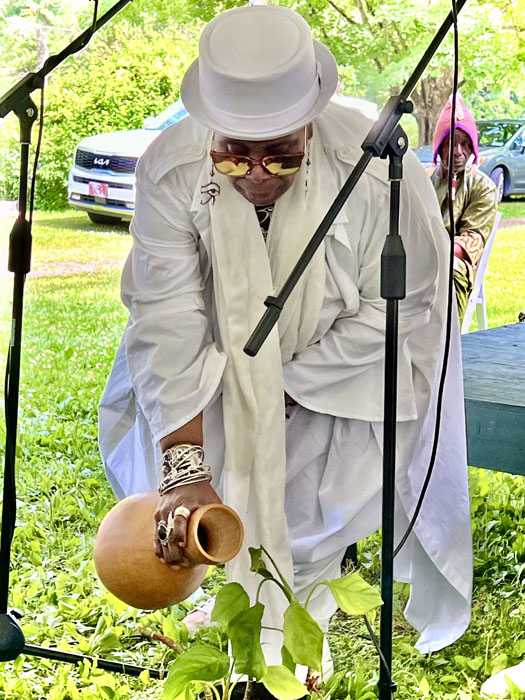
Grim references to efforts by the current presidential administration to purge mentions of the achievements of Black Americans from federal websites, historic sites and school curricula popped up throughout the afternoon’s proceedings, but for the most part the emphasis was on joyful commemoration, remembrance and celebration. Jenna Flanagan took the helm as emcee, bringing Lenape elder Brenda Hicks up to recite the “Great Prayer” written in 1887 by Lakota chief Yellow Lark, followed by the vocal quartet Sisters in Spirit of the Hudson Valley to perform the Black National Anthem, “Lift Every Voice and Sing.” Another quartet, Good Gourd, poured a libation of water onto a potted plant while singing “Mojuba Fefe Iku,” a 12,000-year-old Yoruba incantation calling on the ancestors to bless the proceedings.
Flanagan next invited Dr. Albert Cook, who teaches Black History at New Paltz High School, to discuss the prospects for Black Americans going forward in what he called “a hard time to persist with hope.” While acknowledging the current challenges, Cook said that he took heart from the increasing interest among young people in his subject area. Even as “33 of 50 states have made Black History courses illegal,” he noted, “my course enrollment is steadily increasing… The generation that’s coming up is not the same.”
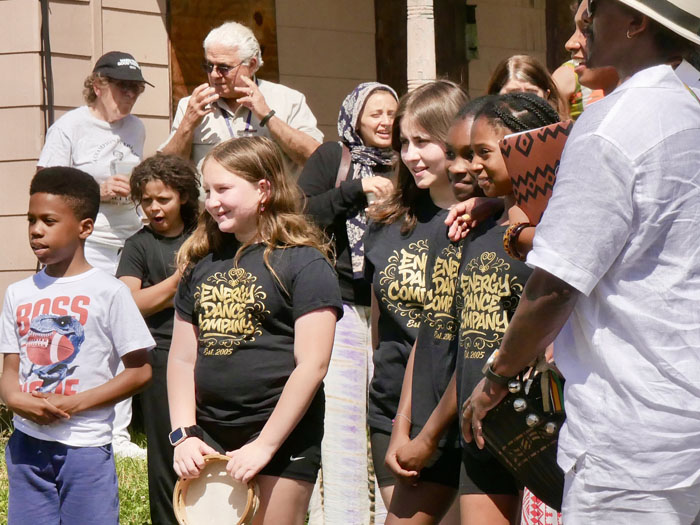
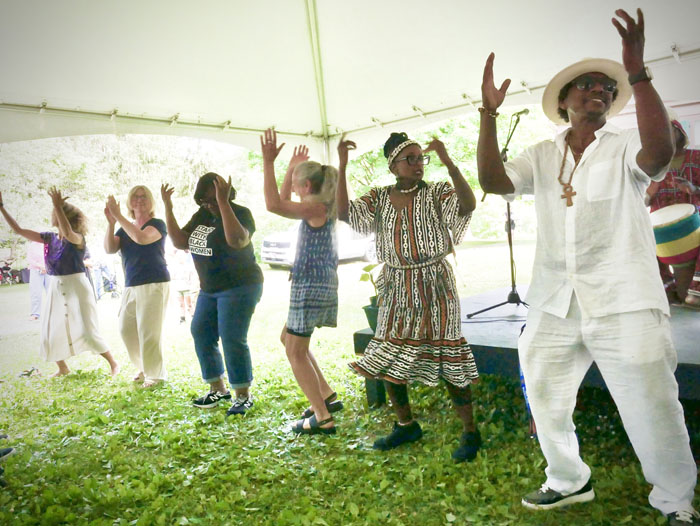
Then it was back to celebratory music, with the drum and dance group Melody Africa taking the stage (and the ground around it) for an extended session of traditional Sinté rhythms from Guinea. One by one, audience members stepped forward to join the line of dancers, including Drew Andrews and some of his young students from Kingston’s Energy Dance Company.
An intermission gave the crowd a chance to check out the La Ruta del Sol food truck and the many tables, booths and exhibits set up on the grounds. These included games and crafts activities for kids and a place where you could pose for an old-fashioned tintype photographic portrait. A fundraiser for the Wade-Lewis Center, the tintypes were advertised as “free for descendants of formerly enslaved people; others $40.” As proposals for reparations for the effects of slavery in America aren’t currently gaining any traction on the federal level, one must take one’s tiny perquisites wherever one can, we suppose.
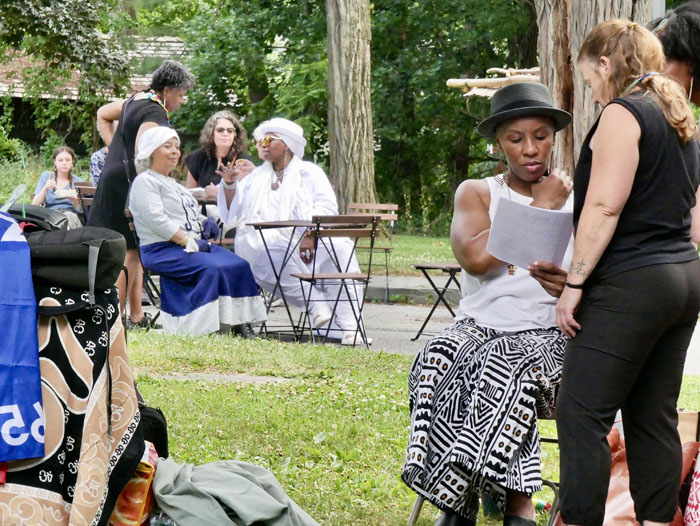
Following the break, more educational and celebratory activities continued into the evening, beginning with a live dramatization of the history of how, in 1885, Black nurse Ann Oliver engaged Black homebuilder Jacob Wynkoop to construct the house that now bears her name. Many local and regional dignitaries stepped up afterwards to mark the happy occasion, including New Paltz supervisor Tim Rogers and mayor Alexandria Wojcik, assemblywoman Sarahana Shrestha, Ulster County historian Eddie Moran and others. County executive Jen Metzger presented the Wade-Lewis Center with a proclamation on the county government’s behalf honoring Juneteenth 2026.
‘ The preceding article may include information circulated by third parties ’
‘ Some details of this article were extracted from the following source hudsonvalleyone.com ’